The Antrim Bata tradition
The Northern Irish stick-fighting lineage centred on County Antrim — the family line its teachers trace it to, the revival movement the school dates from the early 2000s, and what its chief instructor says about choosing a stick.
The Antrim Bata tradition is the substantial Northern Irish-specific lineage within the broader Bataireacht Irish stick-fighting world. The tradition is distinguished from the broader Bataireacht context by:
- A County Antrim family teaching line: the Antrim Bata school says its techniques were handed down the Ramsey family from at least the mid-nineteenth century (and, in another passage, names the Ramsey and Kennedy families), through a period when it says the wider practice went underground and very nearly vanished
- A forward-weighted stick: the school describes its weapon as the Irish shillelagh, “a forward weighted stick that is not unlike a mace, and which tends to be of walking stick length”
- A modern revival movement: the school dates a movement to repopularise the art from the early 2000s, led today by Máistir Max Chouinard, who is based in Canada and who, according to the school, recorded the techniques that family members had safeguarded
- A separate lineage from the Doyle family system: the Doyle system, which Glen Doyle’s own published accounts trace to County Wexford and Newfoundland, is a different tradition (see Bataireacht)
This page covers the Antrim Bata tradition specifically. For the broader Bataireacht context, see Bataireacht. For the Northern Irish regional cluster, see Northern Ireland.
Quick reference
| Regional centre | County Antrim, Northern Ireland (by the 19th century the Ramsey family lived principally in Larne, per the school); the school’s listed teaching groups are now elsewhere (see below) |
| Lineage (the school’s own account) | Ramsey family of County Antrim; the school’s site also names the Kennedy family |
| Preferred stick material | Blackthorn, per the school’s chief instructor |
| Stick length and weight | Traditionally about four feet, and a beginner’s stick of about 300 grams, per the school’s chief instructor (his own opinions; the school publishes no construction specification) |
| Modern teaching groups | Antrim Bata schools and study groups listed on the school’s site |
| Cultural register | Working martial tradition; on the school’s account it nearly vanished after faction fighting ended, with a revival movement since the early 2000s |
The lineage tradition
The lineage described here rests on the Antrim Bata school’s own website, and the journal has not been able to cross-check it against independent sources.
According to that site, the techniques of Antrim Bata were handed down the Ramsey family from at least the mid-nineteenth century, when they were used both for self-defence and in faction fights. Elsewhere the site says the art came down from the Ramsey and Kennedy families who lived in County Antrim, and that it does not know when Antrim Bata was created.
The school’s account of the twentieth century is one of near-loss rather than unbroken public practice. After faction fights disappeared, it says, bataireacht “slowly went into hibernation”, practised only by a handful of individuals; the techniques were safeguarded by members of the family and recorded by Max Chouinard, and since the early 2000s a movement to repopularise the art has been active. The school describes itself as traditional, passed down in an uninterrupted fashion, and says there are now two known traditions of bataireacht left that it knows of, besides groups working to reconstruct the art from manuals.
The Doyle family system is a separate lineage. As Glen Doyle’s own published accounts tell it, the Doyles came from County Wexford and carried their curriculum to Newfoundland; the journal has not been able to cross-check those accounts. It is not the Antrim Bata lineage.
How the school says the tradition survived
The only account of survival the journal has been able to read is the school’s own: that members of the family safeguarded the techniques while the wider practice waned, and that they were recorded by Max Chouinard, who the school says learned the style in Ireland in 2007 and went on to teach it in North America. The journal has not found an independent study of why the tradition persisted in Antrim, and offers no further explanation.
The Antrim Bata stick
The journal has found no construction specification published by the Antrim Bata school or any other source: no grip diameter, seasoning time, head form or fittings is given for an “Antrim Bata stick”, and none is claimed here. What the school does publish is a personal guide by its chief instructor, Maxime Chouinard, on choosing a fighting stick, which he introduces as “my opinions as chief instructor in Antrim Bata” that “do not necessarily represent what is correct from the standpoint of other styles”. In it he says:
- Material — blackthorn is “by far the best material you can get”, because its solidity-to-lightness ratio “is one of the best on the planet”; the drawbacks are price and limited use for safe sparring
- Length — “traditionally, and this is referenced in many historical accounts, the length in Antrim bata and many other styles was 4 feet long”, though he adds that balance and construction matter more than length, and that he sometimes uses a two-foot stick
- Weight — an able-bodied adult beginner should choose a stick of around 300 grams and move to heavier sticks as they progress; the knob (murlán) is the part that strikes, so the shaft needs only to be solid enough to hold it together and balance it
- Shape — the stick should be straight, tapering from the thickest part just below the knob down to the point; he advises avoiding sticks with much of a crook, and sticks drilled near the top for a lanyard
- Grip — the grip should be small enough that the three bottom fingers touch the palm
- Ferrule — most makers fit one; he prefers none and believes that was also the historical case, because he says almost no ferrule withstands the impacts and vibrations of training and fighting
He advises a buyer to ask a maker for the total weight, the length, the diameter at the grip, the point of balance, and whether the stick is one solid piece or separate parts. In the school’s pages that the journal read, it found no construction specification (grip diameter, seasoning, head dimensions or fittings).
Where Antrim Bata is taught
The school says it is headed by one person, with teaching levels from máistir down to captain. Its Find a Group page divides groups into schools (headed by a máistir pionsa, a propast or an instructor) and study groups (headed by captains). As the journal read that page, it listed groups in Canada, France, the Republic of Ireland (Dublin), Mexico, Spain, Switzerland and the United States (Missouri and Texas), and none in Northern Ireland; its seminar page listed one event, in Dublin, in May 2022. Several listed groups are historical-fencing or broadsword clubs.
The Doyle family system is a separate lineage which, by Glen Doyle’s own published accounts, has been taught publicly from the 1990s; see Bataireacht.
Relation to other traditions
Broader bataireacht — the school describes Antrim Bata as “a style of bataireacht” and says it knows of two surviving traditions, besides groups reconstructing the art from manuals. See Bataireacht.
Scotland — the school’s chief instructor writes that the vast majority of Ramseys in Ireland have Scottish roots, and that how and when this family came to Ireland is unknown. The school’s About page, which is unsigned and refers to Max Chouinard in the third person, says the techniques are “reminiscent of broadsword and boxing methods of the era” and describes Max Chouinard as “an active practitioner and researcher of Historical European Martial Arts”.
The journal has found no source linking the Antrim Bata school to the Donegal stick-making tradition. The school’s own blog reproduces a Donegal Democrat report of 23 November 1923 on a faction fight between Ramseys and Blackwoods in Donegal, and says that, as far as its author knows, those Ramseys are not related to the family that preserved Antrim Bata.
What the tradition includes
The Antrim Bata working tradition includes:
- Specific working technique system — defensive stick-fighting technique taught by the school
- Cultural-historical context — the school’s own account of the lineage and its revival
- Teaching organisation — a single head of style, with the teaching levels and standards the school describes on its site
What the tradition is not
A few honest acknowledgements:
- A family lineage — the school traces its teaching to the Ramsey and Kennedy families rather than to a codified national system
- Not a tradition that stayed in public view through the twentieth century — on the school’s own account the practice nearly vanished and a revival movement began in the early 2000s
- Not a tradition the journal can date precisely — the school says it does not know when Antrim Bata was created, and traces its family line only “since at least the mid 19th century”, with faction-fight use “at least up to the mid 19th century”
- Not the Doyle family system — that is a separate lineage, which rests on Glen Doyle’s own published accounts and which the journal has not been able to cross-check
A note on responsible coverage
The Antrim Bata tradition is a substantial living martial-arts tradition with active teaching organisations, family teaching lines, and cultural-political register. Responsible coverage:
- Defers to the Antrim Bata school for substantial technical and historical detail
- Acknowledges documentation gaps in the historical record
- Treats the working tradition with appropriate cultural register rather than as historical curiosity
- Welcomes contributions from the school and its members
The journal does not claim authoritative coverage of the working martial tradition; the school’s own pages are the primary source. This page provides orientation for readers wanting to understand the Antrim Bata tradition’s place in the broader stick-and-stave world.
Reading order
For a reader new to the Antrim Bata tradition:
- Bataireacht — the broader Irish stick-fighting context
- Northern Ireland — the regional cluster
- Regional stick styles of Ireland — regional identification context
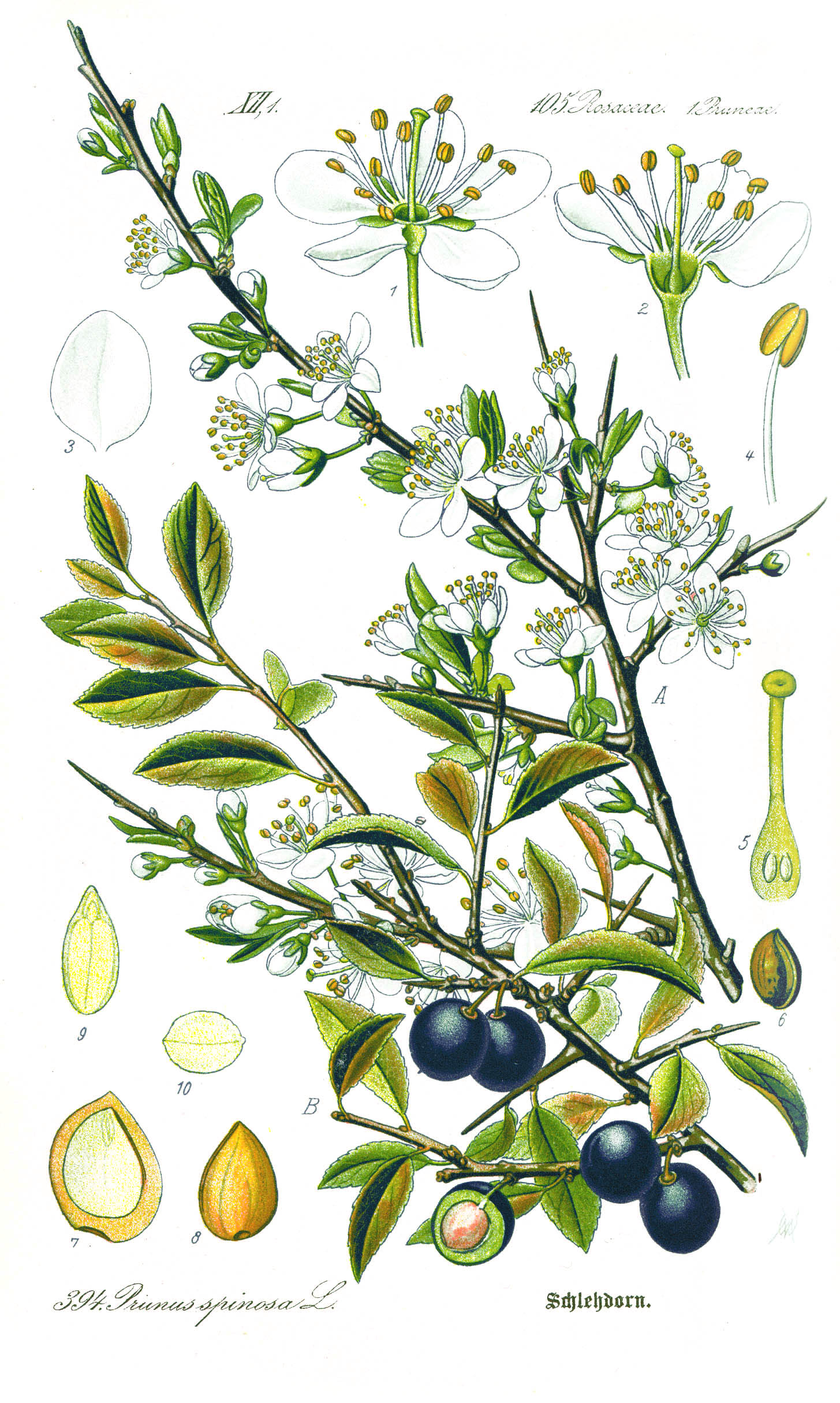
- Blackthorn — the canonical material
- What is a shillelagh? — the broader Irish stick form
Where to learn more
The Antrim Bata website (cited above) lists its groups and contacts under Find a Group.
For a blackthorn stick from a working maker, see The makers page and Commissioning a bespoke stick; the school’s chief instructor advises asking for the total weight, length, grip diameter and point of balance. The journal does not claim that any maker’s stick is an “Antrim Bata” stick.
Sources & further reading
- Antrim Bata — the school's website, Antrim Bata
- Antrim Bata — About, Antrim Bata
- Antrim Bata — Find a Group, Antrim Bata
- Antrim Bata — What is Antrim Bata? (Maxime Chouinard, 22 December 2022), Antrim Bata
- Antrim Bata — Genealogy Bata: what family history can (and can't) tell us (27 August 2024), Antrim Bata
- Antrim Bata — How to choose the perfect shillelagh (Maxime Chouinard, 15 January 2019), Antrim Bata
- Patrick D. O'Donnell — The Irish Faction Fighters of the 19th Century (1975), Anvil Books / WorldCat
- John W. Hurley — Shillelagh: The Irish Fighting Stick (2007), Caravat Press / WorldCat
- Dúchas — National Folklore Collection of Ireland, University College Dublin
Related reading
- historyBataireacht
Irish stick-fighting — once everywhere in rural Ireland, suppressed for over a century, taught now by a small number of teachers and clans.
- historyRegional stick styles of Ireland
How to identify an Irish walking stick or shillelagh by its county or regional origin — Wicklow, Kerry, Cork, Donegal, Antrim, and the broader Munster, Leinster, Connacht, Ulster traditions.
- historyBlackthorn county by county
The Irish blackthorn-stick tradition mapped across the working counties — Wicklow, Kerry, Cork, Donegal, Antrim, and the broader four-province distribution — and how each county's hedgerows, climate, and working culture shaped the local register.
- woodsBlackthorn Wood: Seasoning, Uses
The hedgerow tree behind most Irish sticks: dense, dark, slow-growing, and beloved of hedge-witches.