Crab apple
The native British and Irish wild apple — dense, tight-grained, exceptionally fine in figure, sized below the canonical stick-wood range, and producing some of the most attractive hand-stick and short-cane pieces in the working tradition.
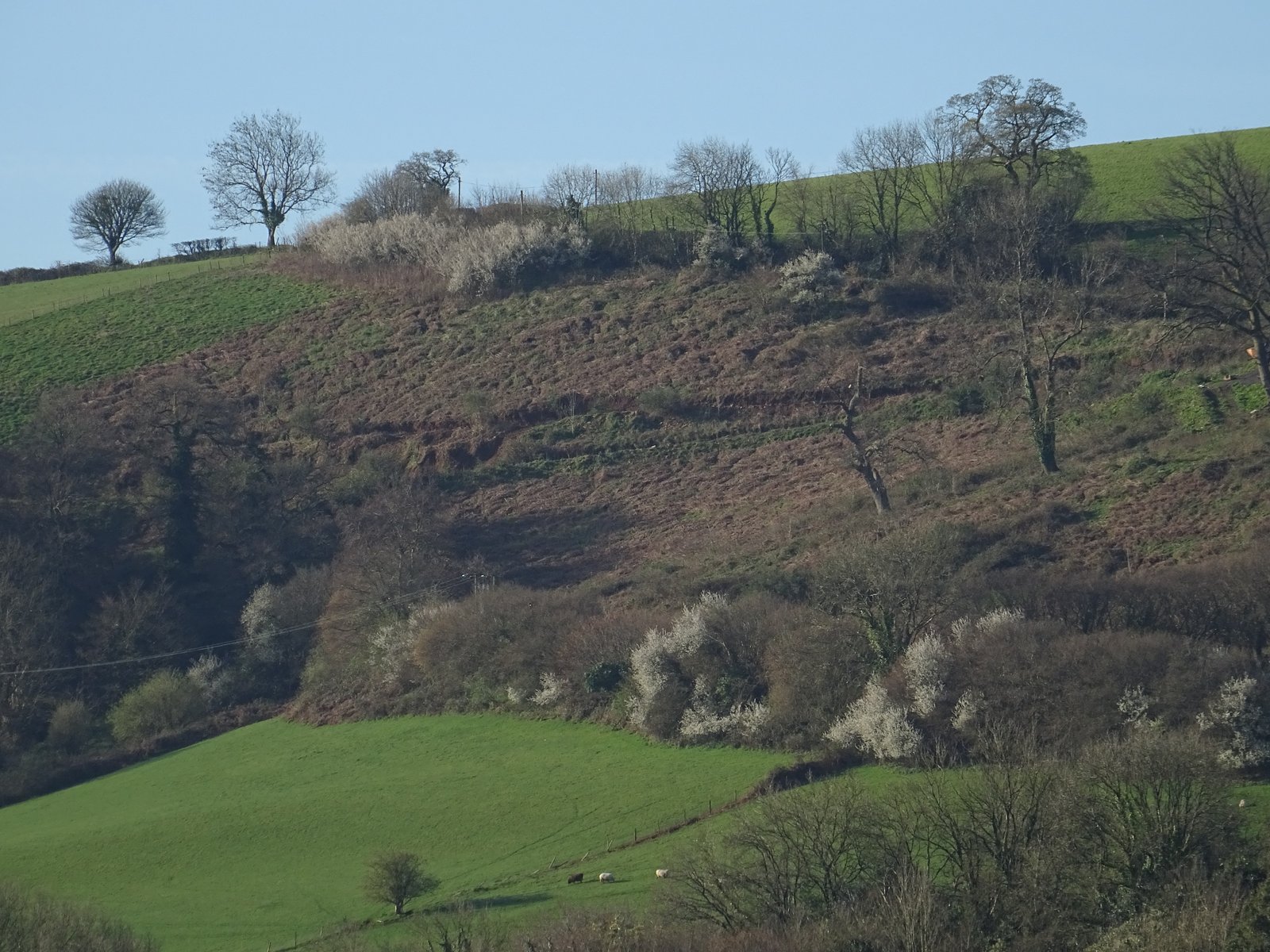
Crab apple is the native British and Irish wild apple — the ancestor species of the cultivated orchard apple and a substantial component of British and Irish hedgerow flora. As a walking-stick wood, crab apple sits in a specific niche: too small-stemmed for full walking sticks, ideal for hand-sticks and short canes, with exceptional density and grain character that produces some of the most attractive show-grade pieces in the British and Irish working tradition.
This page covers crab apple as a stick wood. For the broader rose-family context, see Blackthorn and Hawthorn; for the broader other-niche-woods context, see Other woods of note.
Quick reference
| Common names | Crab apple, wild apple, European crab apple, crann fia-úll (Irish), afal sur (Welsh) |
| Binomial | Malus sylvestris |
| Family | Rosaceae (rose family) |
| Native range | Most of Europe, including Britain and Ireland; western Asia |
| Habit | Small to medium tree, 5-12 m typically; long-lived but small |
| Bark | Greyish-brown, fissured with age; often with characteristic raised ridges |
| Leaves | Oval-elliptical, 4-10 cm, serrated; downy on underside when young |
| Flowers | White-to-pink, five-petalled, in clusters of 4-7, mid-spring |
| Fruit | Small green-to-yellow apples, 2-4 cm, hard and astringent |
| Wood density | ~830 kg/m³ at 12% MC (Malus generally) |
| Janka hardness | ~7,700 N (~1,730 lbf) (Malus generally) |
| Working tradition | Hand-sticks, short canes, show-grade pieces; furniture and decorative work |
The plant
Crab apple grows as a small to medium deciduous tree across most of Britain and Ireland, particularly common in mixed deciduous woodland, in old hedgerows, and as a relict species in former orchards and managed landscapes. It is one of the most widely-distributed native British and Irish trees.
Three features identify crab apple in the field:
The leaves. Oval-elliptical leaves, 4-10 cm long, with finely serrated margins. The leaves are downy on the underside when young, becoming smoother with age. Distinguishing wild crab apple from cultivated apple species requires close attention — generally, wild crab apple has smaller, narrower, more sharply-pointed leaves than orchard apple.
The flowers. White to pink five-petalled flowers in clusters, appearing in mid-spring (April-May). The flowers are typically pinker than blackthorn or hawthorn blossom and substantially showier than the small white pear blossom that might otherwise be confused. The flowering is one of the more attractive features of late-spring British hedgerow.
The fruit. Small hard green-to-yellow apples, 2-4 cm in diameter, ripening in autumn. The wild fruit is intensely astringent and not generally eaten raw, but is used in traditional jelly-making and as a source for the substantial regional cider tradition (Herefordshire crab-apple cider in particular).
Crab apple lives to substantial age — individual trees commonly 100-200 years, occasionally substantially older. The species’ gnarled, character-rich growth habit makes mature wild crab apples among the more visually interesting trees in British hedgerow landscape.
The wood
Crab apple produces one of the finest wood-density-to-grain combinations in the British and Irish native flora.
Density — ~830 kg/m³ at 12% MC (the Wood Database’s figure for apple, Malus species generally). Substantially denser than English oak (~675 kg/m³) and a little denser than hawthorn (~785 kg/m³). The mass-in-the-hand is substantial for the dimensions.
Hardness — Janka ~7,700 N (the Wood Database’s figure for apple, Malus species generally). Significantly harder than English oak (~4,980 N) and close to hawthorn’s estimated ~8,250 N. Holds detail and resists indentation well.
Colour — pale pinkish-honey heartwood when fresh-cut; develops to warm amber over years and decades of handling. Less dramatic colour development than cherry but real and attractive.
Grain — tight, fine, often beautifully figured. Cross-grain patterns, occasional flame figure, and natural irregularity from the gnarled growth habit produce show-grade aesthetic character.
Burl character — crab apple stems frequently develop substantial natural burls and gnarled growths, particularly on mature trees. These features produce dramatic head selection options for hand-stick and cane work.
The dimensional limitation
The defining constraint on crab apple as a stick wood is stem dimension.
Working blackthorn or hazel stems for full walking sticks are typically 22-30mm at the working diameter and 33-42 inches in working length. Working crab apple stems for the same purpose are typically:
- Stem diameter: 15-22mm at the working point
- Stem length: 24-32 inches typical
The dimensional limitations confine crab apple to:
- Hand-sticks — short hand-held sticks ~85cm (33 inches), traditional British shepherd’s-and-walking-aid form
- Short canes — 28-32 inches, suitable for some user heights
- Children’s sticks — sized for children’s walking aid use
- Show-grade decorative pieces — emphasising the figure and colour character
Full-length walking sticks (36-40 inches) at full diameter (24-28mm) are not generally producible from crab apple; the working stem stock doesn’t support it.
For the broader hand-stick tradition, see Holly and Hawthorn — both used in similar dimensional ranges.
Working tradition
Crab apple has substantial working tradition as:
Hand-sticks — particularly in the English Lake District and the Welsh hill country, where the smaller-stem character of crab apple suits the hand-stick form.
Show-grade walking aids — for users wanting an attractive short stick rather than a full walking-stick-sized piece. The substantial figure and the colour development make crab apple show-grade work distinctive.
Children’s walking sticks — for use in family heritage traditions, Highland Games children’s events, and similar contexts. The smaller dimensions suit children’s body sizes.
Furniture and turnery — substantial tradition outside stick-making. Crab apple is one of the canonical fruit-woods of British cabinet-making; used for fine turned pieces, inlay work, and small decorative furniture.
Cider tradition — substantial regional tradition in Herefordshire, Worcestershire, and parts of Wales producing crab-apple cider as a distinct regional tradition.
Working crab apple as a stick wood
Working notes for makers and informed buyers:
Seasoning — slow. The tight grain and high density mean substantial seasoning time, typically 18-30 months for a stick blank from properly-handled stock. Sealed end-grain prevents checking; ventilated drying in stable conditions is critical.
Stem selection — wild crab apple stems of suitable dimension are not difficult to obtain from felled hedgerow trees or working hedge-laying cuts. The dimensional supply is modest but consistent across British and Irish working landscape.
Cutting and shaping — crab apple is dense and slow to work but holds fine detail. Working pieces often have substantial root burls or character bends; the maker selects for these as aesthetic features rather than working them out.
Finishing — crab apple takes finishing exceptionally well. Hand-rubbed beeswax produces a soft warm glow; shellac and French polish bring out the natural figure; the wood polishes to a near-glass finish under sustained hand-rubbing.
Long-term character — develops modest but real colour deepening over decades. Less dramatic than cherry; more stable than yew. The aesthetic register holds across long working life.
Crab apple as a hand-stick — buyer considerations
For buyers considering a crab apple hand-stick or short cane:
Use case — hand-sticks (short, hand-held) for users wanting a working aid that’s not a full walking stick. Short canes for users below 5’4 (see Best stick for shorter walkers). Show-grade decorative pieces for users wanting a substantial wood character in a smaller form.
Aesthetic register — quietly attractive; substantial figure when worked to show-grade finish. Sits in similar register to wild cherry but with smaller dimensional possibilities.
Heirloom register — modest. The piece develops attractively over time but doesn’t transform dramatically like cherry.
Price — typically show-grade pricing (£250-£480) reflecting the dimensional limitation (each piece requires careful stock selection) and the working time (the dense wood takes substantial finishing).
Stock vs commission — most working makers don’t routinely hold crab apple stock. Commissions typically require sourcing from felled stock; lead times 8-14 weeks for show-grade commissions.
Crab apple compared with other native stick woods
Within the British native woods:
- Against blackthorn — crab apple has a smaller dimensional range; lighter cultural register; substantially more attractive figure for show pieces
- Against hawthorn — both close-kin Rosaceae; crab apple is denser and more figured; both produce hand-sticks well
- Against cherry — crab apple is denser and more dimensionally limited; cherry develops more dramatically with age; both suit show-grade work
- Against holly — both common British hand-stick woods; holly is paler (white character); crab apple is warmer-toned
For the broader other-niche-woods context, see Other woods of note. For the four-canonical-wood comparison, see Holly vs blackthorn vs oak vs ash.
Crab apple beyond walking sticks
Substantial working tradition outside stick-making:
- Cabinet-making and turnery — fine fruit-wood for high-end cabinetry
- Wood-block printing — historically used for printing blocks (the tight grain holds fine engraved detail)
- Tonewood for some instruments — occasional use in continental woodwind instrument tradition
- Cider production — substantial regional tradition
The walking-stick use sits within this broader working tradition; a crab apple walking stick is one application of a substantial fine-timber working tree.
Where to commission
Crab apple walking aids are not routinely stocked. Buyers wanting a commission should:
- Ask working makers specifically about crab apple availability
- Accept the dimensional constraint — a crab apple “walking stick” will typically be a hand-stick or short cane, not a full-length working walker
- Expect modest premium pricing above standard hawthorn or hazel commissions, reflecting the wood selection and longer finishing time
- Consider whether the dimensions suit — if a full-length walking stick is needed, choose a different wood
For commissioning, see The makers page and Commissioning a bespoke stick. For the broader other-niche-woods discussion, see Other woods of note.
Sources & further reading
- Malus sylvestris (L.) Mill. — Plants of the World Online, Plants of the World Online, Royal Botanic Gardens, Kew
- Crab apple — A-Z of British Trees, Woodland Trust
- Mabey, R. — Flora Britannica (1996), Sinclair-Stevenson / WorldCat
- Niall Mac Coitir — Irish Trees: Myths, Legends & Folklore (2003), Collins Press
- Apple (Malus spp.) — wood properties, The Wood Database
Related reading
- woodsBlackthorn Wood: Seasoning, Uses
The hedgerow tree behind most Irish sticks: dense, dark, slow-growing, and beloved of hedge-witches.
- woodsHawthorn Tree Wood: Janka & Uses
Blackthorn's hedgerow companion: lighter in colour, and the fairy tree of British and Irish folklore.
- woodsCherry
Wild cherry — the British and Irish native fruit-wood that produces some of the most attractive show-grade walking sticks in the working tradition, with the heartwood deepening to a rich amber-red over decades of use.
- woodsOther woods of note
Crab apple, cherry, beech, willow, dogwood, elder, and yew — the second-tier stick woods that supplement rather than replace the canonical hardwoods.