Cherry
Wild cherry — the British and Irish native fruit-wood that produces some of the most attractive show-grade walking sticks in the working tradition, with the heartwood deepening to a rich amber-red over decades of use.
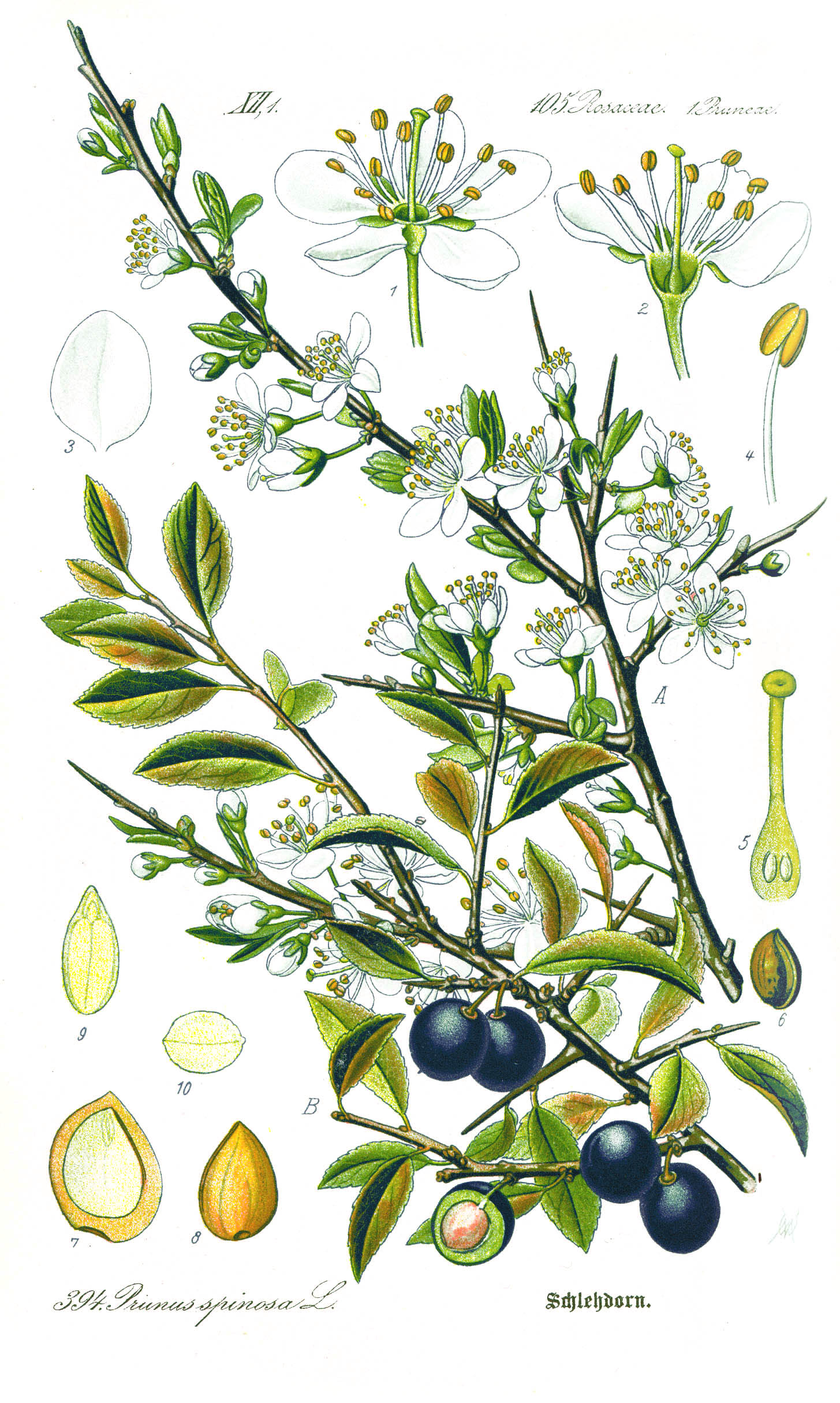
Wild cherry is the British and Irish native cherry — the parent species of the cultivated sweet cherry and a substantial timber tree in its own right. As a walking-stick wood, wild cherry sits in a quieter register than its close cousin blackthorn but produces some of the most attractive show-grade pieces in the British and Irish working tradition. The wood’s tight straight grain and the dramatic colour development over decades of handling combine to produce pieces that age beautifully.
This page covers wild cherry as a stick wood. For the broader rose-family context, see Blackthorn and Hawthorn; for the broader other-niche-woods context, see Other woods of note.
Quick reference
| Common names | Wild cherry, gean, mazzard, sweet cherry (cultivated form) |
| Binomial | Prunus avium |
| Family | Rosaceae (rose family — same as blackthorn, hawthorn, apple) |
| Native range | Most of Europe, including Britain and Ireland; western Asia; introduced widely |
| Habit | Substantial tree, 15-25 m typically; long-lived but rarely massive |
| Bark | Smooth reddish-brown, peeling in horizontal bands; distinctive on mature trees |
| Leaves | Oval-elliptical, 7-14 cm, serrated; reddish-purple autumn colour |
| Flowers | White, five-petalled, in clusters of 2-6, mid-spring |
| Fruit | Red-to-dark-purple cherries, 8-12 mm, edible (sweeter in cultivated forms) |
| Wood density | ~600 kg/m³ at 12% MC |
| Janka hardness | ~5,120 N (~1,150 lbf) |
| Working tradition | Show-grade and presentation walking sticks; substantial cabinet-making use |
The plant
Wild cherry grows as a substantial deciduous tree across most of Britain and Ireland, particularly common in mixed deciduous woodland on well-drained soils. It is one of the few British and Irish native trees in the Prunus genus alongside blackthorn (P. spinosa) and bird cherry (P. padus); the close kinship is visible in similar flower structure (five-petalled white blossom) and similar fruit form (small stone fruits).
Three features identify wild cherry in the field:
The bark. Smooth reddish-brown bark with characteristic horizontal lenticels (small breathing pores) arranged in bands around the trunk. The bark often peels in horizontal strips, particularly on mature trees, exposing fresh reddish bark beneath. The bark colour and the horizontal-stripping pattern are diagnostic.
The leaves. Oval-elliptical leaves, 7-14 cm long, with serrated margins and a pointed tip. The leaf stalk has two small glands near the base of the leaf blade — diagnostic when present. Autumn colour ranges from yellow-orange to deep reddish-purple, sometimes producing dramatic colour on individual trees.
The flowers and fruit. White five-petalled flowers in clusters of 2-6, appearing in mid-spring (April-May) alongside or just before the leaves emerge. The fruit is a red-to-dark-purple cherry, 8-12 mm in diameter, ripening in mid-to-late summer. The wild fruit is edible but small and astringent compared to cultivated cherries.
Wild cherry is short-lived for a substantial tree — typically 60-80 years to maturity and decline, occasionally reaching 100+ years. The species is prone to bacterial canker and other diseases that limit individual lifespans.
The wood
Wild cherry produces one of the finest temperate-zone furniture timbers and one of the most attractive walking-stick woods in the British and Irish native tradition.
Density — ~600 kg/m³ at 12% moisture content. Lighter than English oak (~675 kg/m³) and close to black walnut (~610 kg/m³).
Hardness — Janka ~5,120 N. Close to English oak (~4,980 N) and English walnut (~5,410 N). Workable to fine detail; takes hand tools cleanly.
Colour — the most distinctive feature. Fresh-cut heartwood is pale pinkish-tan to medium honey-brown. With exposure to light and handling, the wood deepens dramatically over years and decades, developing toward a rich amber-red mature colour. A 20-year-old cherry walking stick is substantially darker and more colourful than the same piece fresh from the workshop.
Sapwood-heartwood contrast — sapwood is pale yellow-cream; heartwood is the characteristic deepening pink-tan. The contrast is less dramatic than yew but visible on flat-cut pieces.
Grain — tight, straight, fine. Even-textured throughout. Workable to high finish.
Figure — flame figure (curly grain) appears in some pieces, particularly in stems with stress reactions. Quarter-sawn pieces show distinctive ray figure. Burl figure where root burls are worked.
The colour development is the wood’s defining working virtue. A fresh cherry stick is pleasant but not striking; a 10-year-old stick is genuinely beautiful; a 30-year-old heirloom is among the most attractive working sticks in any tradition.
Working tradition
Wild cherry has substantial working tradition across British, Irish, and continental European craft work — primarily as a cabinet-making and turnery timber, with walking-stick use as a niche application.
Cabinet-making and furniture — cherry is one of the canonical fine furniture timbers, used for high-end cabinetry, table tops, and decorative inlay across the British and continental traditions. The wood’s colour development is the primary aesthetic virtue.
Turnery work — cherry turns cleanly and takes detail well; used for fine turned bowls, spindles, and decorative work.
Musical instruments — used for some woodwind instrument bodies and (in continental tradition) for the backs of fine violin bows.
Walking sticks — the working stick tradition is small but consistent. Wild cherry walking sticks appear in:
- Welsh and English traditional makers’ show pieces
- Occasional Irish working production
- Continental European working tradition (substantial in some German, Swiss, and Italian Alpine traditions)
The walking-stick use is show-grade or presentation register, not working register. A cherry stick is bought for its aesthetic substance, not for its day-to-day working durability.
Working cherry as a stick wood
Working notes for makers and informed buyers:
Seasoning — moderately fast for a fine timber. Typical seasoning 12-18 months for a stick blank from properly-handled stock. Sealed end-grain prevents checking. Cherry is more forgiving than blackthorn during seasoning but less forgiving than ash.
Stem selection — wild cherry stems of suitable diameter (22-30mm) at adequate length (33-42 inches) are not difficult to obtain from felled estate or woodland trees. The dimensional supply is better than blackthorn but the working makers don’t routinely hold cherry stock; commissions typically require sourcing.
Cutting and shaping — cherry responds well to hand tools. The tight straight grain shapes cleanly; the moderate hardness allows fine detail without excessive tool dulling. Cherry can be steam-bent for handle curves where required.
Finishing — cherry takes finishing exceptionally well. Hand-rubbed beeswax produces a soft warm glow that emphasises the wood’s natural colour. Shellac and French polish produce higher-gloss finishes suitable for presentation pieces. Linseed oil deepens the heartwood colour development.
Long-term character — cherry darkens substantially with age. A buyer commissioning a cherry stick should expect the piece to look quietly attractive at delivery and to develop into a substantially more striking object over decades of handling.
Cherry as a walking stick — buyer considerations
For buyers considering a cherry walking stick:
Use case — cherry suits show-grade daily-use walkers and presentation pieces. Less suited for hard hill use; fine for everyday walking on mixed surfaces.
Aesthetic register — quieter than blackthorn or yew; substantially more attractive than ash or hazel at comparable spec. Suits buyers who want a distinctive walking stick without the substantial cultural register of blackthorn.
Heirloom register — cherry is one of the best walking woods for passing down. The colour development over decades produces a piece that looks meaningfully different at 30 years than at delivery; the aesthetic deepens as the family relationship with the stick deepens.
Price — cherry walking sticks typically sit at show-grade pricing (£280-£500) reflecting the wood selection and finishing investment.
Stock vs commission — most working makers don’t hold cherry stock routinely. Commissions typically require sourcing from estate or woodland felled stock; lead times can be longer than blackthorn commissions (10-16 weeks typical).
Cherry compared with other stick woods
Within the British and Irish native woods:
- Against blackthorn — cherry is less dramatic in head selection (no root burl tradition), substantially lighter cultural register; develops more dramatically with age
- Against oak — cherry is lighter and more fine-grained; oak is the canonical heavy traditional wood; cherry suits show-grade where oak suits working register
- Against ash — cherry is lighter (~600 against ~680 kg/m³ for ash) and more figured; ash is the canonical hill-walking wood; cherry suits presentation register where ash suits working hill use
- Against yew — both produce dramatic show-grade pieces; yew is more strongly two-toned, cherry develops more over time; yew has toxicity concerns, cherry has none
For the broader other-niche-woods context, see Other woods of note.
Where to commission
Cherry walking sticks are not routinely stocked by working makers; commissions require advance conversation about wood sourcing. For commissioning, see The makers page and Commissioning a bespoke stick. Working makers will source cherry stock from felled estate trees or working woodland; the lead time may be longer than for canonical Irish woods, but the resulting piece carries substantial show-grade or presentation register that justifies the wait.
Sources & further reading
- Prunus avium L. — Plants of the World Online, Plants of the World Online, Royal Botanic Gardens, Kew
- Wild cherry — A-Z of British Trees, Woodland Trust
- The Wood Database — Cherry, The Wood Database
- Mabey, R. — Flora Britannica (1996), Sinclair-Stevenson / WorldCat
Related reading
- woodsBlackthorn Wood: Seasoning, Uses
The hedgerow tree behind most Irish sticks: dense, dark, slow-growing, and beloved of hedge-witches.
- woodsHawthorn Tree Wood: Janka & Uses
Blackthorn's hedgerow companion: lighter in colour, and the fairy tree of British and Irish folklore.
- woodsOther woods of note
Crab apple, cherry, beech, willow, dogwood, elder, and yew — the second-tier stick woods that supplement rather than replace the canonical hardwoods.
- comparisonsHolly vs blackthorn vs oak vs ash
Four traditional stick woods, side by side: how they look, how they behave under the hand, and which one belongs in which kind of stick.