The thumb-stick
The long Y-forked walking stick of the Scottish and Welsh uplands — found in the field, not shaped at the bench, and the canonical hill-walker's stick of the British and Irish working tradition.
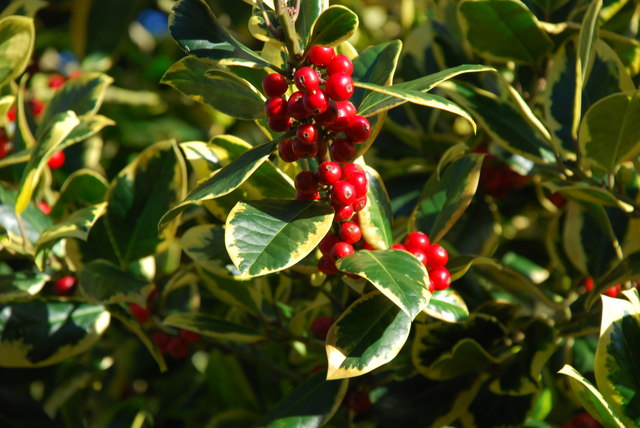
The thumb-stick is the canonical hill-walker’s stick of the British uplands. It is also unusual among traditional walking-stick forms in one specific respect: the Y-shape at the head is taken directly from the natural growth of the live tree, not shaped at the bench. The maker’s job is to find the right Y in a holly hedge or a hazel coppice, not to carve one. A thumb-stick is, in this sense, less a stick-maker’s stick than a stick-finder’s stick — and the skill is in the eye for the hedge rather than in the hand at the workbench.
For a reader oriented toward the Irish blackthorn shillelagh — a stick whose every feature is the result of careful seasoning and bench-shaping — the thumb-stick is a different kind of object from the start. The wood gives the form. The maker confirms it.
Quick reference
| Form | Long walking stick with a natural Y-fork at the head, into which the user’s thumb settles when carried at the hip |
| Length | 38–48 inches (97–122 cm), occasionally up to 52 inches for taller users |
| Primary wood | Holly (Ilex aquifolium) — the canonical thumb-stick wood |
| Secondary woods | Hazel (Corylus avellana), occasionally ash (Fraxinus excelsior) |
| Y-fork dimensions | Typically 30–60 mm wide at the cleft, with the inner curve smooth enough to accept the user’s thumb |
| Foot | Metal ferrule (brass, copper, or steel); rarely a horn cap |
| Working tradition | Scotland (Highland and Lowland), Wales, northern England (Lake District, Pennines) |
| Cultural register | Working hill-walker, gillie’s helper, sheep-handler, country gentleman |
How a thumb-stick is held
The defining feature of the form is the grip. Where a standard walking stick is held with the head in the user’s palm and the hand wrapping over the top, a thumb-stick is held in two distinct positions depending on how the user is moving.
In the carrying position — used while walking on flat or gently-sloping ground — the user holds the stick at the hip, with the thumb settling into the cleft of the Y at the head and the fingers curling around the upper shaft below. The stick is essentially carried rather than leaned on; weight transfer to the stick is intermittent rather than continuous. The advantage is that the user’s hand is in a relaxed, neutral position, and a long thumb-stick can be carried for hours without fatigue.
In the weight-bearing position — used on steep ascents or descents, or when crossing rough ground — the user grips the stick lower on the shaft, below the hand-rest area, with the head clear of the hand. The stick is now held like a standard walking stick, with full weight transfer to the foot. The Y-fork is no longer doing any work; it is simply at the top of the stick.
This dual-position grip is what makes the thumb-stick suitable for all-day hill-walking. The carrying position spares the user’s hand from the constant grip-pressure that a standard walking stick demands; the weight-bearing position is available when the terrain calls for it. A user who walks twenty miles a day for a week — a Highland gillie on a stalking job, a Welsh sheep-handler on the rounds — finds the thumb-stick a more sustainable tool than the walking stick.
The wood
Holly (Ilex aquifolium) is the canonical thumb-stick wood, and the reason is structural: holly grows in a way that produces good Y-junctions naturally.
A young holly stem branches at relatively wide angles — typically 40–60 degrees between the main stem and a major side branch — and the wood at the junction has a slight reinforcing thickening that provides exactly the structural strength a Y-fork needs. The cleft itself, after debarking, is smooth and wide enough to accept a working thumb without modification.
Holly is also dense, fine-grained, very pale, and takes a high polish — all of which suit the show-stick register of finished thumb-sticks. A debarked, oil-finished holly thumb-stick is one of the more visually distinctive sticks in the British and Irish tradition, with a creamy white-to-soft-cream colour that no other native British stick wood approaches.
The full holly reference is at /woods/holly/, including the leaf dimorphism (spiny low, smooth high), the Janka hardness (~5,500–6,500 N — harder than oak), and the wood’s broader working uses.
Hazel (Corylus avellana) is the secondary thumb-stick wood, used particularly in the Welsh tradition and in working English Lake District pieces. Hazel produces Y-junctions less reliably than holly — the natural branch angles are tighter, and the structural strength at the cleft is less consistent — but a well-selected hazel stem can produce a perfectly serviceable thumb-stick at lower cost than holly. The hazel reference is at /woods/hazel/.
Ash (Fraxinus excelsior) appears occasionally, particularly in longer thumb-sticks (over 48 inches) where ash’s straighter long-grain growth makes finding a clean shaft easier than with holly. Ash thumb-sticks are uncommon in working use and more often appear in show-stick contexts.
How a thumb-stick is found
The selection process — which is where most of the maker’s actual skill resides — runs as follows.
Walk the hedge in winter, when the leaves are off and the structure of the live trees is visible. Holly retains its leaves through winter (it is evergreen) but the leaf cover on a young stem is thin enough that the branching pattern can be read. Look for stems with:
- A clean main run of 38–52 inches between the ground (or the cut point) and the Y-junction
- A Y-fork with branch angles of roughly 40–60 degrees and similar diameters on each leg
- No major knots, splits, or insect damage along the main run
- Bark in good condition — particularly on the outer surface of the cleft, where any damage will show on the finished stick
A maker walking a known holly hedge for thumb-stick wood typically finds one usable stem per ten to twenty inspected, and the inspection itself takes a careful eye. Identifying a stem that will produce a good Y-fork is partly experience, partly luck, and partly the long-cumulative sense of where in a hedge the right kind of growth tends to occur.
Once a candidate stem is identified:
Cut in winter, in dormancy, when the sap is down. Take the cut with a fine-toothed pruning saw at a clean height below the intended foot of the finished stick. The cut shaft includes the Y-fork and the upper few inches of both branches; one branch will become the longer leg of the Y (in the user’s grip area), the other will become the shorter leg (the thumb-rest).
Trim the upper branches to the desired thumb-rest height — typically 2–4 inches above the cleft. A longer thumb-rest gives more thumb purchase but adds weight; a shorter one is lighter but less ergonomically comfortable.
Mark the cut date and source on the bark with a small label, and take the cut shaft back to the workshop the same day.
Seasoning and finishing
Thumb-stick seasoning follows the holly-and-hazel pattern, with one specific concern.
Holly’s pale colour is fragile — the wood will discolour if it absorbs sap residues, dust, or moisture in the early stages of drying. Stick-makers working in the holly tradition typically debark immediately after cutting, before storing the wood. This is the opposite of blackthorn practice (where the bark is often retained for the seasoning period) and reflects the different priorities: blackthorn maintains its dark bark as part of the visual register; holly maintains its white wood as the same.
After debarking, the shaft is stored in a clean, dry, well-ventilated area for one to two years of slow seasoning. Some makers wrap the cut shaft in waxed paper or breathable cloth to keep dust off the surface during the seasoning period.
After seasoning, the surface is planed or fine-sanded to a smooth finish, the cleft is dressed (smoothing any rough internal surface that would catch the user’s thumb), and the wood is finished with linseed oil and beeswax — multiple thin coats over a cure period of weeks. The result is the soft creamy-white-to-honey surface that defines a finished holly thumb-stick.
A brass or steel ferrule is fitted to the foot, pressed onto the trimmed shaft. Some Scottish show-stick pieces add a small brass cap at the top of one or both Y-branches — both for structural protection of the cleft and as a decorative element. A leather wrist strap is occasionally fitted but is less common on thumb-sticks than on other walking-stick forms.
The Scottish tradition
The Scottish thumb-stick tradition is concentrated in the Highlands and the Borders, with parallel use across the Lowlands. The form is most strongly associated with three specific working contexts:
Hill-walking — the everyday upland-walking use that has supported the form across the Scottish countryside for at least two centuries. A Scottish hill-walker’s thumb-stick is plain, working, often slightly longer than the typical English equivalent (44–48 inches), and used in conjunction with proper boots and outdoor clothing.
Deer-stalking — the Highland sporting context. A gillie or stalker carrying a thumb-stick uses it as both a walking aid on the long approach to the deer and as a shooting rest when taking a shot from a kneeling or prone position. The Y-fork supports the rifle barrel; the user’s thumb steadies the stick. This is one of the few working contexts where a thumb-stick performs a function beyond walking.
Show-stick — the Highland-show competitive context. The Royal Highland Show and the regional Scottish agricultural shows include stick-making competitions; thumb-sticks are a recognised category. Show pieces are typically holly with high-polish finishes, sometimes with carved horn caps on the Y-branches.
The full Scottish-tradition treatment is at The Scottish stick tradition.
The Welsh tradition
The Welsh thumb-stick tradition runs in parallel to the Scottish but emphasises different contexts. Welsh thumb-sticks are most strongly associated with sheep-handling — particularly with the sheepdog handler’s stick (which is sometimes a thumb-stick form, sometimes a closer-to-crook form, depending on the handler’s preference) — and with the Royal Welsh Show competitive culture.
Welsh thumb-sticks tend toward slightly shorter lengths than Scottish equivalents (40–44 inches typical, sometimes shorter), and toward more elaborate handle decoration in the show-stick register. A Welsh competition-grade thumb-stick may have carved Welsh-language inscriptions on the Y-branches or pewter-and-silver mountings at the cleft.
The full Welsh-tradition treatment is at The Welsh stick tradition.
The English tradition
In England, thumb-sticks are most strongly associated with the Lake District (Cumbria) and the Pennines. The English Lake District has a long-established hill-walking culture, and thumb-sticks are part of the working kit of the older generation of fell-walkers and Cumbrian sheep-farmers.
English thumb-sticks blend the Scottish and Welsh registers — slightly less elaborate than Welsh show-sticks, slightly more decorated than Scottish working pieces, and often produced through the British Stickmakers Guild’s English membership. The Lake District’s Grasmere and Hawkshead areas have particularly active thumb-stick traditions; the Yorkshire Dales sheep-handling tradition includes thumb-stick variants alongside crooks.
For the broader English context, see England (in preparation).
How to recognise a real handmade thumb-stick
The diagnostic features:
- The Y-fork: should look natural — the curves should flow continuously from the shaft through the cleft, with no visible joint or carving line. A glued or carved Y is the spam signature; the natural-grown Y is the working tradition.
- The wood: holly (creamy-white to soft cream), hazel (light tan), or ash (paler cream). If the maker can identify the source hedge or coppice, that is a strong signal.
- The cleft: smoothly dressed, with the inner curve sized to accept the user’s thumb (roughly 30–60 mm wide). A cleft that is too tight or too wide is the mark of a stem that wasn’t well-selected at cutting time.
- The proportions: the longer leg of the Y should run continuously into the upper shaft; the shorter leg should be a similar diameter to the longer one at the cleft, tapering up to the thumb-rest height.
- The foot: real metal ferrule, pressed onto the trimmed shaft; not a plastic cap.
- The finish: linseed-oil-and-beeswax soft polish, not high-gloss polyurethane. Holly’s white colour should look like cured wood, not like stained or bleached imitation.
A stick that fails on the natural-Y-fork test is, by definition, not a real handmade thumb-stick. It may be a perfectly serviceable walking stick, but it has been misidentified.
Buying a thumb-stick
The journal does not currently maintain a recommended-makers list for thumb-stick work. The British Stickmakers Guild member directory is the most practical starting point; the Guild’s Scottish, Welsh, and English members include most of the active working thumb-stick makers in the British Isles.
For a working hill-walker’s stick, contact a Lake District, Welsh, or Scottish maker via the Guild and specify: the user’s height, the intended use (general walking / hill-walking / stalking / show), the wood preference, and any specific aesthetic preferences (length, handle finish). Working thumb-sticks run £80–£200 from a small workshop; show-quality holly pieces with carved horn caps run £200–£500+.
If you know of a working maker whose thumb-sticks should be on the journal’s radar, please write in. The thumb-stick craft is small enough — perhaps 50–100 active makers across the British Isles — that the journal would benefit from contributions to a future maker’s-mark catalogue specifically for the form.
This is the reference page for the form. The wood references are at /woods/holly/, /woods/hazel/, and /woods/ash/. The regional-tradition pieces are at The Scottish stick tradition and The Welsh stick tradition. The fitted shepherd’s crook — closely related but distinct in form — is at The shepherd’s crook. Corrections from working thumb-stick makers in any of the traditions are welcome at [email protected].
Sources & further reading
- British Stickmakers Guild, British Stickmakers Guild
- Theo Fossel, The Stickmaker's Handbook, WorldCat
- Andrew Jones, The Sticks Book, WorldCat
Related reading
- woodsHolly
The pale-wooded thumb-stick tree of Scotland and Wales — and the harder-than-oak hedgerow shrub that sometimes turns up in Irish work too.
- woodsIs Hazel a Hardwood?
The coppice wood par excellence — light, springy, abundant, and with the longest unbroken folk-tradition of any British or Irish tree.
- woodsAsh
The springy, impact-resistant wood of staves, tool handles, and the Irish hurling stick — and the species now in the middle of a Europe-wide health crisis.
- historyThe Scottish stick tradition
Holly, the gillie's pole, the deer-stalker's stick, and the Highland sporting-estate culture that produced one of the more distinctive walking-stick forms in northern Europe.