The Scottish stick tradition
Holly, the gillie's pole, the deer-stalker's stick, and the Highland sporting-estate culture that produced one of the more distinctive walking-stick forms in northern Europe.
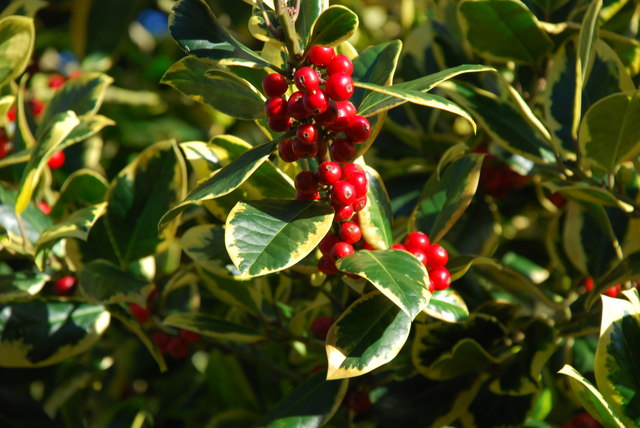
The Scottish stick tradition has a different centre of gravity from either the Irish or the Welsh. Where the Irish stick is a hedgerow-and-household object and the Welsh stick is a sheep-husbandry tool, the Scottish stick is rooted in the Highland sporting-estate culture — the gamekeeping, deer-stalking, hill-walking, and salmon-fishing traditions that grew up around the great Scottish landed estates from the late eighteenth century onward and that, despite radical changes in the surrounding political and economic landscape, are still recognisable in their twenty-first-century descendants.
The wood is predominantly holly, with hazel and ash in supporting roles. The iconic form is the thumb-stick — a long walking stick with a Y-shaped fork at the head. The cultural framing is the gillie, the Highland gamekeeper’s helper whose working kit included a particular kind of stick that has, over two centuries, become the quintessential image of the Scottish countryman.
This is what the tradition consists of in fuller detail than the comparison piece had room for.
The wood
Holly (Ilex aquifolium, Scottish Gaelic cuilionn) is the dominant Scottish stick wood. The reasons are partly cultural — holly was the iconic Highland stick wood from at least the eighteenth century onward — and partly material: holly produces straight, fine-grained, very pale wood that takes a polish well, holds a horn or antler fitted handle securely, and offers the visual contrast that distinguishes a Scottish stick from any other British or Irish equivalent.
Holly is supplemented in the Scottish tradition by:
Hazel (calltainn) — particularly for working sticks where the user’s preference runs to a slightly warmer-coloured wood, and for some show-sticks where the figure of the hazel grain is wanted as a feature.
Ash (uinnseann) — used for longer staves and gillie’s poles where the length and shock-absorption are needed, and where holly is unavailable in suitable lengths.
Blackthorn — occasionally, particularly in Lowland and Borders use, but never the iconic Scottish wood. A Scottish blackthorn stick is unusual; the typical Scottish stick is overwhelmingly holly.
Imported canes — malacca, rattan, and similar — appear in some Edinburgh-and-Glasgow urban walking sticks of the nineteenth and early-twentieth centuries, but these are a separate trade from the upland Scottish stick-making tradition.
The thumb-stick
The thumb-stick is the iconic Scottish stick form. The standard version is:
- 38 to 50 inches long, sized to the user’s hip or lower-rib height
- Holly, predominantly, with the wood debarked to show the pale heartwood
- A natural Y-shaped fork at the head, taken from the live tree’s branching pattern rather than carved separately
- Gripped at the hip, with the user’s thumb settling into the cleft of the Y when the stick is carried
The Y-shape is not carved. A thumb-stick is found, in the field, by selecting a holly stem with a usable Y-junction at the appropriate height; the longer leg of the Y becomes the shaft, the shorter legs are trimmed to leave the cleft. There is comparatively little benchwork involved compared with a carved-handle walking stick.
The show-stick version of the thumb-stick is more highly finished — sometimes with a fitted stag-horn handle in place of (or in addition to) the natural Y, sometimes with carved details on the grip area, often with a higher-gloss finish. The two forms — working and show — have been in continuous parallel production in Scotland for at least 200 years.
The gillie’s pole
A second iconic Scottish form is the gillie’s pole (Scottish Gaelic crann) — a long stick, often 5 to 6 feet, used by Highland gillies and deer-stalkers as both a walking aid and a rifle support. The gillie’s pole is heavier and longer than the thumb-stick; the wood is more often hazel or ash than holly (the longer length favours the more readily-available hazel coppice or the larger ash); and the head is sometimes fitted with a brass or carved-bone crook designed to support the rifle barrel during a long-range shot at deer.
The gillie’s pole is the working tool of a particular sporting context: deer-stalking on a Highland estate. The user carries the pole on the long approach across the hill, uses it for balance on the often-soft Highland terrain, and rests the rifle on the head of the pole when taking a shot from a prone or kneeling position. The pole is, in effect, a multi-function piece of sporting equipment rather than just a walking stick.
The gillie’s pole tradition has declined in volume with the decline of large-scale Highland deer-stalking, but it has not disappeared. Modern Scottish stalking estates still employ gillies; the gillies still carry poles; small Scottish stick-makers still produce them on commission. The tradition is smaller than it was in 1900 but is alive.
The Highland show-stick
The show-stick of the Scottish tradition is the elaborately-carved walking stick associated with the agricultural shows and Highland gatherings of the upland Scottish summer.
A Scottish show-stick is typically:
- A walking-stick-length piece in holly or hazel, carefully selected for grain and figure
- Debarked and finished to a high gloss with multiple coats of oil and beeswax
- Fitted with a stag-horn or ram’s-horn handle, often carved with Scottish motifs (thistle, stag’s-head, crossed swords) or with the user’s clan crest
- Sometimes silver-mounted at the joint between the handle and the shaft
- Engraved with the user’s initials or the date and occasion of presentation
The Scottish show-stick is the traditional gift at retirements, regimental ceremonies, and significant Highland-society occasions. It is closer in register to the swagger stick (see /history/swagger-sticks/) than to the working thumb-stick, and is sometimes carried with dress kilt and Highland dress at formal events as part of the traditional Scottish ceremonial kit.
The Highland sporting-estate context
The Scottish stick tradition is rooted, more directly than either the Irish or Welsh, in a specific economic and social structure: the Highland sporting estate.
From roughly the 1820s onwards, the Highlands underwent a transformation from a mixed agricultural-and-pastoral economy to a sporting-estate economy oriented around deer-stalking, salmon-fishing, and grouse-shooting. The transformation was driven partly by the Highland Clearances (which removed the rural population that had previously occupied the land) and partly by the Victorian fashion for Scottish sporting recreation that Walter Scott’s novels and Queen Victoria’s patronage of Balmoral helped establish.
The sporting estate created a particular labour structure: the laird at the top, the head keeper or stalker as the working professional, the gillies as the working assistants who actually walked the hill with the sporting visitors. Each of these figures carried a stick; the type of stick was specific to the role; and the stick-making craft adapted to supply the demand.
The gillies’ sticks in particular shaped the Scottish tradition. A gillie carrying a pole all day every day for the stalking season needed a stick that worked — light enough not to be a burden, long enough to support the rifle, durable enough to survive the wet Highland terrain. The market for gillie’s poles was steady through the late nineteenth and twentieth centuries; the makers who supplied that market refined the form generation by generation; the resulting tradition is the recognisable Scottish stick tradition of the present day.
The Lowland tradition
Alongside the Highland sporting tradition, Scotland has a Lowland walking-stick tradition that is closer to the English and Borders traditions than to the Highland one.
Lowland Scottish sticks are:
- More often hazel or ash than holly
- Closer in form to English walking sticks than to Scottish thumb-sticks
- Used by hill-walkers, country gentlemen, and rural professionals in a register that overlaps with the broader British walking-stick tradition
- Rarely fitted with elaborate horn handles; more often with simple curved-wood handles
The Lowland tradition has not, the journal observes, attracted the same scholarly or popular attention as the Highland one. It is the quieter half of the Scottish stick world, supplying the everyday walking-stick market across the Borders, the Lothians, Fife, and the western Lowlands. The makers are fewer, the sticks are plainer, the cultural framing is less developed — but the tradition is real and continuous.
The agricultural-show circuit
Like the Welsh tradition, the Scottish tradition has an active agricultural-show circuit that supports the working makers.
The Royal Highland Show, held annually in Edinburgh, is the centrepiece of the Scottish agricultural-show year. Stick-making competitions feature in the craft classes; the sheepdog trials produce parallel demand for handler’s sticks; the stick-makers and the sheepdog handlers and the working shepherds are part of the same broader rural-craft community.
Smaller regional shows — the Royal Northern Agricultural Society Show (Aberdeenshire), the Stranraer Show (Galloway), the Black Isle Show (Easter Ross), and many others — sustain a parallel competitive culture across the country. The pattern is similar to Wales: a continuous calendar of events that gives stick-makers a public platform, a competitive forum, and an annual rhythm.
The British Stickmakers Guild is a UK-wide organisation but has substantial Scottish membership; the regional Scottish stick-making activity is largely organised through the Guild’s structure rather than through a separate Scottish-only organisation [VERIFY current organisational arrangements].
The Scottish-Gaelic craft-vocabulary
Scottish Gaelic has a stick-making vocabulary parallel to (but distinct from) Welsh and Irish:
- Bata — stick (general; same word as Irish)
- Crann — pole, often a longer staff
- Maide — stick, club (in older usage)
- Bata-coiseachd — walking stick
- Cabar — caber (a different tradition; the Highland-Games heavy pole)
- Cuilionn — holly
- Calltainn — hazel
- Uinnseann — ash
The vocabulary is less developed than the Welsh equivalent — there are fewer distinct words for stick-types in everyday Scottish Gaelic — but the words that exist are clearly derived from a working-craft tradition rather than from purely literary sources.
How to recognise a Scottish stick
The diagnostic features of a Scottish stick:
- Wood: predominantly holly (pale to white), distinguishable from any other British or Irish stick wood by colour. (See /woods/holly/ for the wood reference.) Hazel is the secondary wood, often visible by its slightly warmer light-tan colour.
- Form: most often a thumb-stick (with Y-fork at the head) or a gillie’s pole (long, sometimes with a fitted horn crook).
- Decoration: more often fitted horn or antler handles than carved-wood handles; sometimes Scottish-motif carving; sometimes silver mountings.
- Length: thumb-sticks are typically 38 to 48 inches, longer than equivalent Irish or Welsh walking sticks; gillie’s poles are 5 to 6 feet, longer than any equivalent in the other traditions.
- Surface: holly’s pale heartwood and the absence of thorn-stubs gives a Scottish stick a smoother, more uniform appearance than an Irish blackthorn stick.
A Scottish stick will rarely be confused with an Irish or Welsh equivalent. The combination of wood, form, and decoration produces a recognisably Scottish object.
Notable centres and makers
Scottish stick-making is concentrated in several specific regions:
The Borders — particularly around Hawick and Kelso — has a hill-walking and shepherding tradition that supports several working makers, with a stylistic register closer to the English Lake District tradition than to the Highland one.
The Highlands — Inverness-shire, Ross and Cromarty, Sutherland — is the historic centre of holly stick-making and the gillie’s-pole tradition. Several small workshops continue to operate, primarily on commission for working estates and for sporting-collector customers.
Galloway and the south-west — has a distinct sub-tradition with more emphasis on hazel and ash, and stronger overlap with the Cumbrian and northern English traditions across the border.
Fife and the central Lowlands — produces walking sticks closer to the Lowland-English register, often with carved wooden handles rather than horn fittings.
Specific makers vary over time as workshops open and close. The British Stickmakers Guild’s Scottish member list is the most reliable contemporary source.
Why the Scottish tradition matters
For a reader interested in the broader British and Irish stick world, the Scottish tradition is worth understanding because it is the most socially-embedded of the three.
The Irish tradition has the most romantic global cultural footprint, particularly through the diaspora; the Welsh tradition has the most continuous working scale through the agricultural-show circuit. The Scottish tradition has the most specific connection to a specific economic and social structure — the Highland sporting estate — and the form of the iconic Scottish stick (the thumb-stick, the gillie’s pole) is a direct result of that structure.
A reader who has carried a holly thumb-stick, even briefly, in the Scottish hills understands something about the sporting-estate context that no amount of reading would convey. The stick fits the user’s stride, leans into the slope, sits at the hip when the user is glassing for deer. The form is doing a job, and the job is one that is still being done — quieter, smaller in scale, but continuously — in 2026.
This is the Scottish-tradition counterpart to The Welsh stick tradition and the comparison piece Irish vs Scottish vs Welsh sticks. The wood-side is in /woods/holly/ and /woods/hazel/.
Sources & further reading
- British Stickmakers Guild, British Stickmakers Guild
- Royal Highland Show, Royal Highland and Agricultural Society of Scotland
- Theo Fossel, The Stickmaker's Handbook, WorldCat
- Andrew Jones, The Sticks Book, WorldCat
- Highland sporting-estate history (overview), National Trust for Scotland
Related reading
- historyThe Welsh stick tradition
Ash, the shepherd's crook, the sheepdog handler's stick, and the agricultural-show culture that has kept the Welsh stick-making alive at a working scale.
- comparisonsIrish vs Scottish vs Welsh sticks
Three closely-related stick traditions that share a wood-sense and a craft-rhythm but produce visibly different objects. Here is how to recognise each.
- woodsHolly
The pale-wooded thumb-stick tree of Scotland and Wales — and the harder-than-oak hedgerow shrub that sometimes turns up in Irish work too.
- woodsIs Hazel a Hardwood?
The coppice wood par excellence — light, springy, abundant, and with the longest unbroken folk-tradition of any British or Irish tree.