Swagger Stick: History & 3 Uses
The short military stick that was, for a century, the universal symbol of an officer in dress uniform — and is, today, almost extinct outside ceremonial use.
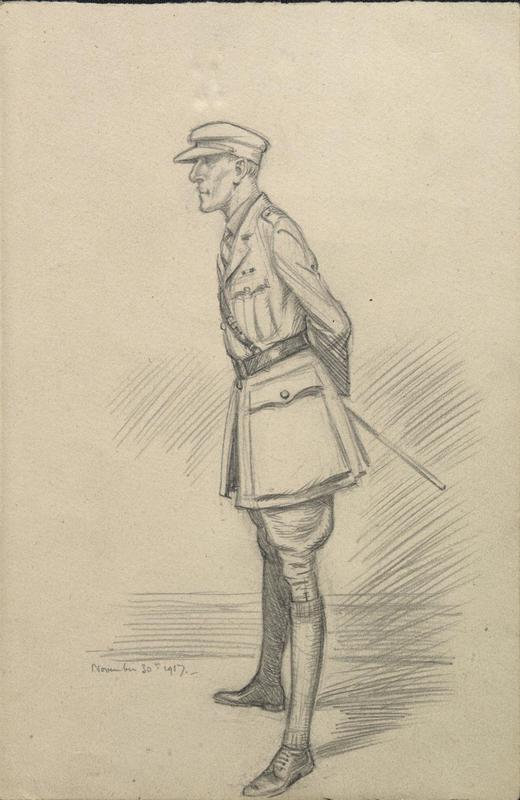
A swagger stick is a short, straight, slender stick — typically twenty to twenty-six inches long — carried by military officers as a symbol of authority rather than as a walking aid. It is held under the left arm, parallel to the body, with the head clear of the elbow; or, in the looser sense of the term, gripped low and tapped lightly against the leg. It is not a shillelagh (it has no knob and no fighting role), and it is not really a walking stick (it is too short and too light to lean on). It is its own object, with its own history.
From the 1850s British Army dress regulations that first specified it through to 1939, it was, across the British and a great many other militaries, the universal accessory of the officer in dress uniform. After 1945 it has retreated almost entirely into ceremonial use, surviving today mainly in three settings — regimental parade, a handful of school and university cadet traditions, and collector and re-enactor culture. This is the short version of how it got there.
What a swagger stick actually is
A swagger stick has three reliable features.
It is short — usually around the length of the user’s forearm, between sixteen and twenty-six inches depending on regiment, era, and personal preference. It is straight — a perfectly straight shaft of seasoned hardwood, with no curve and no taper to speak of. And it has a fitted head, often metal, sometimes pewter or silver-plate, sometimes engraved with regimental crests. The foot may or may not have a small ferrule. There is no wrist strap; the swagger stick is held in the hand or carried under the arm, and it is small enough that loss is the user’s problem rather than the stick’s.
The wood varies by regiment and tradition. Malacca cane (the dried internodes of a Calamus rotang palm) was the universal nineteenth-century material, lighter and slightly more flexible than European hardwoods. Rattan, bamboo, and various light tropical hardwoods were also used. European-grown ash, hickory, and occasionally oak appear in pieces made closer to home, particularly in regiments that did not prefer the imported canes.
A swagger stick is recognisably not a walking stick at first sight. It is too short to take weight from a standing user; it is too light to support a step; it has the wrong proportions for the purpose. The visual register is “officer’s accessory”, not “walking aid”. This is the point.
Origins: the 17th-century officer’s stick
The early genealogy of the swagger stick runs through several adjacent objects, all of them shorter than a walking stick and all of them carried as marks of military or quasi-military authority.
The first is the officer’s pace-stick of the seventeenth and eighteenth centuries — a wooden stick, often forked at the bottom, used to measure regulation marching distances on the parade ground. The pace-stick survives, in ceremonial form, in modern drill regulations. The second is the horseman’s whip, carried by mounted officers as a tool and a symbol; the whip’s short straight shaft is the closest precedent for the swagger stick’s form. The third is the rattan cane, brought back to Europe from Indian and South-East Asian colonies in the seventeenth and eighteenth centuries, and adopted by officers of European militaries as a stylish dress accessory.
By the late eighteenth century all three forms — pace-stick, whip-handle, decorative cane — had been functionally combined in the British officer’s kit into something close to the modern swagger stick: a short, straight, hardwood (or rattan) stick, carried as a mark of rank, with no specific functional purpose beyond signalling that the user was someone who could carry it.
The Victorian apex
The nineteenth century is when the swagger stick became universal in the British officer corps and was widely imitated elsewhere.
By the 1850s, British Army dress regulations specified the swagger stick as a standard item of officer’s kit, not least because it gave officers something to do with their hands while standing at ease. The stick was carried at all times when in uniform and out of doors; it was held in the left hand or under the left arm, leaving the right hand free to salute. The choice of stick — wood, length, fittings, regimental engraving — was largely up to the officer, within the loose conventions of the regiment.
The accessory spread. By the 1880s, drill instructors of all ranks carried smaller versions of the swagger stick to use as a teaching tool — pointing at recruits, indicating drill movements, occasionally tapping a slow learner. Schoolmasters in British public schools adopted similar sticks for similar uses, an adoption that is the origin of the colloquial “schoolmaster’s cane” image. The Indian Army and the various imperial military forces adopted the swagger stick as part of the standard officer’s kit, sometimes in regional materials (Malacca in the Far East, bamboo in some Indian regiments).
By 1914, when the First World War began, the swagger stick was the single most reliable visual indicator that a man in a British uniform held a commission. Soldiers carried rifles. Officers carried swagger sticks.
The First World War and the long decline
The First World War broke the swagger stick’s universal status, slowly. The stick was carried into the trenches by junior officers in 1914 and 1915 — there are many photographs of this — but it was, in working terms, useless against the conditions. Officers learned to leave it in their billets and pick it up only in rear-area moments. By 1918 the stick had become explicitly a rear-echelon accessory, no longer carried at the front.
Between the wars, the swagger stick recovered some of its dress-uniform status but lost ground in the field. By 1939 the picture was patchwork: some regiments still required it on parade, some treated it as optional, some had abandoned it altogether. The Second World War accelerated the move away. Officers in combat zones carried sidearms or fighting knives rather than swagger sticks; the stick survived in barracks, mess halls, and dress occasions.
The single most famous swagger-stick-carrying officer of the twentieth century is General George S. Patton Jr of the United States Army, who carried a custom swagger stick — sometimes described as containing a concealed blade [VERIFY] — as part of his idiosyncratic personal kit through the North African and European campaigns. Field Marshal Bernard Montgomery carried one of a more conventional kind, also visible in many wartime photographs [VERIFY]. By the 1950s, however, the swagger stick had become so closely associated with these specific high-profile officers that carrying one in active service was sometimes read as an affectation rather than a regulation.
The British Army quietly stopped requiring swagger sticks across most regiments in the 1960s and 1970s. By 1990, regular field officers in most NATO armies did not carry one. The accessory had not been abolished — it remained available in dress regulations — but the working culture had moved past it.
Modern ceremonial use
The swagger stick survives in 2026 in three specific contexts.
The first is regimental ceremonial use in the British Army and several Commonwealth militaries. Drum majors of military bands carry a heavier ceremonial mace that is descended in part from the swagger stick. Senior NCOs of certain regiments still carry pace-sticks on parade. Officers of certain Guards regiments still carry swagger sticks in dress uniform on specified ceremonial occasions [VERIFY against current dress regulations].
The second is school and university institutional use, particularly in older schools with a Combined Cadet Force or military-history association. The schoolmaster’s cane, once the symbol of disciplinary authority in British education, has been almost entirely retired from active use, but its swagger-stick descendants survive in a few traditional institutions [VERIFY current usage].
The third is collector and re-enactor culture. A real Victorian or Edwardian swagger stick is a recognisable antique, often with regimental engraving, and the secondary market in named-officer pieces is small but active. Modern reproductions are made in small numbers by traditional stick-makers, including some Irish and British workshops, for clients connected to military regiments or with personal historical interest.
The relationship to walking-stick craft
A swagger stick is, from a stick-maker’s perspective, technically simpler than a full walking stick. The shaft is shorter, the wood is more often imported (rattan, malacca, or another light cane), the head is fitted rather than carved, and the seasoning requirements are less demanding because the stick is not load-bearing.
But the fitted head — particularly when in chased silver, engraved pewter, or regimental silver-plate — requires metalwork as well as woodwork, and a regimental swagger stick made to specification is a multi-discipline piece. The Irish stick-making workshops that produce occasional swagger sticks tend to do so on commission rather than as stock items, and the result is closer to a piece of jewelled furniture than to the everyday hedgerow walking stick.
The functional distinction is also worth noting plainly. A real handmade Irish walking stick is a tool that has carried someone for fifty years and may still have fifty more in it. A swagger stick is, even at its best, an object of dress — a piece of historical theatre kept alive in regimental ceremony — not an object that gets used. Both are interesting; they are not the same kind of object.
How to recognise one
If a stick is short (less than 28 inches), straight, light, with a fitted metal head and no wrist strap, it is almost certainly a swagger stick. If it has regimental engraving, it is a swagger stick.
If a stick of similar length has a heavy knob, a leather strap, and a sense of weight, it is a shillelagh, regardless of whether anyone has labelled it as such. The two objects are easy to tell apart once one knows what to look for. (For the related disambiguation among Irish stick terms, see Shillelagh vs walking stick vs blackthorn stick.)
The swagger stick is, in 2026, more a museum object than a working one — but a small number of stick-makers continue to produce them on commission, and the secondary market in named-regiment pieces is one of the more durable collector niches in British military memorabilia.
Sources & further reading
- swagger-stick, n., Oxford English Dictionary
- Imperial War Museum — collection on First World War officer's equipment, Imperial War Museum
- Patton's pearl-handled pistols and other personal effects, George S. Patton Jr Memorial Museum
- British Army Dress Regulations 1900, National Army Museum
Related reading
- guidesShillelagh: Meaning, History & How to Spot a Real One
An Irish blackthorn club, a contested word, and a heritage object that has outlived its job description.
- comparisonsShillelagh vs walking stick vs blackthorn stick
Three terms that are used interchangeably in tourist shops but mean different things in the workshop. Here's what each one actually refers to.
- guidesA short history of the Irish walking stick
Three centuries of an everyday object — from faction-fight weapon to emigrant gift to the heritage piece a small handful of makers still cut by hand.
- historyFamous shillelagh owners in history
Most of the famous-shillelagh-owner stories are gift stories: heads of state, military officers, and dignitaries given a stick on a state visit. The personal-ownership angle is largely myth.