Irish vs Scottish vs Welsh sticks
Three closely-related stick traditions that share a wood-sense and a craft-rhythm but produce visibly different objects. Here is how to recognise each.

The British and Irish stick tradition is, in practice, three closely-related traditions that share a common wood-sense and a common craft-rhythm — winter cutting, slow seasoning, hand-shaping, hardware fittings — but produce visibly different objects out of those shared materials. The differences are not arbitrary; they reflect the working uses each region put the stick to, and they remain distinctive enough that an experienced eye can usually tell, from the form alone, which tradition a stick comes from.
This is the side-by-side, oriented around the working forms each region most strongly produced.
The Irish tradition: blackthorn and oak, shillelagh and stick
The Irish stick tradition is the most familiar internationally, largely because of the diaspora. The two characteristic Irish forms are:
The shillelagh — short (16–22 inches), heavy in the head, with a natural root burl as a knob and a leather wrist strap, traditionally used as both a walking aid and a fighting club. Blackthorn is the iconic wood. (See What is a shillelagh?.)
The Irish walking stick — longer (32–43 inches), balanced for use on flat ground or gentle hills, with a fitted or natural-curved handle and (often) a leather strap. Blackthorn for shorter pieces; oak for longer ones, particularly in the older Wicklow tradition. (See the history pillar.)
The visible signatures of an Irish piece are:
- Dark wood. Blackthorn is near-black when polished; oak is mid-toned with a honey patina. Pale-wooded sticks (holly, ash) are not the iconic Irish forms.
- Trimmed thorn-stubs on the shaft. The blackthorn signature — small raised marks at irregular intervals along the trunk where live thorns once grew. No other British or Irish stick wood has this surface character.
- Natural root knob, especially on shillelaghs. The bulb at the base of the live shrub becomes the head of the stick; grain runs continuously through the head and into the shaft.
- Leather wrist strap through a hole drilled below the head. The strap is functional (retention during a swing on a shillelagh, hands-free carrying on a walking stick).
The Irish tradition is, at its core, a hedgerow tradition. The wood comes from blackthorn and oak growing in the field-margins and surviving woods of the Irish countryside; the seasoning happens in farmyard sheds and kitchen chimneys; the craft is small-scale and family-based. The connection to the agricultural landscape is direct.
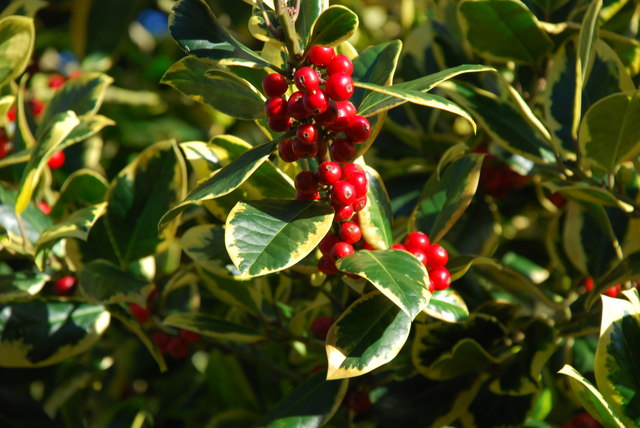
The Scottish tradition: holly, hazel, and the gillie’s pole
The Scottish stick tradition diverges from the Irish at several points. The wood preferences differ — holly and hazel rather than blackthorn dominate; the forms differ — the iconic Scottish piece is the thumb-stick rather than the shillelagh; and the working context differs — Scottish sticks come more from the upland sporting tradition than from the rural household.
The characteristic Scottish forms are:
The thumb-stick — a long walking stick (38–50 inches) with a Y-shaped fork at the top, into which the user’s thumb settles when the stick is held at the hip. Most often holly, sometimes hazel or rowan. The Y-fork is taken from the natural growth of the tree rather than carved separately.
The gillie’s stick (or stalker’s pole) — a long, often very long (5–6 feet) stick used by Highland gamekeepers and deer-stalkers as both a walking aid and a rifle support. Often hazel or holly, sometimes with a stag-horn or carved-bone crook handle.
The show-stick — a finely-finished walking stick, often holly with a horn handle, used by Highland gillies, sportsmen, and country gentlemen at agricultural shows and similar formal occasions. This is the most highly-finished form of the British stick tradition, often with extensive carving on the handle.
The visible signatures of a Scottish piece are:
- Pale wood. Holly and hazel are both substantially lighter than blackthorn or oak; a Scottish stick photographed against a dark background reads as cream or biscuit, not black.
- The Y-shaped thumb-fork at the head, taken from the natural growth.
- Smooth, even shafts without thorn-stubs. Holly and hazel grow without significant thorns, so the surface character of the finished stick is uniform.
- More elaborate fitted handles in horn, antler, or bone, particularly on show-sticks.
- Longer overall length. The Scottish thumb-stick at 42 inches is towards the upper end of Irish walking-stick range; the gillie’s pole at five feet is well beyond it.
The Scottish tradition is, in cultural register, a sporting tradition — its centre of gravity is in deer-stalking, hill-walking, fishing, and the agricultural shows associated with rural sport. This is not the only Scottish stick — domestic walking sticks for the Scottish countryside more generally exist — but it is the form most strongly associated with the regional tradition.
The Welsh tradition: ash and the sheepdog handler’s stick
The Welsh stick tradition is the most specialised of the three and the most centrally linked to a single working activity: sheep husbandry and the related craft of the sheepdog trial.
The characteristic Welsh forms are:
The shepherd’s crook — a long stick (4–5 feet) with a curved hook at the top, designed to catch a sheep around the neck or hind leg. Most often ash, with the natural curve heat-bent into the head; sometimes hazel or holly for the smaller-scale pieces.
The sheepdog handler’s stick — a shorter, lighter stick (around walking-stick length) used by handlers at sheepdog trials as both a working tool and a piece of personal equipment. The form is similar to a thumb-stick or a hooked walking stick; the wood is often ash, with a horn or wooden handle.
The show-stick, in the Welsh tradition specifically, is a highly-finished piece often carved at the handle with the handler’s identifying mark or with traditional Welsh symbols. The Welsh sheepdog show-stick tradition has its own competitive culture at agricultural shows across Wales [VERIFY current state of competition shows].
The visible signatures of a Welsh piece are:
- Ash predominantly. Pale, springy, ring-porous, very different in feel from the harder Irish woods. (See the ash discussion in Holly vs blackthorn vs oak vs ash.)
- Heat-bent curves — the crook at the top, sometimes deliberate slight curves in the shaft, where the maker has used heat and rope-binding to set the shape.
- Working hardware — on a true working sheepdog stick, the head is shaped for catching rather than for grip, and the foot is often heavily reinforced for use on stony Welsh hillsides.
- Carved handles in the show-stick register, often with Welsh-language inscriptions or with the handler’s initials.
The Welsh tradition is, like the Scottish, a working tradition rather than a household one, but the working context is specifically agricultural. It is also the tradition most embedded in a continuous competitive culture: the sheepdog trial circuit and the agricultural show circuit have kept Welsh stick-making in active use, with active makers, with continuous innovation, in a way that the Irish and Scottish traditions have managed less consistently.
Cross-influences and overlap
The three traditions are not isolated. Wood, craft, and forms have moved among them throughout the recorded history of the work.
Holly is the iconic Scottish wood and a recognised but secondary Irish wood; thumb-sticks are predominantly Scottish but exist in the Irish tradition as well, particularly in the north-west.
Blackthorn is iconically Irish, but Scottish and Welsh hedgerow makers have used it where it grows; a blackthorn thumb-stick is rare but not unknown.
Ash is the working Welsh wood, but it is a major Irish stick wood as well (particularly for the longer staves and the camán, the Irish hurling stick), and has been used in the Scottish tradition for the longer gillie’s poles.
Oak is iconically associated with the Irish Wicklow tradition through the place-name etymology of shillelagh, but is a perfectly common stick wood across all three traditions where larger trees were available.
Heat-bending is most strongly associated with Welsh crook-making, but the technique is used in the Irish straightening of seasoned blackthorn shafts and in the Scottish shaping of show-stick handles. The transmission appears to have been multi-directional and slow.
None of the three should be confused with the swagger stick — the short, straight officer’s dress-stick found across British and other militaries, which is not a regional rural tradition at all but a rank marker, and is neither Irish, Scottish, nor Welsh in origin.
The boundaries between the traditions are, in practice, fuzzy at the edges and clear at the centre. A piece that combines blackthorn with a Y-shaped thumb-fork is unusual but not impossible; a Welsh-trained maker using Irish blackthorn for a non-crook walking stick is unusual but happens. The diagnostic signatures above are reliable for typical pieces; they are not reliable for boundary cases.
At a glance
| Irish | Scottish | Welsh | |
|---|---|---|---|
| Iconic wood | Blackthorn (oak for longer) | Holly (hazel for some forms) | Ash |
| Iconic short form | Shillelagh — knobbed club | Thumb-stick (long) | Sheepdog handler’s stick |
| Iconic long form | Oak walking stick | Gillie’s pole / stalker’s stick | Shepherd’s crook |
| Wood colour | Near-black; honey-brown | Pale cream; light brown | Pale cream to light brown |
| Working context | Rural household, faction-fights, walking | Sporting, hill-walking, deer-stalking | Sheep husbandry, trial circuit, agricultural shows |
| Distinguishing surface | Trimmed thorn-stubs (blackthorn) | Smooth even shaft, Y-fork at head | Heat-bent curves, working ferrule |
| Iconic head | Natural root burl | Y-fork or carved horn | Heat-bent crook or carved horn |
| Strap | Leather wrist strap below head | Optional, often at handle | Working strap or none |
How to recognise each
The fastest tests, in roughly the order an experienced eye applies them:
1. Wood colour first. Dark = Irish (blackthorn) or possibly Welsh ash if quite pale-brown. Pale white-cream = Scottish (holly). Pale brown with strong figure = Welsh (ash) or possibly Irish ash.
2. Surface character. Trimmed thorn-stubs visible at irregular intervals = Irish blackthorn, full stop. Smooth even surface = Scottish or Welsh, depending on wood. Heat-bent curves = Welsh.
3. Head form. Heavy natural root knob = Irish shillelagh. Y-shaped natural fork = Scottish thumb-stick. Curved hook for catching sheep = Welsh shepherd’s crook. Carved horn handle = Scottish or Welsh show-stick.
4. Length. Short (under 24 inches) with a heavy knob = Irish shillelagh. Long (over 50 inches) and slender = Scottish gillie’s pole or Welsh crook. Medium with thumb-fork = Scottish thumb-stick.
5. Working context. A stick that has clearly been used for something specific — sheepdog work, hill-walking, faction-fighting wear — gives the tradition away by the wear pattern as much as by the form. A new stick is harder to place; a fifty-year-old stick usually places itself.
The tests above will get an experienced eye to the right tradition in 95 % of cases. The remaining 5 % are pieces that combine elements of more than one tradition (a maker who studied under masters in two regions, a piece commissioned by someone with an unusual specification) and are correctly described as “in the X tradition with Y influence” rather than as pure examples of any one of the three.
Why the three matter as a group
The British and Irish stick traditions are, taken together, one of the longer-surviving regional craft cultures in northern Europe. The wood is the same wood that grew in the same hedgerows and forests three hundred years ago. The methods are the same methods. The objects produced are recognisably the same objects.
What is striking about the three traditions read against each other is how cleanly they map onto the rural working contexts they emerged from: the Irish hedgerow household with its blackthorn, the Scottish sporting estate with its holly, the Welsh sheep farm with its ash. The objects are not arbitrary; they are precisely the sticks that those specific working contexts produced and rewarded.
A reader interested in just one of the three is often interested in the others as well, and the cross-tradition comparison tends to deepen the appreciation of any of them. They are different forms of the same underlying skill, in different woods, for different jobs, by people who in some cases lived a long day’s walk apart and had been making sticks for the same kind of years.
The wood side is in Holly vs blackthorn vs oak vs ash; the form side is in Shillelagh vs walking stick vs blackthorn stick. Corrections particularly on the Welsh tradition — which has fewer published English-language sources than the Irish and Scottish — are welcome.
Sources & further reading
- British Stickmakers Guild, British Stickmakers Guild
- Theo Fossel, The Stickmaker's Handbook, WorldCat
- Andrew Jones, The Sticks Book, WorldCat
- International Sheep Dog Society — show-stick traditions, International Sheep Dog Society
- Niall Mac Coitir, Irish Trees: Myths, Legends & Folklore (2003), Collins Press
Related reading
- guidesShillelagh: Meaning, History & How to Spot a Real One
An Irish blackthorn club, a contested word, and a heritage object that has outlived its job description.
- comparisonsHolly vs blackthorn vs oak vs ash
Four traditional stick woods, side by side: how they look, how they behave under the hand, and which one belongs in which kind of stick.
- comparisonsShillelagh vs walking stick vs blackthorn stick
Three terms that are used interchangeably in tourist shops but mean different things in the workshop. Here's what each one actually refers to.
- woodsBlackthorn Tree Wood: Curing
The hedgerow tree behind most Irish sticks: dense, dark, slow-growing, and beloved of hedge-witches.