The Welsh stick tradition
Ash, the shepherd's crook, the sheepdog handler's stick, and the agricultural-show culture that has kept the Welsh stick-making alive at a working scale.
The Welsh stick tradition is the most working-grounded of the three closely-related British and Irish stick-making cultures. Where the Irish tradition has its centre of gravity in the rural household and the Scottish tradition in the sporting estate, the Welsh tradition is rooted in sheep husbandry — and specifically in the working tools of the upland Welsh shepherd, the agricultural shows that test those tools competitively, and the small-batch makers who produce the shepherd’s crooks and handler’s sticks that the rest of the British and Irish stick world quietly imitates.
The wood is predominantly ash. The iconic form is the shepherd’s crook — long, with a curved hook at the head, made for catching sheep around the neck or hind leg. The cultural framing is the agricultural show, where stick-making competition, sheepdog trial scoring, and the broader rural-craft circuit converge into something that reads, even to outsiders, as a continuous folk tradition rather than a heritage reconstruction.
This is what the tradition consists of, in fuller detail than the comparison piece had room for.
The wood
Ash (Fraxinus excelsior, Welsh onnen) is the dominant Welsh stick wood. The reasons are practical: ash grows in long, straight, knot-free pieces; it is light enough for an all-day working tool; it absorbs impact without breaking; and it heat-bends cleanly into the curved hook of a shepherd’s crook in a way that no other British and Irish wood manages so reliably.
Ash is supplemented in the Welsh tradition by:
Hazel (coll, Welsh collen) — for lighter working sticks and for some show-sticks where a finer grain is wanted. Hazel coppice has been actively managed in Wales for at least three thousand years, and the wood is reliably available in long straight pieces from coppice cycles of 7–15 years.
Holly (celyn) — particularly for the higher-end show-sticks where the pale wood works as a contrast or as a base for elaborate horn handles. Less common as a working stick wood than in the Scottish tradition, but present.
Blackthorn — used occasionally where it grows, particularly in eastern Wales near the English border, but never the iconic Welsh stick wood. A Welsh blackthorn stick is unusual; the traditional Welsh stick is overwhelmingly ash.
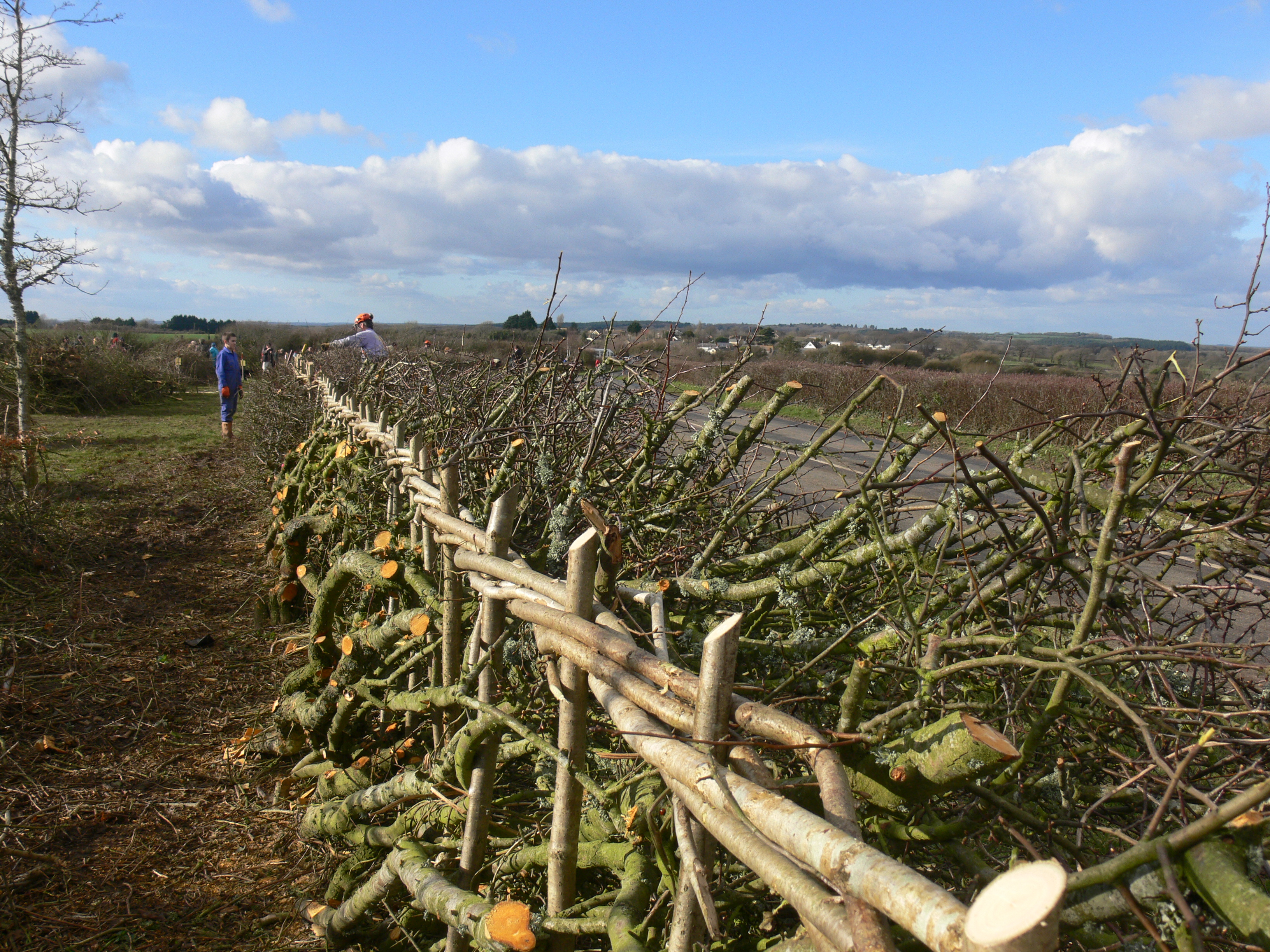
The Welsh use of these woods has been continuous from at least the eighteenth century, with strong continuity from the older medieval tradition of Welsh hedgerow management.
The shepherd’s crook
The shepherd’s crook (Welsh bagl, sometimes ffon fugail) is the iconic Welsh stick form. The working version is:
- 4 to 5 feet long, sized to the user’s chest or shoulder height
- Ash shaft, predominantly, with the wood selected for straightness and minimal knots
- Curved hook at the head, formed by heat-bending the natural growth of the tree, set permanently during seasoning
- Functional shape — the hook is sized to catch a sheep around the neck (the larger hook) or the hind leg (the smaller “leg-cleek” hook)
- Often a metal-tipped foot for use on stony Welsh hillsides
The working crook is used rather than displayed. A Welsh hill shepherd may carry the same crook for forty years, repairing it as needed, replacing the ferrule periodically, fitting a new hook if the original is damaged. The crook is part of the working kit alongside the dog and the boots; it is not a decorative object.
The show-stick version of the crook is finer, more elaborately carved, with a fitted handle in horn (often ram’s horn) or in carved wood, and is made for competitive display at agricultural shows rather than active sheep-work. The two forms — working and show — have been in continuous parallel production in Wales for at least two centuries.
The sheepdog handler’s stick
A second iconic Welsh form is the sheepdog handler’s stick — shorter than the crook, around walking-stick length, with either a thumb-fork at the head or a fitted horn handle. The handler’s stick is used during sheepdog trials as both a working signal-tool (gestures with the stick are part of the handler’s communication with the dog) and as a piece of personal equipment.
The handler’s stick is more often shown than the crook, in the sense that the sheepdog trial circuit features handlers on a public field with the stick visibly in hand. As a result, the handler’s stick has become a more elaborately-decorated form than the working crook, with the better pieces featuring carved Welsh motifs, the handler’s initials, sometimes Welsh-language inscriptions on the horn handle.
The International Sheep Dog Society runs the major UK-and-Ireland trial circuit; the Royal Welsh Show (held annually at Builth Wells) is the centrepiece of the Welsh agricultural-show year, with stick-making competitions, sheepdog trials, and craft demonstrations all clustered in the same week. The cumulative effect is that Welsh stick-making remains visible to working participants and visible to the public in a way that the parallel Irish and Scottish traditions have not always managed.
The agricultural-show culture
The single most distinctive thing about the Welsh stick tradition is the competitive show culture that has grown up around it.
A Welsh agricultural show — at the Royal Welsh, the regional county shows, or the smaller local events — typically features a stick-making competition with categories for:
- Working crook (judged on practical fitness for shepherding use)
- Show stick (judged on craftsmanship and aesthetic detail)
- Carved handle (a separate category for the most elaborately-worked horn or wood handles)
- Novice stick (open to first-time competitors)
- Junior stick (made by makers under a specified age)
The competitions are judged by panels of working makers drawn from the regional craft community, and the winning sticks at the major shows acquire significant prestige within the small world of British and Irish stick-making. A maker whose stick has won at the Royal Welsh has a real piece of professional standing, which is reflected in their order book and in their pricing.
The show culture is continuously self-renewing. Each year produces new winners; new makers enter the novice categories; the standards evolve slightly; the competitions sustain a working community that knows each other personally and competes in a friendly but real way. This is the kind of structure that keeps a craft tradition alive at scale where less-organised parallel traditions have had to be revived from near-extinction.
The Welsh-language craft-vocabulary
Welsh has a developed vocabulary for stick-making that gives outsiders a sense of the depth of the tradition. Some terms:
- Ffon — stick (general)
- Bagl — crook
- Pastwn — cudgel, club
- Ffon fugail — shepherd’s stick / crook
- Cyrn — horn (the material for fitted handles)
- Llwyfen — elm (occasional stick wood)
- Onnen — ash
- Collen — hazel
- Celyn — holly
The presence of distinct words for stick-types in the working language reflects the depth of the tradition. A Welsh-speaking shepherd has at least four distinct stick-words available for the kinds of stick they might be carrying; the Irish and Scottish equivalents are less developed, with the iconic forms generally going by the same general word (bata in Irish covers most of the relevant ground).
Notable makers and centres
Welsh stick-making is concentrated in several specific regions:
Mid-Wales — Powys, Ceredigion, and the surrounding upland country — is the historic centre of crook-making, with several small workshops in the Builth Wells / Llanwrtyd Wells / Tregaron area. The proximity to the Royal Welsh Show site reinforces the regional concentration.
North-east Wales — the Welsh Marches and the Vale of Clwyd — has a different tradition, with more emphasis on hedge-laying-related stick work and a lighter use of horn handles than mid-Wales.
West Wales — Pembrokeshire and the surrounding country — has a coastal-livestock variation on the tradition, with sticks adapted for the mixed terrain of the cliffs and the inland farmland.
Specific named makers vary over time as workshops open and close. The Welsh Stickmakers Guild (a regional affiliate of the British Stickmakers Guild) maintains a current member list [VERIFY current organisational structure]; agricultural-show competition records provide a reliable secondary trail through the recent history.
How to recognise a Welsh stick
The diagnostic features of a Welsh stick, particularly distinguishing it from Scottish and Irish equivalents:
- Wood: predominantly ash, distinguishable by the open ring-porous figure and the pale to light-brown colour. (See /woods/ash/ for the wood reference.)
- Form: most often a crook (long, with a curved hook at the head) or a handler’s stick (shorter, with a thumb-fork or carved handle).
- Decoration: often carved with Welsh motifs (dragons, daffodils, the Prince-of-Wales feathers in some traditional pieces), sometimes with Welsh-language inscriptions.
- Fitting: the head is often horn rather than carved wood — ram’s horn for the higher-end pieces, sometimes deer horn or sheep horn for the working ones.
- Heat-bending: visible in the natural curve of the head; the bend is typically set permanently during seasoning rather than mechanical.
A stick from Wales will not, in most cases, look like a stick from Ireland or Scotland. The combination of wood, form, decoration, and finishing produces a recognisably Welsh object, and an experienced eye can usually identify the tradition from the form alone.
The contemporary scale
The Welsh stick tradition is active in a way the parallel Irish and Scottish traditions are not always.
Numbers: the British Stickmakers Guild and the Welsh regional affiliates have, between them, several hundred working-or-hobbyist stick-makers in the UK [VERIFY current figures], a substantial fraction of whom are Welsh. The Welsh share of working makers is disproportionate to the country’s population.
Output: a Welsh working stick-maker typically produces 20–60 finished pieces a year, depending on whether the operation is full-time or part-time. Cumulative annual output across the Welsh tradition is in the low thousands of finished pieces — a small craft sector, but a continuously productive one.
Customer base: working shepherds and sheepdog handlers (who buy directly from makers); show-circuit participants (who commission pieces for competition); collectors of fine British craft; international buyers (particularly American and Australian customers with Welsh family connections).
Pricing: working crooks run £100–£300 depending on size and maker; show-quality pieces with horn handles £200–£600; high-end carved presentation pieces £400–£1,500+. The pricing is broadly comparable to Irish handmade sticks at equivalent specifications.
Why the Welsh tradition matters
For a publication mostly oriented toward the Irish and Scottish stick traditions, the Welsh tradition is worth understanding because it is, in some respects, the most continuously alive of the three.
The Irish tradition was disrupted by the Famine, the diaspora, and the post-Independence restructuring; it has been preserved in small-batch workshops but has not had the institutional support of the Welsh tradition. The Scottish tradition was tied to the sporting-estate culture of the Highlands and survives partly through that channel and partly through Lowland hill-walking traditions. The Welsh tradition, anchored in active sheep-farming and the agricultural-show circuit, has been continuously self-renewing in a way the others have struggled to match.
A reader interested in the British and Irish stick tradition as a whole — rather than just the Irish element of it — should know about Welsh crook-making, agricultural-show culture, and the working integration of stick, sheep, and hill that the Welsh tradition embodies. The wood is the same wood, the craft is recognisably the same craft, and the differences from the Irish parallel are themselves illuminating.
This is the Welsh-tradition counterpart to The Scottish stick tradition and the comparison piece Irish vs Scottish vs Welsh sticks. The wood-side is in /woods/ash/ and /woods/hazel/.
Sources & further reading
- International Sheep Dog Society, International Sheep Dog Society
- Royal Welsh Agricultural Society, Royal Welsh Agricultural Society
- British Stickmakers Guild, British Stickmakers Guild
- Theo Fossel, The Stickmaker's Handbook, WorldCat
- Andrew Jones, The Sticks Book, WorldCat
Related reading
- historyThe Scottish stick tradition
Holly, the gillie's pole, the deer-stalker's stick, and the Highland sporting-estate culture that produced one of the more distinctive walking-stick forms in northern Europe.
- comparisonsIrish vs Scottish vs Welsh sticks
Three closely-related stick traditions that share a wood-sense and a craft-rhythm but produce visibly different objects. Here is how to recognise each.
- woodsAsh
The springy, impact-resistant wood of staves, tool handles, and the Irish hurling stick — and the species now in the middle of a Europe-wide health crisis.
- woodsIs Hazel a Hardwood?
The coppice wood par excellence — light, springy, abundant, and with the longest unbroken folk-tradition of any British or Irish tree.