How traditional Irish walking sticks are made
From hedgerow to hand: the slow process behind a stick that takes a few hours of bench-work and one to three years of waiting.

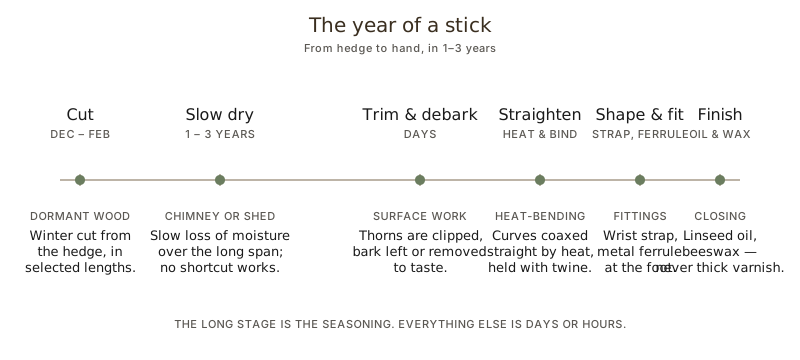
A walking stick from a careful Irish maker arrives ready, finished, and slightly mysterious. The work that produced it is mostly invisible in the finished piece. It happened in a hedge and a shed, over the course of years, by people whose names rarely appear on the stick itself. The bench-work — the part a non-maker tends to picture when they think of stick-making — is the smallest fraction of the time, and the easiest part of it to learn.
This is what the long version of the process actually consists of, in the order it actually happens.
The cut
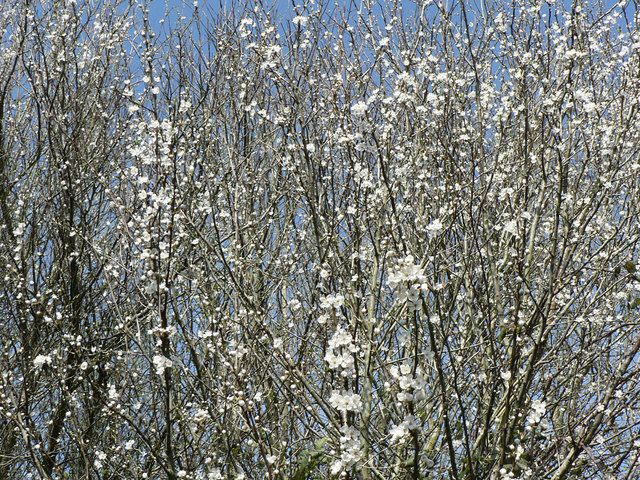
Stick-making begins, every year, in midwinter. Specifically: between the leaves coming off in late October and the sap rising again in early March. The wood is dormant. It is at its driest seasonal moisture content. It is the easiest moment of the year to read what the hedge has produced.
The maker walks a stretch of known hedge — generally on land where they have permission, often family land or a neighbour’s, sometimes the verges of an old laneway — and looks for specific candidates. A usable blackthorn stick is identifiable by:
- A length of straight or near-straight trunk wood, longer than the intended finished stick (allowance for trimming and seasoning loss)
- A clean, undamaged bark surface; no large knots or splits
- A visible root burl at the base, where a knob can be formed
- Thorns of a manageable density — too few suggests a young stem that will not have developed proper density, too many suggests a stem that will need more trimming work than is worth it
The maker takes one or sometimes two pieces from a stretch of hedge and moves on. High-volume harvesting is incompatible with this kind of stick — there is no one stretch of blackthorn that produces twenty usable shafts in a season — and the practical effect is that real makers tend to work with multiple small private permissions rather than a single large source.
The cut itself is taken with a saw or a small pruning blade. Above and below the chosen length, with a few inches of margin at each end, the maker leaves the rest of the stem in place: the cut is part of a hedge-management practice, not an extraction. A well-cut stretch of hedge is, the year after, often visibly healthier than an untouched one.
The seasoning
This is where the long part of the process happens, and where the difference between a real handmade stick and a manufactured one is invisibly made.
A freshly-cut blackthorn stick is mostly water. If it is put on a bench and worked while still green, it does several specific things, none of them good. The bark splits as the underlying wood shrinks. The shaft warps along its length, sometimes by a centimetre or more over a metre of length. The wood develops fine cracks running along the grain — the kind that, on a finished piece, eventually open into the long longitudinal splits visible on cheap “blackthorn” sticks from gift shops. None of this is recoverable once it has happened.
The traditional fix is slow seasoning in conditions that lose the moisture gradually rather than all at once.
The methods used in the Irish and British craft tradition include:
- Burying in a chimney above an old turf fire. Warm, dry, smoky, with a steady airflow. This is the classic method and the one most often described in older accounts; it produces a slightly darkened stick with a faint smoke residue that some makers prize.
- Storing in a cold shed off the ground, on rafters or shelves, with good airflow and no direct sunlight. The most common modern method.
- Periodic oiling of the cut ends with linseed oil to slow the surface drying and reduce checking, particularly at the cuts.
- Binding straight with hemp twine — wrapped in a tight spiral around the shaft — to prevent warping in the early stages of drying.
The wood is left in this state for one to three years, depending on the species, the diameter of the shaft, and the maker’s preference. Roots, which become the knob of a shillelagh or the carved head of a walking stick, are denser than shaft wood and need the longer end of the seasoning range. Some old makers seasoned their best pieces for five to seven years.
The seasoning is the difference. A kiln-dried stick will work — the wood will be dry enough to shape and finish — but it will be more brittle, more prone to surface checking under wear, and more likely to develop the long splits over time. There is no actual substitute for years.
The trim and debark
Once the wood is dry enough to work — judged by feel, by weight, and by the absence of any audible “wet” note when the stick is tapped — the maker takes the seasoned shaft to the bench.
The first job is trimming the thorns. On a blackthorn shaft, the live thorns will have hardened and dried; they are removed with a small knife or a fine pruning tool, cut close to the shaft so that what remains is the thorn-stub — the small raised scar that is the visual signature of a real blackthorn stick. The maker decides on the density of remaining stub: a stick with all stubs left in is more textured and reads as more “rural”; a stick with stubs sanded smoother reads as more refined. Both are correct.
The second is the debark decision. Blackthorn bark is dark, irregular, and gives a particular character. A barked stick keeps that character; a debarked one shows the dark heartwood beneath, often a deep reddish-brown that polishes to near-black with finishing. The choice is between two registers of the same stick:
- Barked: rougher, more textured, more obviously a piece of the hedge
- Debarked: smoother, more refined, a polished object rather than a hedge cutting
For oak, the debark decision is similar; for holly, the choice is usually to debark immediately to preserve the white wood beneath. For ash, the choice is usually to keep the bark or to debark to a light cream; ash is rarely darkened.
Straightening
A seasoned shaft is rarely perfectly straight. Some warping has occurred during drying, some natural curvature was there at the start. The traditional fix is heat-bending.
The shaft is heated — in steam, with a heat gun, or, in older accounts, in the warm ash above a low fire — until the wood becomes pliable. The maker then bends it against the natural curve, holding it slightly past straight to allow for spring-back, and binds it in that position with hemp twine until it cools. A few hours under twine is usually enough. For more serious bends, the process is repeated.
The bending is done in stages, never in one large correction. Pushing too hard, too fast, breaks the shaft cleanly along the grain — the maker’s fastest way to lose the work of two years.
For walking sticks with a deliberate curved handle (a crook, a hook), the bending is done after seasoning and used to set the curve permanently. For most blackthorn shillelaghs and straight walking sticks, the bending is corrective only.
Shaping the head and the foot
The head of a walking stick is whatever the user is going to grip. On a shillelagh, this is the natural root burl — minimal carving, mostly cleaning and smoothing the bulb to remove dirt and any cracked surface. On a walking stick, the head is more often a deliberate shape: a curved handle (carved from a separate piece of wood, or from the same trunk if the natural curvature allowed), a knob, a fork left from the natural Y-junction of the wood (especially in holly), or a fitted handle in horn, antler, or bone for the more elaborate pieces.
A horn or antler handle is fitted by drilling the shaft to receive a tang from the handle, glueing with a hide-glue or epoxy depending on the maker, and dressing the joint flush. The work is precise. A poorly-fitted handle will loosen with seasonal moisture changes; a well-fitted one will outlast the wood it is attached to.
The foot of the stick is more straightforward. A simple stick is finished with a beeswax-rubbed end-grain. A formal stick is fitted with a metal ferrule — usually brass or copper — pressed onto the trimmed shaft after a tight fit has been ensured. The ferrule prevents wear at the foot, where the stick takes most of its impact in everyday use, and gives a small audible note that some users find pleasant on hard surfaces.
The wrist strap
Almost every traditional Irish stick has a leather wrist strap through a hole drilled below the head. The strap is functional rather than decorative: on a shillelagh, it loops over the wrist when the stick is in the low fighting grip, securing it through a swing; on a walking stick, it allows the stick to be carried hands-free on a slope or hung from a peg.
The strap itself is a simple thing — a piece of dark vegetable-tanned leather, around 5 mm wide, knotted or hand-stitched, often with the stitching deliberately visible. The hole is drilled at a specific point: low enough that the stick can be gripped at the head with the strap clear, high enough that the strap does not interfere with the user’s palm. The placement is decided by the maker, with reference to the user’s grip preference if known.
A real leather strap will last decades. A synthetic one — common on cheap sticks — looks almost identical when new and goes brittle within a year.
Finishing
The final step is the finish, which determines how the stick will look and feel for the rest of its life.
The traditional Irish finish is the simplest: linseed oil, applied in several thin coats, allowed to penetrate, then beeswax rubbed in over the cured oil. The result is a soft, low-sheen surface that deepens with handling — every hand that holds a well-finished stick contributes a small amount of skin oil to the surface, and over years the wood develops a patina that no factory finish reproduces.
Variations include Danish oil (a modern penetrating finish, similar in result to traditional linseed but cures faster), shellac (a thin spirit-based varnish, fine for finer woods like holly, but rarely used on blackthorn), and scorching before oiling (a darkening technique that produces the “burnt” finish associated with some Irish pieces).
What real makers do not do, almost without exception, is apply thick polyurethane varnish. The thick gloss finish associated with cheap walking sticks is, in the working tradition, a mark of haste rather than craft. It seals the wood from contact, prevents the patina from developing, and visually disguises whatever character the wood actually has. A finished stick from a careful maker reads dark and slightly matte, not glossy.
Why the process can’t be rushed
It is worth saying plainly. A real Irish walking stick is not a faster object made better. It is a slower object made by people who have accepted that some of what they sell is two and a half years of patience.
There are technical reasons for this — a kiln-dried stick is genuinely more brittle, a glued knob genuinely separates over time, a varnished surface genuinely refuses to develop patina. But there is a non-technical reason that matters too. The tradition is, in effect, a tradition of deferred reward. The stick the maker is shaping at the bench in February was cut at a hedge in February two years ago by the same hand. The stick the same maker cuts today will be shaped in February two years hence. The whole craft runs on a slow rhythm that does not match the production speed of any other furniture-grade hardwood object.
This is why real handmade Irish sticks are not, by global standards, abundant; why they cost more than tourist-shop equivalents; why the makers who do this seriously tend to be small, family-scale, and not particularly easy to buy from on a Wednesday. It is also why a stick made this way lasts a lifetime, and often longer, where a manufactured one cracks or splinters within a few years.
A reader looking to buy from a maker working this way can find one — there are still working stick-makers in Ireland, particularly in the south-west — but the buyer should expect to wait. A stick from a real maker is not on a shelf; it is on a rafter in a shed, two years from being ready.
This is the pillar guide to the process. The wood-by-wood notes are in the blackthorn, oak, and holly reference pages. The finished forms are covered in What is a shillelagh? and Shillelagh vs walking stick vs blackthorn stick.
Sources & further reading
- Theo Fossel, The Stickmaker's Handbook, WorldCat
- Andrew Jones, The Sticks Book, WorldCat
- Estyn Evans, Irish Folk Ways (1957), Routledge & Kegan Paul / WorldCat
Related reading
- guidesShillelagh: Meaning, History & How to Spot a Real One
An Irish blackthorn club, a contested word, and a heritage object that has outlived its job description.
- woodsBlackthorn Wood: Seasoning, Uses
The hedgerow tree behind most Irish sticks: dense, dark, slow-growing, and beloved of hedge-witches.
- woodsOak
The other Irish stick wood — older, heavier, and the source of the original Wicklow shillelaghs.
- woodsHolly
The pale-wooded thumb-stick tree of Scotland and Wales — and the hedgerow shrub that sometimes turns up in Irish work too.