Malacca Cane: The Victorian Gentleman's Walking Stick
The colonial-era gentleman's cane material — a climbing palm, not a tree, and a solid rattan, not bamboo.
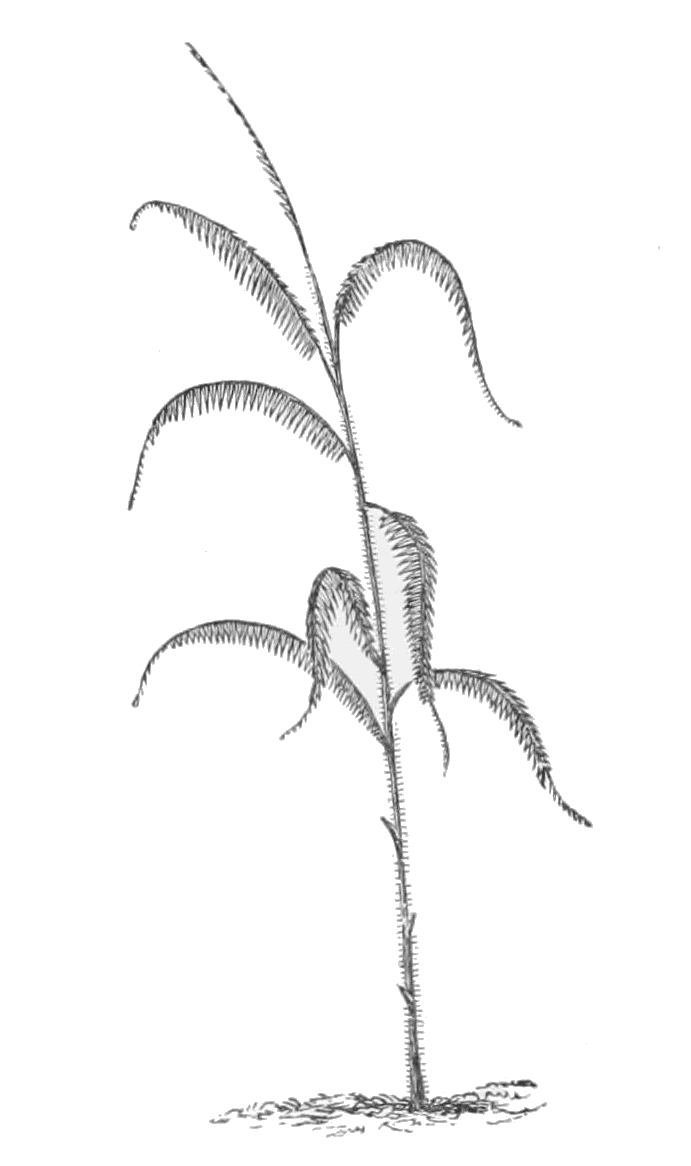
Malacca cane is the iconic shaft material of the Victorian gentleman’s walking cane — a slender, polished, naturally-segmented stick that became the standard urban-dress accessory of the British and European upper classes from roughly 1830 to 1939, then retreated almost entirely from everyday use within a single generation. It is not bamboo. The two materials are confused with one another with extraordinary frequency, including in the antiques trade, but they are botanically and structurally distinct: bamboo is a hollow grass, and Malacca is a solid climbing palm.
Beyond the material confusion, the Malacca-cane story is the story of a colonial-era trade: a South-East Asian climbing palm, harvested by indigenous Malayan and Sumatran labour, routed through the port city of Malacca on the western coast of the Malay peninsula, shipped to Liverpool and London and Hamburg, fitted with silver collars and ivory handles in European workshops, and sold to the men who walked the boulevards of Paris and the squares of Belgravia in the high age of European empire. The trade has both botanical interest and ethical complications, and an honest reference page has to handle both.
Quick reference
| Common name | Malacca cane |
| Binomial | Calamus scipionum (the principal species); other Calamus species enter the broader rattan trade |
| Family | Arecaceae (palms) |
| Habit | Climbing palm — long flexible stem that grows up through forest canopy supported by neighbouring trees |
| Native range | South-East Asia: Malay peninsula, Sumatra, Borneo, parts of Thailand and southern Vietnam |
| Stem diameter | ~2–4 cm at the working size for canes |
| Working length | Stems can reach 40 m or more in the canopy; cut to ~80–100 cm for canes |
| Structure | Solid vascular bundles in a fibrous palm matrix — not hollow |
| Surface | Smooth, with regularly-spaced “leopard-spot” nodes (the leaf-scar marks) every 8–15 cm |
| Colour | Pale honey-brown when fresh; ages to a deeper amber-tan with handling |
| Density | ~600–700 kg/m³ [VERIFY] |
| Working tradition | Victorian and Edwardian gentleman’s walking cane (~1830–1939), now substantially declined |
Malacca is not bamboo
The single most useful thing to know about Malacca cane is that it is not bamboo. This is worth establishing early because the two materials look superficially similar at the museum case or the auction-house photograph — both are pale tan, both have visible nodes at intervals along the stem, both are flexible and lightweight — but the underlying biology and the resulting working character are completely different.
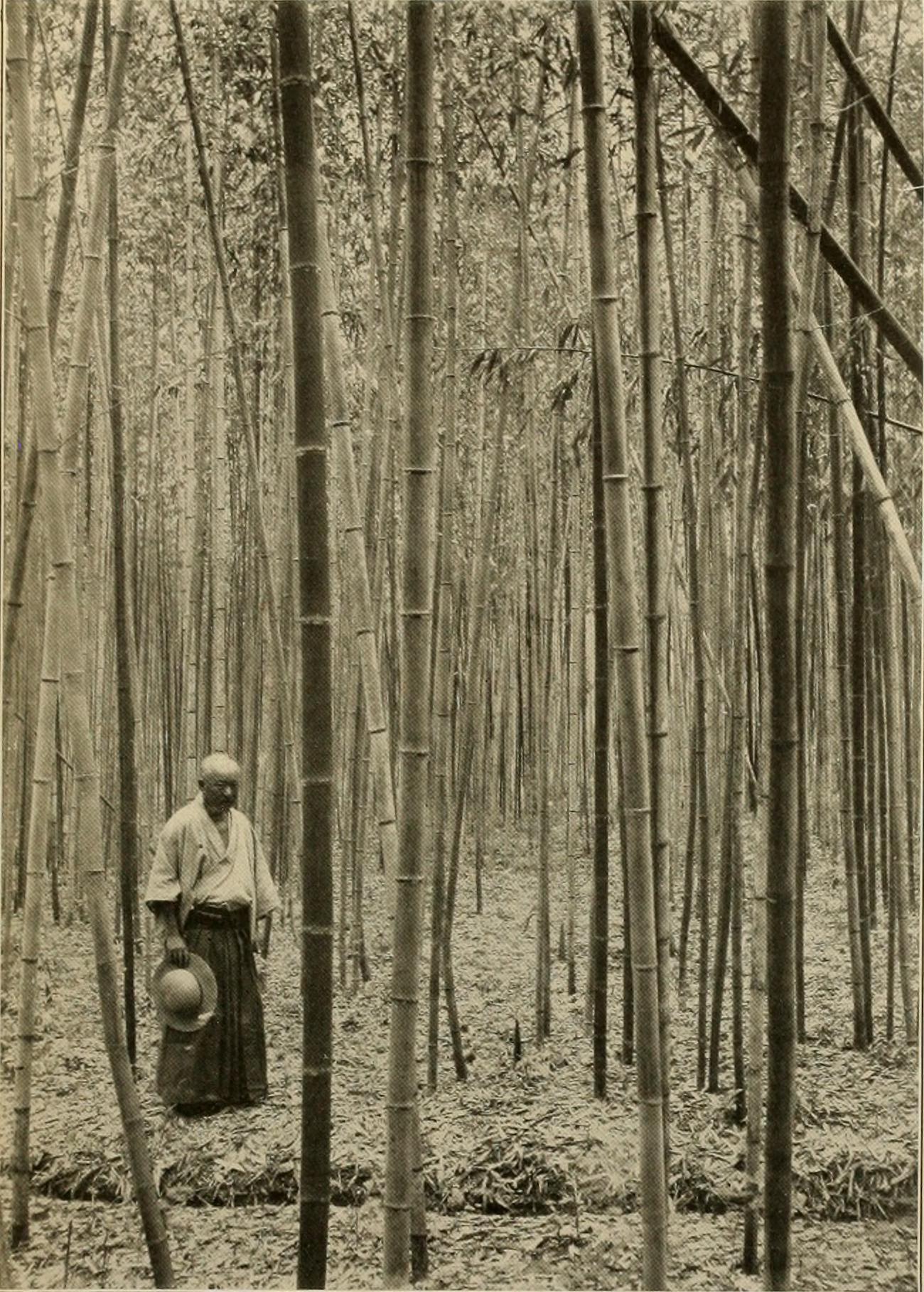
Bamboo is a grass — a member of the Poaceae family, like wheat and rice and the lawn outside your front door, just enormously enlarged. The stem is hollow between the nodes, with internal walls (septa) at each node forming closed compartments. This hollow construction is what gives bamboo its characteristic ringing note when struck and its low weight relative to its diameter, and it is the structural feature that the kendo shinai (which see in Bamboo) depends on for its safe-impact behaviour.
Malacca is a palm — a member of the Arecaceae family, like the coconut and the date palm, but with a climbing rather than upright growth habit. The stem is solid throughout: vascular bundles (the conducting tissue that carries water and nutrients up the stem) embedded in a parenchyma matrix, with no hollow centre and no internal septa. The “nodes” on a Malacca cane are leaf-scar marks left where each frond once attached to the stem; they are surface features, not structural compartments.
The implications for the working stick are not subtle. Malacca, being solid, is heavier per unit length than bamboo of comparable diameter — though still light by hardwood standards. It is also stronger in compression and resists end-grain splitting in a way that bamboo (which can fracture longitudinally between nodes under load) does not. A Malacca cane bears a man’s full weight on the handle without protest; a comparable bamboo cane needs more careful loading. And Malacca takes a polish — that warm amber sheen on a Victorian cane is the result of patient hand-polishing of the solid surface — in a way that bamboo’s harder, glossier silica skin does not.
The reason the two are confused is simple: Victorian and Edwardian commerce often used “cane” as a generic term for any slender Asian stem-material, regardless of botanical origin. Catalogues described both materials as “cane”, and the antiques trade has inherited that imprecision. A buyer or a museum cataloguer who wants to be honest distinguishes between them by structure: solid vs hollow at the cut end. There is no ambiguity at the cross-section.
The plant
Calamus scipionum is the principal species of the Malacca-cane trade, but the broader genus Calamus contains several hundred species across South-East Asia and into the Pacific, and the commercial rattan supply has historically drawn on multiple species. Calamus manan (manau rattan) is a related larger-stemmed species used for furniture; Calamus caesius (sega rattan) is used for finer weaving work; the genus is enormously diverse, and pinning a Victorian-era walking cane to a single botanical species is often impossible without analytical work.
The plants are climbing palms — also called “rattans” — that grow as long flexible stems through the lowland and montane rainforest of South-East Asia. The stem produces feathery pinnate fronds at intervals; the lower fronds are the working tissue, the upper fronds reach for light through the forest canopy, and the whole plant supports itself by hooking onto neighbouring trees with sharp recurved spines on the leaf rachises. A mature Calamus scipionum stem can extend forty metres or more through the canopy, anchored to a single root system at ground level.
The harvesting cycle is destructive in the obvious sense: the stem is cut at the base, pulled down through the canopy (a labour-intensive operation that requires clearing the spines from the leaves), and processed into working lengths. Sustainable rattan harvest depends on coppice regeneration from the cut stump, which is possible for Calamus scipionum but slower than for some other rattans — typically eight to fifteen years between harvests on a managed stand. Through most of the colonial period, harvest was effectively extractive rather than managed, and pressure on wild stands of Calamus scipionum in the Malay peninsula contributed to the species’ commercial decline by the mid-twentieth century.
The wood
A Malacca cane stem, processed for the cane trade, is roughly two to four centimetres in diameter at the working size, smooth-surfaced, and pale honey-brown when fresh. The diagnostic feature is the leopard-spot node — a darker, slightly raised mark every eight to fifteen centimetres along the stem where each leaf once attached. The spacing of these nodes was a quality criterion in the historical trade: a “well-jointed” Malacca cane had regular, evenly-spaced leopard spots; a poorly-jointed one was discounted. The best-quality Victorian canes were often fitted with the silver collar positioned to display three or four nodes along the working length of the stick.
The structure at the cut cross-section is unmistakably palm: a dense outer ring of fibre, an inner zone of softer parenchyma tissue with vascular bundles distributed throughout (rather than the concentric annual rings of a hardwood). This structure gives Malacca its working character: high tensile strength along the stem axis, modest bending stiffness, and an ability to be heat-bent (steam-bent, traditionally) into curved handle shapes when fitted with a derby or crook end.
Density runs around 600–700 kg/m³ [VERIFY] in working condition, comparable to oak by mass but with a fibrous rather than ring-porous structure that distributes load differently. Malacca will not snap cleanly under impact in the way that hardwood does; under genuine sudden load it tends to fracture longitudinally between nodes, splaying the fibres rather than cleaving across the grain. For a walking cane that bears the user’s body weight on a regular basis but is not asked to absorb impact, this is acceptable behaviour. For a fighting stick — which Malacca was never intended to be — it is not.
The Victorian gentleman’s cane
The cultural register of Malacca cane is the Victorian and Edwardian urban gentleman: the man in formal day dress who carries a slender ~85 cm cane with a silver-collared handle as the standard accessory of his walking costume. The form had antecedents in the seventeenth and eighteenth centuries — the amber-tip clouded cane (Malacca cane with an amber knob) was already in use among continental European aristocracy by the 1690s — but the high age of the Malacca cane is the long nineteenth century, from roughly 1830 to 1914, with a final coda through the inter-war period.
Several factors converged to make Malacca the iconic Victorian cane shaft:
The colonial trade. Singapore (founded as a British trading post in 1819) and the Strait Settlements (Singapore, Malacca, Penang) provided an institutional supply chain for South-East Asian rattan to reach London and Liverpool docks in commercial volume. The eponymous port of Malacca on the western Malay coast was the historical gathering point for upcountry rattan harvested by Malay and Sumatran labour and shipped onward — and “Malacca cane” became the trade name for the material regardless of where the stem had actually grown.
The dress register. The Victorian gentleman’s day dress required a walking accessory, and the slender, polished, light Malacca cane fit the register precisely — heavier than a riding crop, lighter than a working walking stick, more refined than a hawthorn or a hazel. The cane was not, primarily, a walking aid; it was an item of dress. The handle (derby, crook, knob, or fritz) carried the personality, and the shaft displayed the leopard-spot nodes that identified the material at twenty paces.
The material’s working virtues. Malacca is light, takes a beautiful polish, accepts steam-bent handle shapes, and ages to an attractive amber colour with handling. None of these are unique to Malacca, but the combination put it ahead of competing materials (ebony was darker and heavier, rosewood was scarce and expensive, hickory was too working-class in register, hawthorn was too rural) for the specific use case.
The status signal. Malacca cane carried a colonial-trade-route signal — a man with a Malacca cane was a man with the resources and the social position to access the imperial commercial system, even if he never travelled east of Dover. By the Edwardian period, the Malacca cane had become, alongside the bowler hat and the pocket watch, one of the costume signifiers of the British gentleman’s professional class.
For the form, see The walking cane, which covers the cane as object — the four canonical handles (derby, crook, knob, fritz), the silver and ivory and tortoiseshell mounts, the gentleman’s etiquette of carriage. For the related officer’s-and-ceremonial form, see Swagger sticks.
The colonial trade — and its complications
The Malacca cane trade was an integral part of the British and Dutch colonial economy in South-East Asia from the late seventeenth century through to Malayan and Indonesian independence in the mid-twentieth. The harvesting was done by indigenous labour — Malay, Orang Asli (the indigenous peoples of the Malay peninsula), Iban and other indigenous Bornean groups — under conditions that varied from informal smallholder collection through forced colonial labour quotas. The export trade was dominated by European trading houses operating through the colonial port system; the value-adding processing (silver collars, ivory handles, polish, mounting) was almost exclusively done in European workshops; and the finished cane was sold at retail to European customers.
A reference page on the material has to acknowledge this. The Malacca cane is, materially, a beautiful object: light, warm-toned, well-balanced, and capable of acquiring a personal patina with decades of handling. It is also the product of a specific historical extractive economy whose human costs were not paid by the men who carried the canes. Both things are true at once. A working Victorian cane in a museum case or an antiques-dealer’s window deserves to be looked at honestly — appreciated for what it is materially, and acknowledged for what its supply chain looked like.
The post-1945 decline of Malacca cane as a material is partly attributable to the simple disappearance of the cane from urban dress (a process that ran from the 1930s through the 1950s across all Western markets), partly to over-harvesting of Calamus scipionum in the wild during the colonial period, and partly to political change — the supply chains of the Strait Settlements ceased to function in their colonial form after Malayan independence in 1957, and the modern Malaysian rattan industry has not chosen to recreate the gentleman’s-cane export trade.
Working a Malacca cane
The traditional working sequence for a Malacca cane: the stem is harvested in the forest at full mature length, dragged or carried to a collection point, scraped clean of the spine-bearing leaf sheath, sun-dried and smoke-cured, sized for the cane trade (typically cut to ~85 cm working blanks at ~2–4 cm diameter), bundled, and shipped. At the European workshop, the blank is steamed and bent if a curved handle is required, hand-polished with successively finer abrasives, fitted with a metal collar (silver, plated brass, or in the inter-war period sometimes nickel), fitted with a handle of contrasting material (derby of horn or ivory, knob of silver or bone, crook of bent Malacca itself), and shod at the foot with a brass or rubber ferrule.
A genuine Victorian Malacca cane in good condition can be identified by:
- The leopard-spot nodes at regular intervals — usually 8–15 cm apart, with the better canes showing more uniform spacing
- The solid cross-section at the ferrule end, where any wear has exposed the fibrous palm structure
- A polished honey-amber surface rather than the glossier silica skin of bamboo
- A silver or plated collar at the join between shaft and handle, often hallmarked
- A light weight in the hand — typically 250–350 grams for a 90 cm cane — heavier than bamboo, lighter than oak
Modern reproduction Malacca canes do exist, but the supply of high-quality wild Calamus scipionum has been substantially reduced, and most contemporary “Malacca canes” sold at retail use lower-quality rattan from related species. A buyer in the contemporary market should expect either to pay heavily for a vintage Victorian cane in the secondary market, or to accept that a new “Malacca cane” is likely a generic rattan product rather than the historical material specifically.
Beyond canes
Malacca cane has limited use outside the gentleman’s-cane register. Some applications:
- Riding crops and dressage whips: a related but distinct trade, using thinner stems and different fitting traditions
- Furniture frames and chair-bottoms: the broader rattan industry, dominated by Calamus manan and Calamus caesius rather than Calamus scipionum specifically
- Conducting batons: occasional use in the orchestral world, where Malacca’s lightness and stiffness suit the requirement
- School-discipline canes: an unfortunate historical use in British schools through the mid-twentieth century, now obsolete
- Hat-frames and basketry: traditional South-East Asian uses, separate from the export trade
For full-length walking sticks (rather than the shorter cane register), Malacca was never the standard material — the stem diameter is too slender at typical canopy height, and the working tradition for a six-foot walking staff has always been hardwood (oak, ash, hickory, blackthorn) rather than rattan.
Compared with other stick materials
A Malacca cane against an oak walking stick is not a fair comparison: the two are different objects for different uses. But within the cane register specifically, the alternatives to Malacca were:
- Ebony (Diospyros spp.): darker, heavier, polished to a near-black gloss; the formal-evening alternative to the Malacca day cane
- Rosewood (Dalbergia spp.): warmer-toned than ebony, more figured, scarcer; the high-end alternative
- Snakewood (Brosimum guianensis): the South American spotted-grain figured wood, closely associated with the high-end Victorian cane market
- Hickory: the American working-class alternative — heavier, plainer, never penetrated the European urban-dress register
- Hawthorn: occasional use for fine canes by named British makers (see Hawthorn for the working tradition); too rustic in register for full Victorian formal use
For the side-by-side comparison of Malacca with the British and Irish hardwood stick traditions, see Holly vs blackthorn vs oak vs ash for the British natives, and the broader Walking stick vs walking cane vs trekking pole for the form-level distinction.
Sources & further reading
- Calamus scipionum Lour. — Plants of the World Online, Plants of the World Online, Royal Botanic Gardens, Kew
- Rattans of South-East Asia — botanical and economic overview, Royal Botanic Gardens, Kew
- Henderson, A. (2009) — Palms of Southern Asia, Princeton University Press
- Calamus and the rattan trade — economic-history overview, Center for International Forestry Research (CIFOR)
- Walking canes in Victorian dress — Victoria & Albert Museum, Victoria & Albert Museum
Related reading
- woodsBamboo
Not a wood at all but the stick-material of half the world: a giant grass that grows a finished culm in three to five years and underpins the entire East Asian stick tradition.
- historySwagger Stick: History & 3 Uses
The short military stick that was, for a century, the universal symbol of an officer in dress uniform — and is, today, almost extinct outside ceremonial use.
- comparisonsHolly vs blackthorn vs oak vs ash
Four traditional stick woods, side by side: how they look, how they behave under the hand, and which one belongs in which kind of stick.