The Cailleach
The hag of winter, of the high places, of the storm, and of the blackthorn staff that keeps the cold in the ground.
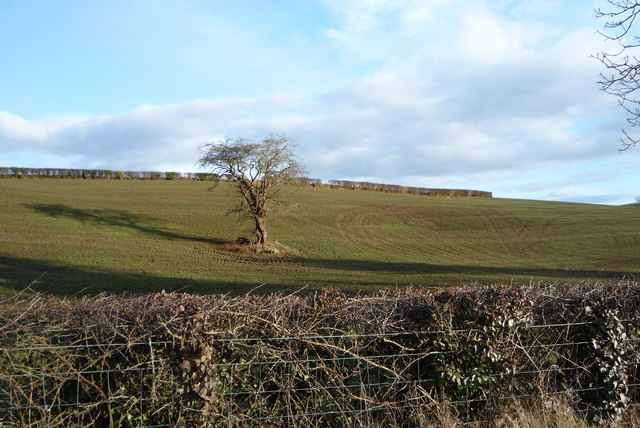
The Cailleach is the winter. Or rather: in the surviving fragments of Irish, Scottish, and Manx Gaelic tradition that come down through the medieval period and the early-modern collectors, she is the figure who does the winter — who freezes the ground, who herds the deer, who walks the high places, and who carries a staff with which she strikes the earth to keep the cold in. The staff, in the versions that name a wood, is blackthorn. The figure herself is one of the older mythological survivals in any of the Celtic traditions; the threads she has left in the modern Gaelic landscape and the modern English language are the subject of this piece.
It is worth saying at the outset what this article is not. It is not a primary-source synthesis of the academic literature on the Cailleach — that work has been done, more thoroughly than a heritage publication can manage, by scholars including Eleanor Hull, Donald Mackenzie, and more recently in studies by the Royal Irish Academy. What this piece offers is an editorial account of the Cailleach as she relates to the wood and the stick, with citations to where the heavier reading can be found.
What she is
In the Gaelic-language sources, the Cailleach is the divine hag — the hag in its older sense of “veiled woman”, from the same root as the Latin celare, “to conceal”. She is associated with the creation of the landscape (mountains, lakes, and standing stones are named in tradition as having been formed when she dropped or threw something); with the weather, especially storms and winter; and with the liminal places of the high mountains and the western coasts.
Her name appears across the three Gaelic-speaking traditions:
- In Irish, An Chailleach — sometimes specifically An Chailleach Bhéara (the Hag of Beara, in west Cork)
- In Scottish Gaelic, A’ Chailleach — most strongly associated with the Argyll mountains and the western Highlands
- In Manx, Caillagh — particularly in the figure of Caillagh ny Groamagh (the Hag of the Gloomy Brow, who emerges on St Bride’s Day to predict the weather)
The three traditions are clearly variants of a single mythological figure with regional adaptations, and the surviving accounts overlap enough to support reading them together while differing enough to repay separate study.
Her staff
The detail that connects the Cailleach to this site specifically is her staff. Across the surviving Gaelic accounts she carries one — variously named and described — and what she does with it is freeze the ground.
The Wikipedia overview of the Cailleach, drawing on a wide range of Scottish and Irish sources, says she “carries a hammer for shaping the hills and valleys” and that her staff “freezes the ground” through the winter months. Niall Mac Coitir’s Irish Trees (Collins Press, 2003) collects more of the wood-specific material from the Irish-language oral tradition: in the versions that name the wood, the staff is blackthorn. In the versions that describe her using it, she walks the land between Samhain (the start of November) and Bealtaine (the start of May) and strikes the ground to keep the cold in.
The detail of the wood is small and persistent. It is the kind of specific that survives in folk memory long after the larger mythological frame has eroded. In the Hebrides and the Highlands of Scotland, the same Cailleach figure appears with the same blackthorn staff; in Beara in west Cork, the same; in the parish-level material gathered by the Folklore Commission in the 1930s, scattered references to “the old woman of the winter” who walks with a stick of blackthorn appear from County Donegal to County Kerry.
The English-language idiom blackthorn winter — the cold snap that often coincides with the blackthorn’s March bloom — is, in this longer reading, the meteorological residue of the Cailleach’s last walk. The folk-name for the weather has outlived the figure who, in the older tradition, was responsible for it.
The seasonal frame
The Cailleach rules the dark half of the year — the half of the Gaelic calendar that runs from Samhain (1 November) to Bealtaine (1 May), with Imbolc (1 February, St Brigid’s Day) as a turning-point in the middle. The light half of the year — Bealtaine to Samhain — is the domain of the younger goddess Brigid, who is the Cailleach’s seasonal counterpart and, in some versions, her own younger self before the spring transformation.
The transition is precise. In one Scottish tradition, the Cailleach washes her great plaid in the Gulf of Corryvreckan (between Jura and Scarba in the Inner Hebrides) for three days before Samhain to usher in winter, and the plaid emerges white — a metaphor for the snow that follows. At Bealtaine, in the inverse motion, she lays down her staff under a holly bush (in some versions a gorse bush) and the cold leaves with her. The cycle repeats annually.
The Imbolc midpoint is the Cailleach’s last appearance of the season. Caillagh ny Groamagh in Manx tradition emerges on St Bride’s Day (1 February) — if she is gathering firewood, she intends to make winter long; if she is not, winter is already over. The same prediction-by-emergence pattern is embedded in the modern American Groundhog Day, which descends from European folk traditions of February-shadow weather divination — including the Manx Cailleach in her gloomy-brow form. The line of inheritance is not always clearly marked.
Sites in the Irish landscape
The Cailleach has named sites across Ireland, of which the most prominent are:
Hag’s Head — Ceann na Caillí — at the southern end of the Cliffs of Moher in County Clare. The cliff-face here was, in tradition, the figure of the Hag herself, looking out to the Atlantic.
Labbacallee — Leaba Caillí, “the Hag’s Bed” — a wedge tomb in County Cork, one of the largest in Ireland. The site is dated to roughly 2000–2500 BC and was identified in folk-tradition as the Cailleach’s burial place.
Slieve na Calliagh — Sliabh na Caillí, “the Hag’s Mountain” — at Loughcrew in County Meath. The site is a complex of Neolithic passage tombs, including a chair-shaped natural feature called the Hag’s Chair where, in folk-tradition, the Cailleach sat to oversee her work.
Slieve Gullion — in County Armagh — has its own Cailleach traditions, particularly associated with a small lake (Lough Calliagh Berra) on the summit, where the figure is said to have transformed Fionn mac Cumhaill in one Ulster Cycle story.
The pattern across these sites is consistent: prehistoric monuments — passage tombs, wedge tombs, distinctive natural features — were absorbed by later folk-tradition into the Cailleach’s biography, with the tombs becoming her bed, the mountains her seats, and the cliffs her watching-places. The tradition is layered: the monuments themselves are at least 4,000 years older than the surviving Cailleach material, and the mythological identification probably overlaid a much earlier veneration of the same sites.
Sites in the Scottish landscape
Scottish Gaelic tradition has the larger surviving Cailleach corpus and the more living veneration. Key sites include:
Ben Cruachan in Argyll — the highest of the Cruachan range, named in tradition as the Cailleach’s principal seat. The associated lake, Loch Awe, is said in some versions to have been formed when the Cailleach forgot to cap a well at the mountain’s summit.
Ben Nevis — the highest mountain in the British Isles — appears in some Scottish accounts as her “mountain throne”, though this association is less documented in primary sources than the Cruachan one.
Beinn na Caillich (“the Cailleach’s mountain”) on the Isle of Skye — a clear example of the figure’s name surviving in landscape nomenclature.
Glen Lyon in Perthshire — home to Tigh nam Bodach, a small turf-roofed shrine that holds three stones representing the Cailleach, her husband (the Bodach), and their daughter. The shrine’s stones are taken out of the structure at Bealtaine and replaced at Samhain in a ceremony that has been continuously practised for several centuries [VERIFY exact transmission history]. This is the most specific surviving example of active Cailleach veneration in either Ireland or Scotland.
The Tigh nam Bodach tradition is worth flagging: it is not a reconstructed neopagan revival. The ritual has been continuously practised within the Glen Lyon community across generations, predating the New Age engagement with Celtic spirituality, and is documented in writing from at least the early nineteenth century.
The surviving thread
What survives of the Cailleach in 2026 is more than most casual observers realise.
The lone-thorn-tree taboo — the proscription against felling a solitary blackthorn or hawthorn growing apart from a hedge — is, in one reading, the surviving residue of the older Cailleach veneration. The fairy that protects the tree in modern folk-belief is not, in any explicit version, the Cailleach; the protection is now attributed to the Sídhe generally. But the function — making the tree untouchable — is exactly what one would expect if a figure once associated with the wood had left a behavioural taboo behind even after the explicit veneration faded. (See The fairy-thorn taboo for the contemporary observance.)
The blackthorn winter idiom remains in regional British and Irish weather-talk — the cold snap that catches early-flowering cherries and plums in March is named after the wood that the Cailleach struck the ground with. The naming is older than the people who use it.
The landscape names continue to tag her. Hag’s Head, Labbacallee, Slieve na Calliagh, Beinn na Caillich, Tigh nam Bodach — these are still on the maps, still visited, still occasionally explained to children by parents who could not produce a coherent account of who the Cailleach was. The names hold even when the explanations have eroded.
The Imbolc—Bealtaine—Samhain seasonal frame still organises the Gaelic calendar in some communities, and the Imbolc weather divination has, through cultural transmission, ended up shaping a North American holiday. The pattern outlives the figure.
What this means for a stick
A blackthorn walking stick from a careful maker in 2026 is not, in any active sense, a piece of Cailleach material. The maker is unlikely to think of it that way; the buyer is unlikely to use it that way. But the wood is the wood that the surviving Gaelic-language tradition put in the hands of the figure who froze the ground for half the year, and the small caution one feels around a lone blackthorn in a field is, on the longer historical view, the same caution that the Cailleach was supposed to keep alive with the strike of her staff.
There is a continuity here, and it is one of the reasons that a piece of Irish folk-craft can carry a kind of weight that a comparable piece of, say, Mediterranean-tradition olive-wood material does not. The wood remembers more than the modern user is normally aware of. The stick is what is left when the larger story has retreated.
This is a folklore piece. The fuller Blackthorn in Irish mythology covers the same ground at less depth and with more emphasis on the wood; the fairy-thorn taboo covers the surviving folk-behaviour. Corrections from readers familiar with regional Cailleach material — particularly the Tigh nam Bodach transmission history — are welcome.
Sources & further reading
- Cailleach — Wikipedia overview with sourced veneration sites, Wikipedia
- Niall Mac Coitir, Irish Trees: Myths, Legends & Folklore (2003), Collins Press
- Patricia Lysaght, The Banshee: The Irish Death-Messenger (1986), Glendale Press / WorldCat
- Glen Lyon and the Tigh nam Bodach shrine, Tigh nam Bodach
- Dúchas — National Folklore Collection of Ireland, University College Dublin
Related reading
- historyBlackthorn in Irish mythology
The fairy tree, the Cailleach's staff, and the dark twin of the May hawthorn — what the older tradition actually says about the wood.
- historyThe May bush
The branch of hawthorn — sometimes blackthorn — decorated with ribbons and eggshells at Bealtaine, set up at the door to mark the start of summer. A folk-craft that nearly disappeared and is now slowly returning.
- historyThe fairy-thorn taboo
The proscription against felling a lone hawthorn or blackthorn — the most durable element of Irish folk-belief, observed in 2026 by people who would not call themselves believers.
- woodsBlackthorn Tree Wood: Curing
The hedgerow tree behind most Irish sticks: dense, dark, slow-growing, and beloved of hedge-witches.