Blackthorn in Irish mythology
The fairy tree, the Cailleach's staff, and the dark twin of the May hawthorn — what the older tradition actually says about the wood.
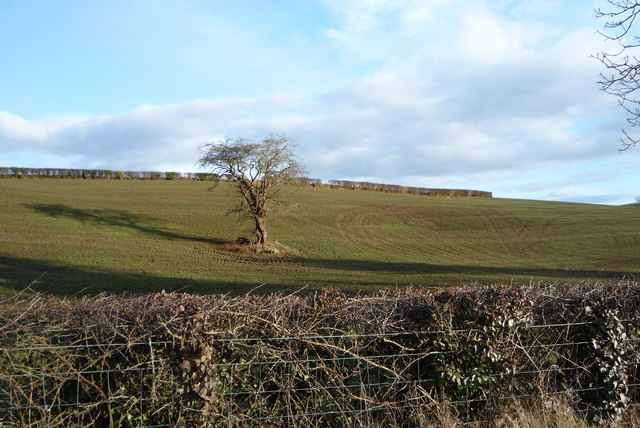
The folklore of trees is rarely flattering to blackthorn. Where the oak is the king of the wood and the rowan is the protector, the blackthorn is the wand of the witch, the staff of the winter hag, the lone tree in the field that you must not, on any account, cut down. None of this is straightforwardly negative; the tree’s reputation in the older tradition is mixed, layered, and — in places where the tradition still has any practical hold — observed. But it is darker than most.
Part of this is the wood itself. Blackthorn is the only common Irish hedge-tree whose thorns are long, dark, and slow to heal once they go in. Part is the timing: the bloom comes in March, before the leaves, when the rest of the countryside is still in winter. Part is the company the tree keeps in language — sloe-eyed, blackthorn winter, the dead month of the sloe — none of which are sunny phrases. And part is older than any of it, going back into the layered fragments of Gaelic mythological material that the early Christian period preserved selectively and the Folklore Commission of the twentieth century tried to gather what was left of.
This is what the older tradition actually says.
The fairy tree
The single most durable belief about blackthorn — and the one most likely to still influence a behaviour, in Ireland, in 2026 — is the proscription against cutting a lone fairy thorn. A solitary thorn tree, growing apart from a hedgerow, often in the middle of a field or at the meeting of paths, is held to be the property of the Other Crowd: the Sídhe, the Daoine Maithe, the fairies. To fell such a tree is to invite ill luck of a particularly stubborn kind. The luck does not need to be supernatural to feel real; the records are full of farmers who lost cattle, lost crops, lost relatives, or lost their wits within months of putting an axe to a fairy thorn.
The belief attaches more strongly to the lone hawthorn than to the lone blackthorn — the May tree is the more obviously fairy-protected of the pair — but blackthorn is folded into the same complex of belief, and a lone blackthorn is treated with the same caution. The Folklore Commission’s Schools’ Collection, gathered in the late 1930s and now searchable through the Dúchas project, holds many hundreds of accounts of fairy thorns, of the misfortunes that came to those who felled them, and of the careful negotiations by which farmers and roadbuilders sometimes had to route around a single tree rather than risk taking it.
The proscription is not abstract. The 1999 campaign over a section of the M18 motorway in County Clare — in which the folklorist Eddie Lenihan led the effort to save a fairy thorn at Latoon, and the tree was spared — is a well-known example. The tree at Latoon was a hawthorn. Local opinion holds that it would have been just as serious had it been blackthorn.
The Cailleach’s staff
In Gaelic-language tradition — Irish and Scottish — the Cailleach is the personification of winter. She is the Hag, the Old Woman, the One-Eyed; she is the maker of mountains and the breaker of cattle; she walks the land between Samhain and Bealtaine carrying a staff with which she strikes the ground to keep the cold in. The staff, in the surviving versions, is blackthorn.
Niall Mac Coitir’s Irish Trees: Myths, Legends & Folklore (2003) is the best single synthesis of the tradition in print. Mac Coitir collects the Cailleach material from sources including the Ordnance Survey Letters, the manuscript collections of the Royal Irish Academy, and the Folklore Commission’s parish-by-parish collections, and the picture they give is consistent: the Cailleach’s staff is a blackthorn, sometimes a wand, sometimes a club; it is associated with cold weather, with frost, with the freezing of the rivers; and it is set down by her at the start of summer when she yields the land to the younger goddess Brigid.
The detail of the staff is small but persistent. It is the kind of fragment — a wand, a tree, an attributed weather event — that lives on in folk-memory long after the larger mythological frame has eroded. In the Hebrides and the Highlands of Scotland, the same Cailleach figure appears with the same staff and the same association with March cold. The old idiomatic phrase the blackthorn winter is, in this longer view, the meteorological residue of a much older mythological figure.
Witches’ wands and burning sticks
Whether deserved or borrowed, the blackthorn has a long European reputation as the wand-wood of folk magic. In English and Welsh sources from the seventeenth century onwards it is named as the wood of the witch’s staff or wishing rod; cunning-folk are described in trial records as carrying blackthorn wands; the early-modern witch-belief complex assigns it a role distinct from the protective rowan and the ambivalent hazel.
The Irish picture is less specific and probably less originally Irish than borrowed in. The native Irish material is closer to the Cailleach complex than to the witch-of-the-cottage complex. They overlap; they are not the same.
What is reliably Irish is the negative association. Blackthorn was the wood of bad weather, the wood of the lone fairy thorn, the wood of the staff that struck the ground to bring frost. None of this prevented its everyday use: blackthorn made walking sticks, faction-fight clubs, hedge-laying material, and tool handles in the same villages where the older beliefs were observed. The two registers — practical and supernatural — coexisted, as they tend to in any folk tradition that survives the transition from belief to memory.
Beltane and the May bush
The pairing of hawthorn and blackthorn in the older calendar is precise. Hawthorn flowers in May, around the festival of Bealtaine (Beltane), and is the wood of the May bush — a branch or a small whole tree decorated with ribbons, eggshells, and bright objects, set up at the door of a house or in a public place to mark the start of summer. The May bush was popular in parts of Ireland until the late nineteenth century, and some Bealtaine customs have since been revived as local cultural events.
Blackthorn flowers in March, before any of this. Its bloom is not celebrated. The cold spell that often coincides with it — the blackthorn winter — is, in the older calendar, winter’s last word, a final rebuke from the Cailleach before she yields to Brigid. The two trees are read as an opposed pair: hawthorn is summer’s herald, blackthorn is winter’s. The spring belongs to neither; it belongs to the moment between them.
This pairing is consistent enough across Irish, Scottish, and parts of English folk-tradition that it is reasonable to take it as a structural feature rather than a coincidence. The trees flower at the right times, in the right colours (both white), with the right thorns; they are the two hardest hedgerow shrubs in the British and Irish flora; they grow in the same hedge as often as not. The folk-imagination did with them what folk-imagination tends to do with any salient pair, and assigned them the parts of opposition.
The afterlife of the older beliefs
Most of this material is no longer believed in any literal sense. The Cailleach is a figure of academic interest now rather than active veneration; the witch-cunning of the early-modern period has been gone from rural Ireland for at least three generations. The blackthorn winter survives as a piece of weather-talk. The May bush is reconstructed at festivals.
The fairy thorn is a different matter. The proscription against cutting a lone thorn — blackthorn or hawthorn — is, in many parts of rural Ireland, still observed, by people who do not necessarily describe themselves as believing in fairies. The proscription operates as a kind of inherited caution: a way of paying respect to a tree, a place, a piece of inherited landscape, that does not require a metaphysical account to remain intact. It is the most living of the old beliefs about the tree, and the one most likely to outlast the others.
A walking stick from a contemporary Irish maker is not, in any active sense, a piece of folk-magical material. The maker is unlikely to think of it that way; the buyer is unlikely to use it that way. But the wood it is made from has carried, for several centuries, a thicker layer of cultural meaning than nearly any other piece of timber in the British and Irish flora — and the small caution one feels around a lone blackthorn in a field is, in the end, the same caution the Cailleach was supposed to keep alive with the strike of her staff.
This is the long-form folklore companion to the blackthorn wood reference page. The folklore literature is large, regional, and often contested between collectors; corrections and pointers to sources we should add are welcome.
Sources & further reading
- Niall Mac Coitir, Irish Trees: Myths, Legends & Folklore (2003), Collins Press
- Patricia Lysaght, The Banshee: The Irish Death-Messenger (1986), Glendale Press / WorldCat
- Dúchas — The National Folklore Collection of Ireland, University College Dublin
- Folklore of Trees — Tree Council of Ireland, Tree Council of Ireland
- Estyn Evans, Irish Folk Ways (1957), Routledge & Kegan Paul / WorldCat
- Latoon fairy bush, Wikipedia
- Beltane — flowers and May bushes, Wikipedia
Related reading
- woodsBlackthorn Wood: Seasoning, Uses
The hedgerow tree behind most Irish sticks: dense, dark, slow-growing, and beloved of hedge-witches.
- guidesShillelagh: Meaning, History & How to Spot a Real One
An Irish blackthorn club, a contested word, and a heritage object that has outlived its job description.
- historyBataireacht
Irish stick-fighting — once everywhere in rural Ireland, suppressed for over a century, taught now by a small number of teachers and clans.
- comparisonsHolly vs blackthorn vs oak vs ash
Four traditional stick woods, side by side: how they look, how they behave under the hand, and which one belongs in which kind of stick.