The May bush
The branch of hawthorn — sometimes blackthorn — decorated with ribbons and eggshells at Bealtaine, set up at the door to mark the start of summer. A folk-craft that nearly disappeared and is now slowly returning.
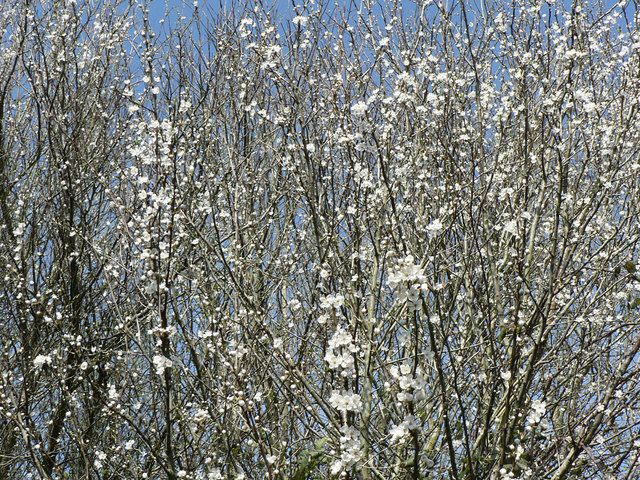
The May bush — Crann Bealtaine in Irish — is a branch of hawthorn, sometimes blackthorn when hawthorn is unavailable, decorated with ribbons, painted eggshells, and other bright objects, set up at the door of a house or in a public place at Bealtaine (1 May) to mark the start of summer. It was, until the early twentieth century, one of the most widespread and visible folk-customs in Ireland, observed across Leinster, Munster, and parts of Connacht in versions that varied by locality but shared a common form.
By the middle of the twentieth century, the practice had nearly disappeared. From the 1990s onward it has been gradually revived — most visibly in Dublin, where the tradition was particularly strong in the south-west of the city through the nineteenth century — and the May bush is now a recognisable, if minority, part of the contemporary Bealtaine season.
This is what the older tradition actually consisted of, and what survives.
Bealtaine in the Irish calendar
The Gaelic year divides into four quarters at the cardinal points of Imbolc (1 February), Bealtaine (1 May), Lughnasadh (1 August), and Samhain (1 November). Bealtaine is the start of summer — the moment when the light half of the year begins, the cattle were traditionally moved to the summer grazing grounds (the booley), and the year’s outdoor work began in earnest.
The Bealtaine customs that survived into the recorded folk-tradition include the bonfires (still observed in many parts of Ireland), the first-water customs (rising before dawn to draw the first water of the day, said to bring luck for the year), the butter-making rituals to ward off the theft of milk-yields by the Sídhe, and the May bush itself.
Of these, the May bush was the one that most consistently appeared in public space. The bonfires were communal but distant; the first-water and butter customs were private to the household; the May bush was set up where it could be seen by neighbours and passers-by, and was, in some localities, the centre of a small competitive performance — whose May bush was best, who had decorated theirs first, who had managed to steal a rival’s overnight.
What the practice looked like
The exact form of the May bush varied by region, but the recurring elements were:
A branch. Cut at sunset on Bealtaine Eve (30 April) or at sunrise on Bealtaine itself, from a hawthorn growing on common land or in a hedge — never from a fairy thorn, the lone tree forbidden by the older taboo (see The fairy-thorn taboo). The branch needed to be in bloom if possible — hawthorn flowers in late April and through May in Ireland, so the bush was timed to catch the white flowering. Where hawthorn had not yet flowered or was unavailable, blackthorn (which flowers earlier and is more readily found bare) was used, with ribbons compensating for the absence of natural bloom.
Decorations. Ribbons of red, blue, white, and yellow were the standard — the colours varied by region — tied along the length of the branch. Painted eggshells (saved from Easter the month before, or coloured specifically for the bush) were threaded onto strings and hung from the branch. Wildflowers (cowslips, primroses, and marsh marigolds were the most common) were tied at the top. In some areas, candles were lit on the bush at evening; in others, rushlight (a primitive candle made from rush dipped in animal fat) was used.
Placement. The bush was set up at the door of the house — sometimes in a pot, sometimes simply driven into the earth at the threshold; or in a public place — at the cross-roads of a village, on a green, in a market square. In Dublin, the May bush was particularly associated with the south-west of the city — the Liberties and adjacent districts — where the public ones were elaborate community productions, set up at street-corners and lit at evening for the duration of May.
Theft and rivalry. A consistent element across the regional reports is competitive theft. Rival villages or neighbourhoods would attempt to steal each other’s May bushes overnight; the theft itself was part of the ritual, not a violation of it; recovering one’s bush, or replacing a stolen one with a finer specimen the next morning, was part of the contest. This element is well-documented in the Folklore Commission’s Schools’ Collection of 1937–38 (now searchable at Dúchas.ie) and appears in versions across Munster, Leinster, and parts of Connacht.
The blackthorn-hawthorn pair
For a publication about Irish stick-making, the May bush is interesting partly because of the paired symbolism it embodies between the two thorn-trees of the Irish hedgerow: hawthorn and blackthorn.
Hawthorn flowers in late April and through May. Its bloom is the moment summer is generally accepted to have arrived. The May bush is its festival.
Blackthorn flowers in March, before the leaves come out, and the cold spell that often coincides with the bloom is named after it (the blackthorn winter). It is winter’s last word — the wood that the Cailleach strikes the ground with to keep the cold in (see The Cailleach).
The two trees, planted side by side in the same hedgerow, mark the cusp of the seasons: blackthorn’s bloom in March is the end of winter; hawthorn’s bloom in May is the start of summer; the period between them is the spring, which in the Gaelic calendar belongs to neither season fully. The May bush is the celebratory marker of the transition, raised when the cold has finally retreated and the warm half of the year has begun.
This is part of why blackthorn was used as the May bush wood when hawthorn was not yet in bloom — the substitution was natural because the two trees were already culturally paired, and the use of either one read as a Bealtaine signal regardless of which was available.
The decline
The May bush largely disappeared from Irish public life in the early twentieth century. Several factors were involved.
The Catholic Church discouraged the practice from the late nineteenth century onward, partly as part of its broader campaign against folk-customs with pre-Christian associations, partly because the May bush competed for public attention with May devotions to the Blessed Virgin Mary (May being traditionally the Marian month in Catholic devotional calendar). The discouragement was not always doctrinal — many parish priests participated in May bush customs — but the overall institutional pressure was negative.
The public-health authorities of nineteenth-century Dublin discouraged the bonfires associated with Bealtaine, and the May bush as a public installation was sometimes folded into the same regulatory pressure (concerns about thatched roofs, candles in public spaces, disorderly gatherings).
Urbanisation removed the practice’s natural setting. The May bush worked best in a village, a small town, or a clearly-defined urban neighbourhood. In the rapidly growing twentieth-century Irish city, the social conditions for a public competitive folk-practice were eroded, and the practice retreated to private household observance before fading further.
The 1916 Rising and the War of Independence disrupted Dublin’s customary urban life in ways that public folk-practices rarely recovered from. By the founding of the Free State in 1922, the May bush was a memory in most parts of Dublin where it had been most strongly observed.
By 1950, the May bush was effectively a folk-historical phenomenon rather than a living tradition. The Folklore Commission collectors of the 1930s and 1940s recorded the custom from elderly informants who remembered it from their childhoods; by the 1970s, those informants had passed and the practice was held only by a few isolated households.
The revival
From the 1990s onward, the May bush has been gradually revived — first as a heritage-festival reconstruction, more recently as something closer to a working folk-practice in some Dublin localities.
The revival has been led by:
- Heritage and folklore organisations, including the National Folklore Collection at UCD and various Dublin community history groups, which have published material on the older tradition and supported public reconstructions
- Dublin City Council, which has incorporated May bush installations into Bealtaine-month cultural programming since the early 2000s
- Local community groups in the Liberties and other south-west Dublin neighbourhoods, where the tradition was strongest and where some inherited memory of the practice persisted longer than elsewhere
- Individual households who have taken up the practice as a piece of family folk-craft, often with reference to the published Folklore Commission material
The modern May bush is, like most folk-revivals, partly historical and partly reconstructed. The visual elements (ribbons, eggshells, wildflowers) follow the older models faithfully; the competitive theft has not, on the whole, been revived as part of the contemporary practice, which would in any case be hard to fold into an urban context where private property is more strictly bounded than in the older village setting.
The practice survives now as a household observance in some families and a community installation in some Dublin districts. It is not nationally observed in the way Halloween or St Patrick’s Day are. But it is, in 2026, more visible than it was in 1990, and the trajectory is upward.
What this has to do with sticks
The May bush is not directly a stick-making tradition. The branch is not made into a stick; the bush is decorative rather than functional; the wood is not seasoned, shaped, or carried after Bealtaine.
But the May bush sits in the same wood-culture as the Irish stick. Both depend on the hedgerow as a source — the hedge that produces the May hawthorn is the same hedge that produces the November blackthorn for the stick. Both observe the cyclical use of hedgerow wood: cut, used, returned to the soil. Both are part of a continuous Irish relationship with the thorn trees of the hedge that has, on the longer view, lasted far longer than any of the political or institutional structures that have tried to discourage or accommodate it.
A reader who has cut a stick from a hedge in winter has, in a small sense, done the same kind of cultural work that the May bush practitioner did at the other end of the year. The wood is the same wood. The hedge is the same hedge. The use is different but the relationship is continuous.
How to observe it
The simple form, for a reader who would like to try the practice themselves:
- On Bealtaine Eve (the evening of 30 April) or at sunrise on Bealtaine (1 May), cut a small branch of hawthorn — or, if hawthorn is not in bloom, blackthorn — from a hedge (with permission, and avoiding any lone fairy thorn).
- Tie ribbons to the branch in colours of your choosing — red, blue, white, and yellow are the traditional set.
- Hang painted eggshells (saved from Easter or coloured for the purpose) along the branch on threads.
- Add wildflowers if available — cowslip, primrose, marsh marigold are the canonical choices.
- Set the branch upright at your door, or in a public place where it can be seen by neighbours.
- Leave it in place for the month of May.
- At the end of the month, return the branch to the hedge or compost — do not burn it.
The practice does not require any belief in its mythological background. It is, like most folk-customs that survive, a piece of seasonal observance that works at the level of cultural continuity regardless of what one makes of the older meanings.
This piece is one of three on the surviving Bealtaine and Cailleach material on the journal. The figure of the Cailleach, who carries blackthorn in winter, is the seasonal counterpart of the hawthorn May bush. The lone-thorn-tree taboo — which is observed in selecting hedge wood for either a stick or a May bush — is in The fairy-thorn taboo.
Sources & further reading
- Estyn Evans, Irish Folk Ways (1957), Routledge & Kegan Paul / WorldCat
- Niall Mac Coitir, Irish Trees: Myths, Legends & Folklore (2003), Collins Press
- Dúchas — May Day customs in the Schools' Collection, National Folklore Collection of Ireland
- Crann Bealtaine — Dublin May bush revival, Dublin City Council Heritage
- Patricia Lysaght, on calendar customs, WorldCat (Lysaght bibliography)
Related reading
- historyBlackthorn in Irish mythology
The fairy tree, the Cailleach's staff, and the dark twin of the May hawthorn — what the older tradition actually says about the wood.
- historyThe Cailleach
The hag of winter, of the high places, of the storm, and of the blackthorn staff that keeps the cold in the ground.
- historyThe fairy-thorn taboo
The proscription against felling a lone hawthorn or blackthorn — the most durable element of Irish folk-belief, observed in 2026 by people who would not call themselves believers.
- woodsBlackthorn Tree Wood: Curing
The hedgerow tree behind most Irish sticks: dense, dark, slow-growing, and beloved of hedge-witches.