The fairy-thorn taboo
The proscription against felling a lone hawthorn or blackthorn — the most durable element of Irish folk-belief, observed in 2026 by people who would not call themselves believers.
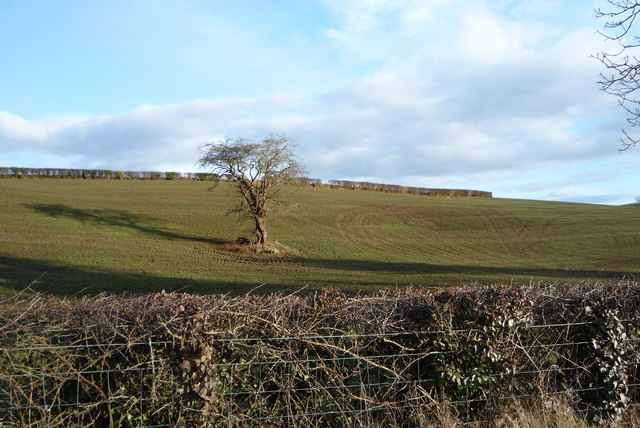
The most durable surviving element of Irish folk-belief — the one that crosses the most decisively from inherited tradition into observed contemporary behaviour — is the proscription against cutting down a lone fairy thorn. A solitary hawthorn or blackthorn tree, growing apart from a hedge, often in the middle of a field or at the meeting of paths, is held to be the property of the Other Crowd — the Sídhe, the Daoine Maithe, the fairies — and to fell such a tree is to invite ill luck of a particularly stubborn kind.
The belief is observed in 2026, in much of rural Ireland, by people who do not necessarily describe themselves as believing in fairies. It is the kind of taboo that operates as inherited caution more than as active religion: a way of paying respect to a tree, a place, a piece of inherited landscape, that does not require a metaphysical account to remain intact.
This is what the proscription consists of, and what survives.
The form of the proscription
The taboo is specific. It applies to a lone tree of one of the two thorn species — hawthorn (Crataegus monogyna) or blackthorn (Prunus spinosa) — growing apart from a hedge or copse, by itself, in an open field, on a hill, at the meeting of roads, or at a boundary marker. A thorn tree growing as part of a hedgerow is not protected; the protection attaches specifically to isolation.
The proscription:
- Felling the tree is the most strictly forbidden act. The negative consequences are held to be severe and to fall on the person who cuts the tree, the person who ordered the cutting, or in some accounts on members of their family.
- Cutting branches is also avoided, particularly in older accounts, though in some regional variants the taboo against branch-cutting is weaker than the taboo against full felling.
- Building close to the tree is discouraged in some local traditions, with the variation that builders should not encroach within a circle of a certain distance (specified variously, often as the tree’s drip-line or as a fixed unit such as nine or twenty-one feet).
- Animals or children allowed under the tree at certain times — particularly at the boundary days of Bealtaine, Lughnasadh, Samhain, and Imbolc — are at risk of being “taken” by the Sídhe, in some accounts.
What is not forbidden:
- Walking past the tree
- Sitting under it during ordinary times of year
- Allowing it to grow naturally without intervention
- Leaving offerings — some traditions encourage leaving small items (ribbons, coins, fragments of cloth) tied to the branches as gifts to the Sídhe, particularly when seeking favour or protection
The pattern is consistent: the tree is to be left alone in a way that respects its supposed occupants. Active interference is what triggers the negative consequences.
The documented misfortunes
The Folklore Commission’s Schools’ Collection of 1937–38, gathered from primary-school children and their elderly relatives across rural Ireland and now searchable at Dúchas.ie, contains many hundreds of accounts of fairy-thorn felling and the misfortunes that followed.
The recurring patterns:
Cattle losses. A farmer who fells a fairy thorn finds his cattle dying within months, with no veterinary cause established. This is the most-cited form of post-felling misfortune in the Folklore Commission material.
Crop failure. Fields that had been productive fail to yield after a fairy thorn nearby is removed.
Family illness or death. A member of the family — sometimes the fellor himself, more often a child or a spouse — falls ill and dies, with the family attributing the death to the felling.
Builder’s accidents. Workers involved in clearing land for development, where a fairy thorn was removed, suffer accidents on the site.
Loss of sense or mental disturbance. A small but consistent thread of accounts describes the fellor losing his wits, becoming melancholic, or being unable to sleep after the deed.
The accounts are collected at the level of personal testimony rather than verified causation. The collectors did not, by and large, attempt to determine whether the misfortunes were genuine or attributable to confirmation bias; the Schools’ Collection is a record of what people believed had happened, not a forensic survey of what actually had. But the consistency of the patterns across the regional reports — the same kinds of misfortunes appearing in counties on opposite sides of the country — suggests a stable cultural framework for interpreting the events, even if individual accounts vary in plausibility.
The Latoon thorn and the M18
The most famous modern example of the fairy-thorn taboo is the 1999 re-routing of the M18 motorway around a lone hawthorn at Latoon, near Newmarket-on-Fergus in County Clare.
The motorway, then under planning, was scheduled to take a route that would have required felling the tree. Eddie Lenihan, a folklorist, storyteller, and author of Meeting the Other Crowd: The Fairy Stories of Hidden Ireland (Penguin, 2003), led a public campaign to spare the tree, drawing on Irish-language tradition and his own collected oral histories to argue that the consequences of felling would be serious. The campaign attracted national and international media attention.
The outcome: the M18 route was amended to bypass the tree, which still stands at the side of the motorway in 2026 [VERIFY current status]. The episode was widely reported as an example of folk-belief winning out over engineering pragmatism in modern Ireland; it was, more accurately, an example of an engineering practicality (a small route adjustment) being adopted in deference to a real cultural belief held by some of the people the project would affect.
Lenihan’s role was important. He framed the issue not as a question of whether fairies exist — a frame on which he would have lost the public argument — but as a question of respect for inherited landscape and inherited belief. The argument worked because the Irish public, including many people who would not describe themselves as religious or superstitious, retained enough cultural attachment to the lone-thorn-tree to support the protective conclusion.
The Latoon case has become a shorthand reference in the Irish-language conservation conversation. Other lone thorns subsequently flagged for development have, in some cases, been spared on the same precedent; in other cases, the developments have proceeded after public discussion. The taboo is not absolute, but it has more force in the contemporary Irish landscape than a casual observer might expect.
Why the proscription survives
The fairy-thorn taboo has survived more durably than most pre-Christian folk-beliefs in Ireland for several reasons.
First, it is specific and behavioural. It tells you what not to do. There is no doctrinal claim to be assented to; you simply leave the tree alone, and the question of whether anything would have happened if you had felled it never arises. A behavioural taboo of this kind survives much better than an explicit belief, because it does not require active commitment from those who observe it.
Second, the costs of observance are low. A lone hawthorn or blackthorn in a field reduces the field’s grazing or arable area by a few square metres. The economic cost of leaving the tree alone is trivial; the social cost of felling it (in a community where the belief still has currency) can be significant. The cost-benefit calculation favours preservation regardless of metaphysics.
Third, the enforcement mechanism is internalised. There is no priest, no court, no institution that polices fairy-thorn felling. The enforcement is the felling person’s own anxiety about the consequences, plus the social judgement of neighbours. Both are durable mechanisms; both survived the secularisation of mid-twentieth-century Irish life better than institutional religious observance did.
Fourth, the proscription is consistent with broader environmental sensibility. A late-twentieth-century or twenty-first-century landowner who would not describe themselves as believing in fairies can still endorse the practice of leaving a venerable solitary tree alone, on grounds that range from biodiversity to landscape aesthetics to inherited respect for elders’ practices. The taboo accepts a wider range of motivations than its medieval form would have required.
Fifth, the cultural framing has been actively maintained by figures like Lenihan, by published material like Mac Coitir’s Irish Trees, and by the Folklore Commission’s archives. The belief has not had to depend on uninterrupted oral transmission alone; it has been periodically refreshed in published form, which has helped it survive even where the local oral tradition has weakened.
What it tells us about the wider tradition
The fairy-thorn taboo is, in the larger pattern of Irish folk-belief, an unusually well-preserved survival. Most of the rest of the older tradition — the Cailleach, the May bush, the bataireacht stick-fighting, the pattern-day gatherings, the wells and the hag-stones — has either disappeared, been institutionalised into an official-heritage register, or been actively reconstructed by revivalists. The fairy thorn, alone, has not needed any of those treatments. It has stayed in place.
This is interesting partly for what it suggests about which kinds of belief survive into modernity. The explicit metaphysical claims of the older tradition (the existence of the Sídhe, the Cailleach as a divine winter figure, the predictive power of the May bush) have largely faded. The implicit behavioural rules that those claims supported (don’t fell a lone thorn, don’t cut a hedge during certain weeks of the year, don’t build over a known fairy-fort) have survived in adapted form because the behaviour can persist without the explicit framework. The container outlived the contents.
For a publication about Irish stick-making, the lesson is practical: a maker walking a hedge in winter, looking for stick wood, is reading a landscape that is partly shaped by the same proscription. Lone thorns are not cut for sticks. Hedge thorns are. The harvesting practice that produces real handmade Irish sticks is compatible with the lone-thorn taboo because real makers cut from hedgerows, not from solitary trees, and the maker’s instinct to leave the lone tree alone is the same instinct the broader culture has retained.
The wood that becomes a real handmade Irish stick comes, in this small sense, from the same cultural framework that left the lone tree standing — and that framework, in 2026, is still operative.
The fairy-thorn taboo is one of three closely-related Irish folk-beliefs the journal addresses on its own pages. The Cailleach is the older mythological figure who originally protected the wood. The May bush is the seasonal counterpart, observed at Bealtaine. Blackthorn in Irish mythology covers the wider folklore the wood carries.
Sources & further reading
- Eddie Lenihan, Meeting the Other Crowd: The Fairy Stories of Hidden Ireland (2003), Penguin / WorldCat
- Dúchas — National Folklore Collection of Ireland, University College Dublin
- Niall Mac Coitir, Irish Trees: Myths, Legends & Folklore (2003), Collins Press
- Estyn Evans, Irish Folk Ways (1957), Routledge & Kegan Paul / WorldCat
- Patricia Lysaght, The Banshee (1986), Glendale Press / WorldCat
Related reading
- historyBlackthorn in Irish mythology
The fairy tree, the Cailleach's staff, and the dark twin of the May hawthorn — what the older tradition actually says about the wood.
- historyThe Cailleach
The hag of winter, of the high places, of the storm, and of the blackthorn staff that keeps the cold in the ground.
- historyThe May bush
The branch of hawthorn — sometimes blackthorn — decorated with ribbons and eggshells at Bealtaine, set up at the door to mark the start of summer. A folk-craft that nearly disappeared and is now slowly returning.
- woodsBlackthorn Tree Wood: Curing
The hedgerow tree behind most Irish sticks: dense, dark, slow-growing, and beloved of hedge-witches.