How to fit a brass ferrule to a walking stick
Step-by-step replacement of a worn or lost ferrule on a working walking stick — sizing, removal, fitting, securing, and what to do when the shaft end has deteriorated under the old ferrule.
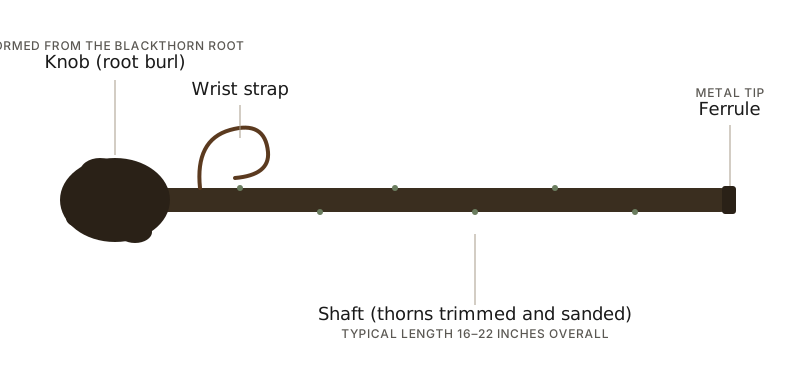
The ferrule — the metal or rubber cap at the foot of a walking stick — is one of the working parts most likely to need replacement during the working life of a stick. A typical brass ferrule lasts 5-15 years of regular use; a rubber tip can wear through in 6-18 months on hard surfaces. Replacement is well within home-maintenance capacity for most users.
This guide covers the practical procedure. For the broader maintenance context, see How to care for a blackthorn stick. For identifying when a ferrule needs replacement, see Identifying stick wear and damage.
Tools and materials
For a typical ferrule replacement:
- New ferrule sized to the shaft diameter (see sizing section below)
- Small flat file or fine sandpaper (320-grit) for shaft preparation
- Small hammer (a soft-faced mallet is ideal; a regular small hammer with a piece of cloth between hammer and ferrule works)
- Small wood drill bit (only needed for very tight fits or for re-securing with a small pin)
- Wood glue (optional, for additional securing)
- Damp cloth for clean-up
Total cost of materials: typically £8-£20 for the ferrule itself plus £5-£15 for any tools not already on hand.
Sizing the replacement ferrule
Standard ferrule sizes come in 5mm increments. The common working sizes are 15mm, 19mm, 22mm, and 25mm internal diameter.
To size:
- Measure the shaft diameter at the point where the new ferrule will sit (typically the bottom 30-50mm of the shaft)
- Choose a ferrule with internal diameter matching the shaft diameter or one size larger for a friction-fit. Don’t undersize — a too-small ferrule won’t fit; a slightly oversized ferrule can be filed down or glued into place.
- Check ferrule length — typically 30-50mm of shaft is enclosed by the ferrule; choose a length that suits the look of your stick.
If the shaft tapers significantly, measure where the ferrule will actually sit, not at the absolute foot.
Removing the old ferrule
The procedure varies depending on how the old ferrule was secured:
Friction-fit ferrule — should slide off with modest force. Apply gentle heat (hairdryer or low-temperature heat tool, 30 seconds) if it’s stuck; the heat softens any oxidation or old adhesive.
Glued ferrule — score around the top edge of the ferrule with a sharp craft knife to break the glue seal, then apply heat as above. Most glues soften with heat enough to allow removal.
Pinned ferrule — locate the small pin or screw securing the ferrule (often visible as a small dot on the side of the ferrule). Remove the pin first with fine pliers or by drilling carefully, then proceed with friction-fit removal.
Rusted-on steel ferrule — these are harder. A small amount of penetrating oil applied around the join, left overnight, often loosens enough for removal. If still stuck, score deeply around the top edge with a sharp knife and split the old ferrule off in sections.
Once the old ferrule is off, inspect the shaft end carefully. See the next section for what to do if the shaft has deteriorated.
Preparing the shaft end
Before fitting the new ferrule, the shaft end needs to be in sound condition:
- Clean off old glue or oxidation with fine sandpaper or a small file. The shaft end should be clean wood.
- Check the wood condition — squeeze the shaft 25-50mm from the end with finger pressure. If the wood compresses or feels soft, you have rot or moisture damage to address (see below).
- File any splits or check marks flush — small splits at the foot can be levelled with a file; major splits need wood-filler or sectional replacement.
- Match the shaft diameter to the ferrule — if the shaft is slightly oversized, file down lightly until the ferrule slides on with firm hand pressure. If slightly undersized, build up with a thin shim of wood (a wooden coffee-stirrer works well) or accept a small amount of glue gap.
Fitting the new ferrule
Once the shaft is prepared:
- Test-fit the ferrule by hand. It should slide on with firm pressure and require some force to seat fully. If it pushes on easily, it’s too loose; size down or add a thin shim.
- Apply a thin bead of wood glue to the inside top edge of the ferrule (optional but recommended for long-term security). PVA wood glue works for most fittings; epoxy is overkill for normal use.
- Slide the ferrule onto the shaft by hand until it stops.
- Seat the ferrule fully by tapping with a small hammer (using a piece of cloth between hammer and ferrule to prevent marking the brass). Tap the side of the ferrule, not the bottom — direct hammer strikes to the bottom can dent the ferrule.
- Check the seating — the top edge of the ferrule should sit flush against the shaft taper, with no visible gap.
- Wipe off excess glue with a damp cloth before it sets.
- Allow the glue to dry overnight before serious use.
For very tight fits, warming the ferrule slightly (hairdryer for 30 seconds) expands it modestly and makes seating easier.
Securing with a pin (optional)
For working sticks that see hard use, some makers add a small securing pin:
- Drill a small hole (1-2mm diameter) through the side of the ferrule and into the shaft, about 8-12mm from the top edge of the ferrule. Drill carefully — too deep penetrates through to the other side of the shaft.
- Insert a small brass pin or nail — sized to a friction-fit in the drilled hole.
- File the pin flush with the ferrule surface.
This is optional belt-and-braces; most ferrule replacements don’t need it.
Handling a deteriorated shaft end
The most common complication is finding the shaft end has deteriorated under the old ferrule. Wood under a ferrule sits in a sealed environment with limited air circulation; moisture penetration over years can cause rot, particularly in older sticks stored in damp conditions.
Mild deterioration (slight softness, small surface checks):
- Cut off the deteriorated section (1-2cm of shaft) with a fine saw
- File the new end flush and clean
- Fit the new ferrule slightly higher up the shaft than the old one sat
Moderate deterioration (visible rot, larger splits):
- Cut back further to clean sound wood
- The stick is now slightly shorter; check that the new length still fits the user
- Fit a ferrule of slightly larger diameter to match the new (likely larger) shaft diameter higher up
Severe deterioration (substantial rot extending up the shaft):
- The stick may not be salvageable without major work
- A working maker can sometimes fit a hardwood splice or replace the lower section, but the work is substantial
- For a heritage piece, professional restoration may be warranted
- For a working stick of modest value, replacement is often more economical than repair
For broader restoration context, see How to restore a vintage stick.
Checking the result
A properly-fitted ferrule should:
- Sit flush with the shaft taper, no visible gap at the top edge
- Hold firmly when the stick is tapped on the ground — no rattle, no movement
- Look proportionate to the stick’s overall size and decoration
- Be replaceable in future — if you’ve glued in place, the same heat-and-knife procedure should work next time
A stick with a properly-fitted ferrule should give years of further working life.
When to ask a working maker
For situations where the home job isn’t appropriate:
- High-value vintage or heritage pieces — professional restoration preserves provenance and value
- Substantial rot or damage — beyond simple ferrule replacement, working maker assessment is worthwhile
- Tight original silver collar or sterling fittings — risk of damaging silverwork is real; professional handling is safer
- You don’t want to do it yourself — working makers will fit a replacement ferrule for £15-£40 depending on complexity
For commissioning replacement work, see The makers page for the journal’s recommended Irish maker.
Maintenance schedule going forward
Once the new ferrule is fitted:
- Annual check — wipe clean, check for looseness, inspect for new wear
- 5-10 year replacement expectation for brass ferrules under normal use; sooner for rubber tips
- More frequent checks if the stick sees hard use (hill walking, daily commuter use)
- Combine with annual oiling of the shaft (see How to oil a stick step by step)
A walking stick well cared for at the ferrule should give decades of further service.
Related reading
- guidesHow to care for a blackthorn stick
A real handmade blackthorn stick is meant to last a lifetime. The maintenance that gets it there is small and simple, and it is mostly about keeping the wood fed and dry.
- guidesHow to replace a leather wrist strap
Removing a worn or broken wrist strap and fitting a quality replacement — selection, attachment methods (knot, drilled-through, swivel-fitting), and the small details that distinguish a working repair from a botched one.
- guidesIdentifying stick wear and damage
How to recognise the common wear patterns and damage modes that develop on working walking sticks — what's cosmetic, what's structural, when to repair, and when to retire.
- guidesHow to restore a vintage walking stick
When and how to restore an inherited, acquired, or rediscovered vintage walking stick — assessment, deciding what to preserve, the conservative restoration approach, and when professional restoration is appropriate.