The Philippines
Escrima, arnis, kali, and the rattan paired-stick tradition — one of the world's most distinctive stick-using cultures, and the Philippine national martial art since 2009.
The Filipino stick tradition is, in its modern form, the most internationally-visible non-Western stick-arts tradition — carried globally by the twentieth-century Filipino diaspora, recognised as the Philippine national martial art and sport since 2009, and present today in serious training communities across the United States, Australia, Britain, continental Europe, and the broader Filipino-diaspora world. The tradition occupies a register that no other regional stick-art quite duplicates: paired rattan sticks (rather than single hardwood), high-tempo flowing practice (rather than the slower-paced Japanese and European disciplines), substantial pre-colonial and colonial-period historical depth, and a working modern competitive structure under the Republic Act No. 9850 framework.
This page is the regional cluster — orientation, reading-order, and a structural overview. The detailed treatment of the martial-arts forms is at Escrima, arnis, and kali; the material context is at Bamboo and Malacca cane.
Quick orientation
| Principal stick traditions | Escrima (Cebuano-influenced), arnis (Tagalog-influenced), kali (indigenous-revival term) |
| Canonical form | Paired sticks, ~26–28 inches (66–71 cm), held in both hands |
| Training material | Rattan — particularly palasan (Calamus merrillii) |
| Hardwood material | Kamagong (Philippine ironwood, Diospyros philippensis) for advanced and presentation work |
| National status | Republic Act No. 9850 (2009) — national martial art and sport |
| Modern competitive structure | World Eskrima Kali Arnis Federation (WEKAF), International Modern Arnis Federation Philippines (IMAFP), and several others |
| Major regional centres | Cebu (escrima centre); Manila and Luzon (arnis centre); broader Visayas |
| International diaspora communities | Substantial in the United States (particularly California), Britain, Australia, and continental Europe |
The rattan-vs-bamboo distinction
The single most-confused point about Filipino stick traditions in Western coverage is the material distinction between rattan and bamboo. The two are not the same; the Filipino tradition uses rattan, and the Western viewer who casually conflates “Asian stick culture” with “bamboo” is making a real material-cultural error.
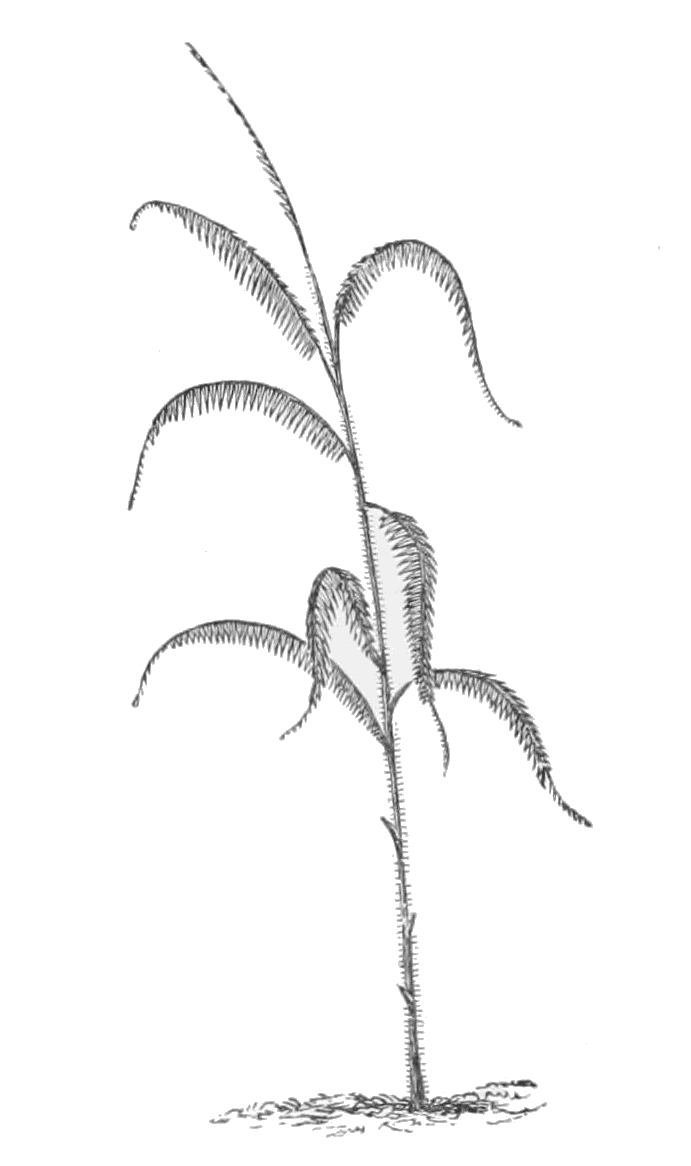
Rattan (the Filipino working stick material) is a climbing palm — solid in cross-section, fibrous, with vascular bundles in a parenchyma matrix. It is light, flexible, and absorbs impact through fibre splaying rather than through cleaving. The principal Filipino working species are palasan (Calamus merrillii), sega (Calamus caesius), and several other Calamus species. The harvest is from wild and managed stands of climbing palms in lowland Filipino forest, with the long climbing stems cut down at maturity and processed into stick blanks.
Bamboo (the East Asian working stick material) is a giant grass — hollow in cross-section, with internal nodes forming closed compartments. The substantially-different structure produces substantially-different working character: bamboo is lighter still, more rigid in some axes, and behaves differently under impact (tendency to splinter longitudinally rather than splay fibrously).
The Filipino tradition uses bamboo in some contexts — bamboo in the broader Philippine material culture is entirely real and substantial — but the stick-arts working tradition centres on rattan, not bamboo. A Filipino arnis stick is a rattan stick. The distinction matters because it sets the Philippine tradition apart from the East Asian (Japanese-Chinese-Korean) tradition that uses bamboo, and it matters because the working character of the resulting stick is genuinely different.
For the rattan side specifically, see Malacca cane (which covers a related but distinct rattan species, Calamus scipionum) and Bamboo (which covers bamboo and includes the rattan-vs-bamboo botanical comparison). For the Filipino stick work as a martial art, see Escrima, arnis, and kali.

Pre-colonial origins
The Filipino stick-fighting traditions predate the Spanish colonial period (which began in 1565 with Miguel López de Legazpi’s expedition) by an indeterminate but substantial margin. Pre-contact Filipino warfare drew heavily on edged weapons — the kris, kampilan, barong, and various blade forms — and the stick-and-blade traditions of the modern arnis curriculum descend in part from these pre-contact practices.
Direct documentary evidence of the pre-colonial period is limited (pre-Hispanic Philippine writing systems were in use but few original texts survive; most surviving descriptions of pre-colonial Filipino martial practice come from Spanish chroniclers writing in the sixteenth century and later). Indirect evidence — from comparative linguistic study of stick-and-blade terminology across Philippine languages, from oral lineage histories preserved in modern arnis schools, and from archaeological evidence of indigenous weapons — supports a substantial pre-colonial martial-arts tradition with stick work as one element among several.
The pre-colonial tradition included:
- Edged-weapon combat as the primary martial-arts emphasis (the kris, kampilan, and various other blade forms)
- Stick-and-blade transitions — the use of sticks as training surrogates for blades and as alternative weapons when blade was unavailable
- Empty-hand grappling and striking as integrated with weapon work
- Regional and cultural variations across the substantial linguistic and cultural diversity of the Philippine archipelago
The Spanish colonial period (1565–1898)
The Spanish colonial period substantially shaped the Filipino martial-arts tradition that survived into the modern era. Several developments:
Weapons-prohibition and survival through concealment. Spanish colonial authorities periodically prohibited public practice of indigenous martial arts, particularly with edged weapons. The well-attested traditional account holds that some practices survived disguised as folk dances — particularly the moro-moro dance-dramas, where the choreographed combat between Christian and Moro characters incorporated genuine fighting movements within an apparent theatrical context. The exact extent of this preservation strategy is debated by serious historians, but the broad pattern is well-documented and is part of the tradition’s modern self-understanding.
Spanish-language vocabulary infusion. The Spanish-derived terminology in modern Filipino martial arts — escrima, arnis, largo, corto, espada, daga, the names of the twelve angles in some lineages — dates from this period. The terminology is now fully naturalised in Filipino practice but its origin is colonial.
Synthesis with Spanish blade-arts. Spanish esgrima (rapier and sabre fencing) influenced Filipino practice across the long colonial centuries. Several modern arnis lineages preserve techniques and concepts that are clearly Spanish-derived; the synthesis is integral to the form rather than a removable colonial overlay.
Regional differentiation. The substantial regional variations in Filipino martial-arts practice — Cebuano (Visayan) escrima, Tagalog arnis, the Ilonggo and Pampangan and Bikolano regional traditions — partly reflect the differential impact of Spanish colonial policy across the archipelago. Areas of strong Spanish administrative presence (greater Manila, the major colonial port cities) saw heavier vocabulary borrowing; outlying areas preserved more indigenous terminology and conceptual structure.
The American colonial period (1898–1946)
The American period saw the formalisation of Filipino martial arts into modern lineages and the beginnings of international export.
The first formal lineages. Several major modern arnis lineages were founded during the American period — most notably Doce Pares (“Twelve Pairs”), founded in Cebu in 1932 by Lorenzo Saavedra and others, codifying the Cebuano escrima tradition into a structured curriculum.
Public-school physical education. The American colonial education system included physical-education curricula in some schools that incorporated traditional Filipino arts; this institutional support helped legitimise and spread the practice within the Philippines.
Beginnings of diaspora export. Filipino emigration to the United States during the American period (the substantial Filipino communities in Hawaii and California from the 1920s onward) carried Filipino arts with the migrating community. By the 1940s, Filipino martial arts were being taught informally in California; by the 1960s and 1970s the diaspora community was producing the first substantial American-trained instructors.
The post-independence and modern era (1946–present)
Filipino independence in 1946 began the modern era of the practice’s institutional development.
Codification of major modern lineages. Modern Arnis (founded by Remy Presas, ~1957) is the most internationally-influential post-independence Filipino martial-arts lineage, drawing synthetic on multiple regional traditions and exporting widely through the global diaspora. Pekiti-Tirsia Kali (preserved through the Tortal family and substantially developed by Leo Gaje from the 1960s onward) is the principal blade-emphasising modern lineage. Kalis Ilustrisimo (the lineage of Antonio Ilustrisimo, 1904–1997) preserves an older Filipino blade-and-stick tradition.
The Inosanto vector. Dan Inosanto (born 1936), Bruce Lee’s training partner and one of the most influential Filipino-arts ambassadors in the global martial-arts world, taught extensively in Los Angeles from the 1970s onward. The “Inosanto kali” tradition that Inosanto developed, drawing on multiple Filipino sources he had studied with, became the principal vector by which Filipino arts entered the global martial-arts mainstream and influenced practitioners in dozens of other arts.
Global diaspora expansion. The post-1965 Filipino diaspora to the United States, Canada, Britain, Australia, and continental Europe carried Filipino arts globally. By the 1990s, substantial Filipino-arts communities existed in most major Western countries; by the 2000s, the practice was institutionally well-established in the broader global martial-arts world.
Republic Act No. 9850. In 2009, the Philippine government enacted Republic Act No. 9850, declaring arnis the national martial art and sport of the Philippines, mandating its inclusion in the school curriculum, and providing for its institutional development. The act formalised the practice’s status as a national-cultural institution.
Modern centres of practice
The principal modern centres of Filipino martial-arts practice:
The Philippines — substantial domestic communities, particularly in Cebu (escrima centre), Manila and Luzon (arnis centre, with the IMAFP institutional structure), the broader Visayas, and most major Philippine cities. The Department of Education has incorporated arnis into the national curriculum following Republic Act No. 9850.
The United States — particularly substantial in California (the historic centre of Filipino-American community), with secondary centres in the New York metropolitan area, Hawaii, the Pacific Northwest, and major university communities nationwide. The Inosanto Academy (Marina del Rey, California) is the principal institutional centre of the international Inosanto lineage.
Britain — modest but active community, with Modern Arnis, Inosanto Kali, and several other lineages represented; concentrations in London and the broader South-East.
Australia — substantial Filipino diaspora community has produced substantial arnis representation, particularly in Sydney and Melbourne.
Continental Europe — concentrations in Germany, France, the Netherlands, and Italy, with WEKAF affiliated clubs across most major European countries.
The competitive sport
Modern competitive arnis is governed internationally by the World Eskrima Kali Arnis Federation (WEKAF) and several other federations. The competitive format is described in Escrima, arnis, and kali; the sport features padded armour and padded sticks, point scoring, and weight-class structure.
Within the Philippines, competitive arnis is supported by the International Modern Arnis Federation Philippines (IMAFP) and Sports Commission of the Philippines structures. National-level competition is well-developed; international Filipino competitors regularly succeed at the World Cup level.
The cultural register
Filipino martial arts occupy a distinctive cultural register within Philippine society:
National-cultural status. Republic Act No. 9850 makes arnis the national martial art; this is institutional recognition of a status the practice already had in the cultural imagination, but the formal status has substantial implications for funding, school curriculum, and international representation.
Diaspora identity. For Filipino diaspora communities, particularly in the United States, arnis carries substantial cultural-identity weight as a distinctively Filipino practice. The diaspora arnis community is partly a martial-arts community and partly a cultural-identity community; the two registers overlap significantly.
Pre-colonial pride. The pre-colonial roots of the practice (and the colonial-era preservation strategies) have given arnis a place in Philippine post-colonial cultural pride. The practice represents continuity through colonisation and resistance to cultural erasure, in a way that few other surviving Philippine cultural practices do.
Family lineages. Many Filipino arnis traditions are family lineages — particular families have preserved particular technical curricula across multiple generations, with the inheritance pattern often closer to a craft tradition (master-to-disciple, family-to-family) than to a sport-federation institutional structure.
Beyond stick-arts
The Filipino working culture of stick-and-blade extends beyond the formal martial-arts traditions:
Bolo and itak — the everyday Filipino working knife, used in agricultural and rural-economic contexts. Bolo work has overlap with the formal arnis curriculum but is a distinct everyday-tool tradition.
Walking-stick traditions — the everyday Filipino walking stick is less culturally-elaborated than the martial-arts stick traditions but is real; bamboo and rattan walking sticks appear in older Filipino rural culture, and elder use persists in rural communities. The cultural register is closer to the everyday-tool register of British and Irish working sticks than to the martial-arts register that gives arnis its visibility.
Tinikling and other folk dances — the most internationally-known Philippine folk dance, tinikling, uses bamboo poles in a clapping rhythm rather than as weapons; the form is distinct from arnis but draws on the same broader cultural register of bamboo-as-implement.
Reading order
For a reader new to the Filipino stick tradition:
- Start with Escrima, arnis, and kali for the form, the terminology, and the technical curriculum
- The material context is at Bamboo (with the rattan-bamboo distinction) and Malacca cane (for related rattan)
- The history of bamboo as weapon and walking aid in East Asia covers the broader regional context (with the Filipino tradition’s place at its edge)
- Bo vs jo vs hanbo covers the comparison with Japanese single-stick disciplines
A note on coverage
The journal’s coverage of Filipino stick traditions is partial. Substantial regions — particular regional escrima lineages in the Visayas, particular family traditions in Mindanao, the broader history of pre-colonial Filipino martial arts — deserve treatment that the journal currently does not have the depth to provide. Working corrections and additions, particularly from working escrima/arnis/kali instructors and from Filipino cultural-history readers, are particularly welcome.
Sources & further reading
- Wiley, M. (1994) — Filipino Martial Culture, Tuttle / WorldCat
- Republic Act No. 9850 — Arnis as the Philippine national martial art (2009), Official Gazette of the Republic of the Philippines
- Inosanto, D. & Foon, G. (1980) — The Filipino Martial Arts, Know Now / WorldCat
- World Eskrima Kali Arnis Federation (WEKAF), WEKAF International
- Kew Plants of the World Online — Calamus merrillii (palasan rattan), Royal Botanic Gardens, Kew
Related reading
- woodsBamboo
Not a wood at all but the stick-material of half the world: a giant grass that grows a finished culm in three to five years and underpins the entire East Asian stick tradition.
- woodsMalacca Cane: The Victorian Gentleman's Walking Stick
The colonial-era gentleman's cane material — a climbing palm, not a tree, and a solid rattan, not bamboo.
- historyThe history of bamboo as weapon and walking aid in East Asia
Three thousand years of stick-and-staff bamboo across China, Japan, Korea, and South-East Asia — and the cultural depth that distinguishes East Asian bamboo-stick traditions from Western hardwood ones.