How to trim a walking stick to fit
Practical trimming of a too-tall walking stick to the right working length — measuring, marking, cutting, finishing the new end, and re-fitting the ferrule.
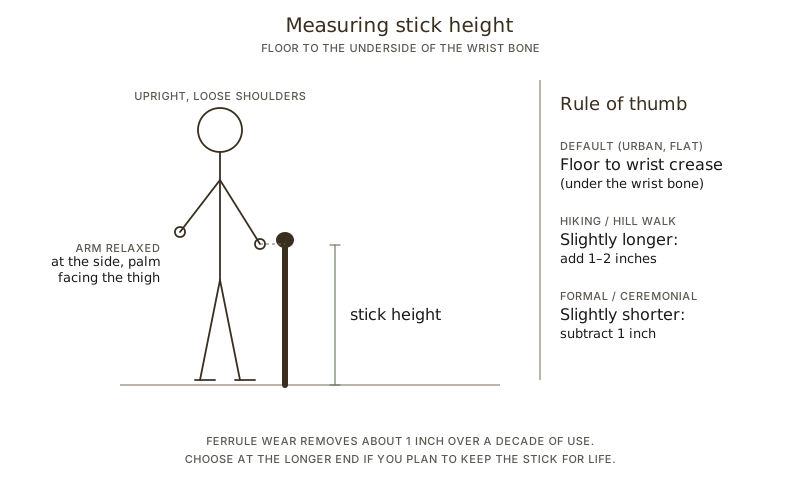
A working walking stick often arrives or is acquired with extra length — most working makers deliver custom commissions with 25-50mm of trim allowance for final at-home fitting. Trimming to the right working length is well within home-maintenance capacity with basic tools.
This guide covers the practical procedure. For determining the right length, see Sizing and fit and How to choose walking stick height.
When to trim
Common reasons:
- Custom commission delivered with trim allowance — the standard 25-50mm over-build needs to be removed to fit the user
- Acquired stick is too tall for the new user (inherited piece, second-hand purchase, gift)
- Posture change over time has made the stick effectively too tall (medical issue, ageing) requiring downsizing
- Footwear change that shifts the user’s working height (move from boots to flats, etc.)
Determining the cut
Before any cutting:
- Measure the user carefully using the seven-measurement method in Sizing and fit. The result is the target length.
- Measure the current stick length from the head down to the ferrule tip
- Calculate the difference — this is what needs to come off
- Subtract conservative margin — trim 5-10mm less than the difference initially; reassess after first cut
- Mark the cut line on the shaft with a pencil or removable tape
Important: it’s much better to take too little than too much. Length cannot be put back. If uncertain, cut less and reassess.
Tools and materials
- Fine-toothed handsaw (Japanese pull-saw, dovetail saw, or fine-toothed crosscut saw)
- Vice or stable holding for the stick
- Pencil or removable tape for marking
- Fine file or sandpaper for finishing the new end
- Replacement or original ferrule for refitting
- Wood glue if reusing the original ferrule
- Measuring tape
Don’t use:
- Chop saw or power saws — risk of chipping the wood at the cut
- Coarse-toothed saws — produce ragged cuts requiring substantial finishing
- Saws designed for metal — wrong tooth pattern for clean wood cuts
The cutting procedure
- Remove the old ferrule carefully (see How to fit a brass ferrule for ferrule removal procedures)
- Mark the cut line clearly on the shaft
- Secure the stick in a vice or stable holding. Pad the vice jaws to avoid marking the shaft.
- Cut along the marked line with smooth, even strokes of the saw. Let the saw do the work; don’t force.
- Maintain perpendicular cut — the new end must be square to the shaft axis, otherwise the ferrule won’t seat correctly.
- Cut completely through — don’t snap the last bit; it can produce splitting.
- Sand the new end smooth with 320-grit sandpaper
Finishing the new end
- File or sand the new end square and smooth. Check with a straight edge that the cut is perpendicular to the shaft axis.
- Sand smooth with 600-grit for a clean working surface
- Apply a thin coat of finish to seal the end-grain. Boiled linseed oil or beeswax both work. The end-grain absorbs more finish than the side-grain; a slightly heavier coat is appropriate.
- Let dry before re-fitting the ferrule (24 hours is conservative; 4-6 hours works for most finishes)
Re-fitting the ferrule
For full procedure, see How to fit a brass ferrule. Summary:
- Test-fit the ferrule on the new shaft end
- Adjust if needed — file the shaft slightly if too tight, shim with a thin leather or paper if too loose
- Apply wood glue to the inside top of the ferrule (optional but recommended)
- Slide ferrule on and seat with light hammer taps (cushioned)
- Wipe off excess glue and let cure 24+ hours
Testing the new length
After cutting and refitting:
- Have the user stand holding the stick with the ferrule on level ground
- Check elbow flex — should be the 10-20° comfortable target
- Walk a short distance — confirm the stick feels natural in normal walking
- Adjust if needed — if still slightly tall, trim again (a few more millimeters)
- If slightly short — accept it (cannot be reversed); confirm the height suits the user’s current proportions
Common mistakes
- Cutting too much initially — irreversible
- Crooked cut — produces a ferrule that doesn’t seat properly
- Forgetting to remove the ferrule first — produces damage to both ferrule and shaft
- Power tools — produce chipping or splitting
- Not finishing the end-grain — exposes the wood to moisture damage at the new end
- Reusing a worn ferrule — better to fit a new one while you’re at it
When to ask a working maker
For situations where home-trimming isn’t appropriate:
- Substantial trim required (substantially more than the 50mm typical) — working maker oversight is worthwhile
- High-value vintage or heritage pieces — professional trim preserves value
- Sticks with substantial silverwork at the head — the silver complicates the working and warrants professional handling
- You’d rather not do it yourself — working makers trim and refit for £15-£40 typical
For commissioning, see The makers page.
Related reading
- guidesSizing and fit: how to size a walking stick precisely
The seven-measurement method — wrist, elbow, terrain, posture, footwear, intended use, and seasonal layering — that gets a working walking stick to the right length the first time.
- guidesHow to choose the right walking stick height
There is one rule that gets you 95 % of the way there. The remaining 5 % is small adjustments for what you'll actually use the stick for.
- guidesHow to fit a brass ferrule to a walking stick
Step-by-step replacement of a worn or lost ferrule on a working walking stick — sizing, removal, fitting, securing, and what to do when the shaft end has deteriorated under the old ferrule.
- guidesHow to care for a blackthorn stick
A real handmade blackthorn stick is meant to last a lifetime. The maintenance that gets it there is small and simple, and it is mostly about keeping the wood fed and dry.