Gift vs personal-use sticks
Buying a stick for yourself and buying one as a gift are two different decisions. Here is what each one weights differently.

A reader who has decided to buy a real handmade stick faces a second question that reshapes the rest of the decision. Is the stick for the buyer’s own use, or is it for someone else as a gift? The two cases pull in different directions on at least four practical questions, and the maker who knows the difference will make a different stick for each.
What each register weights differently
| Decision | Personal-use | Gift |
|---|---|---|
| Form | Walking stick (functional) | Shillelagh (ceremonial) more often, walking stick less often |
| Length | Fitted to the user’s wrist measurement | Often standardised to a “presentation” length (~20 in for shillelagh) |
| Wood | Practical match to use case (hill, urban, formal) | Iconic — almost always blackthorn for the symbolism |
| Decoration | Restrained — finish only | Acceptable to be more decorative — engraving, fitted handles, more polished surface |
| Price | Whatever fits the user’s budget | Usually skewed higher; gift contexts justify more elaborate work |
| Photography for online | Less important | More important — the gift will be photographed at presentation |
| Lead time | Negotiable | Often constrained by the gift occasion |
| Risk tolerance for fit | Low — getting it wrong wastes the buyer’s stick | Higher — recipient may adjust or ferrule-trim |
The contrast is real: the personal-use stick is an object that will be carried for decades, fitted to a specific body, used until the foot wears down. The gift stick is an object that will be received with ceremony, possibly hung on a wall, possibly carried, but in either case experienced as a piece of cultural exchange more than as a practical tool.
The fit problem
The biggest practical difference between the two cases is fit.
A personal-use walking stick must be fitted to the user. The standard rule (covered in How to choose walking stick height) is that the head reaches the underside of the user’s wrist bone when the user is standing upright with the arm relaxed. For most adults this is between 33 and 40 inches, with hill-walking adjustments adding 1–2 inches. Get this wrong by an inch or two and the stick is uncomfortable to carry over distance.
A gift stick is harder to fit, often impossible to fit precisely. The buyer typically does not have the recipient’s wrist measurement; the recipient may not be present to be measured; the gift surprise may rule out asking. The result is that gift sticks are more often standardised to commonly-acceptable lengths — a 20-inch shillelagh works for almost any adult as a ceremonial object; a 36-inch walking stick fits most adult males within a working tolerance.
The fit problem also has a directional asymmetry: a gift stick that is too long can be trimmed at the foot by the recipient (or by a local stick-maker); a gift stick that is too short cannot be lengthened. Smart gift-buyers err slightly long. A 38-inch walking stick can be cut down to 36; a 36 cannot become a 38.
For shillelaghs specifically, the fit problem is less acute because shillelaghs are less load-bearing than walking sticks. A 19-inch shillelagh will work as a ceremonial object for almost any adult; a 19-inch walking stick would not fit anyone. This is part of why gift purchases skew toward shillelaghs.
The form question
The form of the stick — shillelagh vs walking stick vs thumb-stick — also pulls differently in the two cases.
For personal use, the form should match the use case. If the user wants something to lean on while walking, the form is a walking stick. If the user wants something for ceremonial occasions only, a shillelagh fits. The buyer is choosing for known intended use.
For a gift, the form is more often chosen for symbolic resonance. A shillelagh, in the popular cultural register, reads as more emphatically Irish than a walking stick. A blackthorn shillelagh given to a friend with Irish ancestry reads as a piece of cultural recognition; a 38-inch oak walking stick reads more as a piece of personal equipment, which makes a different gift but a more functional one.
The journal’s working observation is that shillelaghs make better gifts for non-immediate-family recipients, and walking sticks make better gifts for close family or friends with active outdoor lifestyles. The shillelagh is more self-explanatory at presentation; the walking stick requires more knowledge of the recipient.
The decoration question
Real handmade Irish sticks span a register from very plain — a debarked blackthorn shaft with a leather strap and a brass ferrule — to elaborately decorated, with carved handles, silver or pewter mountings, engraved presentation plates, and inlay work.
For personal use, the journal’s bias is toward the plainer end. A working stick that will be carried daily for decades develops its own character through the accumulation of patina, light damage, and skin oils; a heavily-decorated stick has less room for the patina to develop because the surface is already busy. Plain working sticks age into themselves more handsomely than decorated ones, in the journal’s view.
For a gift, the calculus reverses. A more decorated stick reads as more ceremonial, more valuable, and more recognisable as “a real piece” rather than a generic walking aid. A presentation plate with the recipient’s name engraved is a register that suits the gift context but would feel intrusive on a personal-use stick that is meant to fade into daily life. A carved handle or a silver mounting reads as appropriate craftsmanship for an object that is being received with attention.
The maker who knows the gift context will often produce a slightly more polished version of the same basic stick — slightly higher gloss on the finish, slightly more figured wood selected from stock, occasionally with a small fitted detail (an engraved nameplate, a finer strap) added at the buyer’s request.
What both registers share
Despite the differences, both registers share non-negotiable baselines for what counts as a real stick:
- The wood is genuinely the wood named on the label
- The head is the natural root burl, not a glued addition
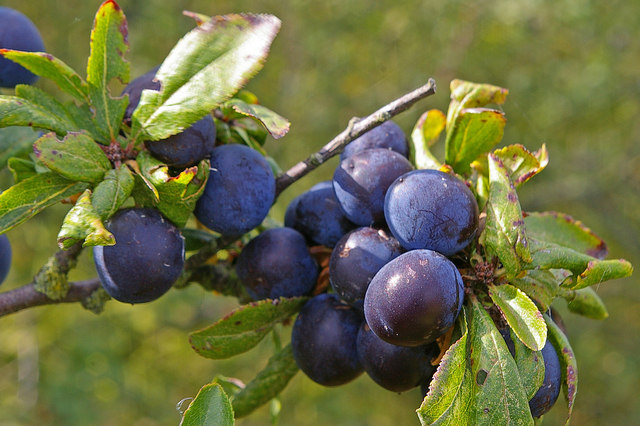
- The surface shows the trimmed thorn-stubs of real blackthorn (or the genuine grain of whatever wood is named)
- The finish is linseed oil and beeswax, or another traditional oil finish — never thick polyurethane varnish
- The strap is real leather, not synthetic
- The wood has been seasoned for the appropriate time — at least one year, ideally more
If a stick fails on these, it is not a real handmade stick regardless of which register it was bought for. The differences between gift and personal-use are layered on top of these baselines, not in place of them.
A poorly-made gift stick is a worse gift than a well-made plain one. A poorly-made personal stick will, simply, not survive long enough to be useful.
The presentation question
A gift stick is, almost by definition, handed over in a context where the act of giving is observable to others. This pulls toward presentation-quality elements that a personal-use stick does not need.
The most useful gift-presentation elements are:
- A brief written note about the stick — the wood, the maker, the year of cutting, the year of finishing, any specific provenance details. Makers often supply this; if not, write your own.
- An appropriate presentation cloth or wrapping — many makers will supply a hessian or linen wrap on request; if buying online, ask about presentation packaging.
- A stand or rack for display, if the stick is likely to be hung rather than carried — a simple wooden wall-rack or a freestanding stand of matching wood adds significantly to the gift’s presentational weight.
For a personal-use stick, none of this matters. The stick is going to be carried; it does not need a presentation context. A maker who insists on packaging a personal-use stick elaborately is, in the journal’s view, slightly missing the point.
The price reality
In rough working terms:
- A personal-use real handmade walking stick from an Irish maker, plain and well-fitted, runs $80–$200 depending on size, wood, and finish
- A gift shillelagh of equivalent quality, possibly with slightly more decorative elements, runs $120–$350
- A highly-decorated presentation piece with engraving, silver mounting, or carved handle runs into the $400–$1,200 range
The price differences within each category are mostly about time-to-make — a more decorated piece takes more bench-hours, a piece with silver mountings requires the silversmith as well as the stick-maker, an engraved presentation plate adds the engraver. The time the wood spent seasoning is roughly constant across all registers.
A buyer who is comparing prices between makers should account for the specifications: a $200 plain blackthorn walking stick from one maker and a $200 decorated shillelagh from another are not in the same comparison; they are different products at the same price-point.
A final thought
The journal’s view is that the best gift for someone who already owns a real handmade stick is not another stick. It is a piece of complementary equipment: a leather replacement strap, a brass ferrule, a maintenance kit (linseed oil, beeswax, soft cloths), or a maker-published book on stick-making. These are perfect gifts for the recipient who already has the foundational object — they extend the stick’s life rather than competing with it.
For a recipient who does not yet have a stick, the first stick is the one that should be the gift. After that, the right gifts are care kits, books, and the occasional commemorative engraving on the existing stick rather than a replacement piece. The relationship is between user and stick; the gifts that strengthen that relationship are usually small additions to the original tool, not parallel objects.
The fitting question is in How to choose walking stick height. The first-stick question is in Your first stick. For the long-term care of any handmade stick, see How to care for a blackthorn stick. For the inheritance dimension, Passing the stick on.
Sources & further reading
- British Stickmakers Guild — buyer's guidance, British Stickmakers Guild
- Theo Fossel, The Stickmaker's Handbook, WorldCat
Related reading
- guidesYour first stick
If you've never owned a real handmade Irish stick before, this is the eight-question framework that will get you to the right one. Most readers can answer all eight in five minutes.
- guidesHow to choose the right walking stick height
There is one rule that gets you 95 % of the way there. The remaining 5 % is small adjustments for what you'll actually use the stick for.
- guidesPassing the stick on
A real handmade stick lasts longer than the user. Sooner or later, every working stick changes hands. This is what to think about when it does.
- comparisonsShillelagh vs walking stick vs blackthorn stick
Three terms that are used interchangeably in tourist shops but mean different things in the workshop. Here's what each one actually refers to.